Achieving Peak Performance: 90-Day Personal Development for 2026

Anúncios
Implementing a 90-day personal development cycle in 2026 is a strategic approach to achieving peak performance by setting clear objectives, consistent action, and regular reflection for sustained growth.
Are you ready to elevate your capabilities and truly thrive in the coming year? The concept of Achieving Peak Performance: Implementing the 90-Day Personal Development Cycle for 2026 offers a structured, actionable framework to transform your aspirations into tangible achievements. This isn’t just about setting resolutions; it’s about engineering sustained progress and unlocking your fullest potential.
Anúncios
Understanding the 90-Day Cycle for Personal Growth
The 90-day cycle is a powerful paradigm for personal and professional development, offering a sweet spot between short-term sprints and long-term planning. It provides enough time to build momentum and see significant results without feeling overwhelmed by an indefinite timeline. This focused approach encourages intense commitment and allows for regular recalibration.
Unlike annual goals that can often lose steam by March, a 90-day cycle breaks down ambitious objectives into manageable, actionable chunks. This structure fosters a sense of urgency and clarity, making it easier to maintain focus and track progress effectively. It’s about creating a series of powerful sprints that collectively lead to marathon-level achievements.
Anúncios
Why 90 days works
- Sustainable Focus: Three months is long enough to establish new habits and see measurable progress, yet short enough to maintain high levels of motivation.
- Adaptability: It allows for quick adjustments based on feedback and results, preventing prolonged adherence to ineffective strategies.
- Milestone Creation: Each cycle becomes a significant milestone, providing a sense of accomplishment and fueling motivation for the next phase.
Embracing the 90-day cycle means committing to a deliberate, iterative process of self-improvement. It’s an invitation to view your personal growth as a series of well-defined projects, each with a clear beginning, middle, and end. This method helps in avoiding burnout by providing natural breaks for reflection and planning, ensuring that your energy and efforts are consistently directed towards meaningful outcomes.
Defining Clear Objectives and Vision for Each Cycle
The cornerstone of any successful 90-day personal development cycle is the clarity of your objectives. Without a well-defined vision, efforts can become scattered and ineffective. This initial phase requires deep introspection and honest assessment of what truly matters to you and what areas demand your focused attention for growth.
Start by identifying 1-3 primary goals that are specific, measurable, achievable, relevant, and time-bound (SMART). These goals should align with your broader life vision but be narrow enough to be realistically tackled within a 90-day timeframe. Avoid the temptation to overload your cycle with too many objectives, as this can dilute your focus and reduce your chances of success.
Crafting SMART goals
- Specific: Clearly state what you want to achieve.
- Measurable: Define how you will track progress and know when the goal is met.
- Achievable: Ensure the goal is realistic given your resources and time.
- Relevant: Confirm the goal aligns with your values and long-term aspirations.
- Time-bound: Set a clear deadline within the 90-day period.
Once your primary goals are established, break them down into smaller, actionable steps. This decomposition makes the larger objective less daunting and provides a clear roadmap for daily and weekly actions. For instance, if your goal is to write a book, your 90-day objective might be to complete the first draft of three chapters, with weekly targets for word count and research.
This phase is not just about listing tasks; it’s about visualizing your success. Spend time contemplating what achieving these goals will look and feel like. This mental rehearsal can significantly boost your motivation and reinforce your commitment to the process. A clear vision acts as a powerful guiding star throughout your journey.
Strategic Planning and Actionable Steps
Once your objectives are crystal clear, the next critical step is to translate them into a strategic plan with actionable steps. This involves mapping out the specific activities you will undertake daily, weekly, and monthly to move closer to your 90-day goals. Effective planning is the bridge between aspiration and accomplishment.
Begin by outlining the major milestones within your 90-day cycle. These serve as mini-checkpoints that help you assess your progress and make necessary adjustments. For each milestone, identify the key tasks required to reach it. This detailed breakdown ensures that you have a comprehensive understanding of the effort and resources needed.
Developing a daily routine
- Prioritize tasks: Identify 1-3 high-impact tasks each day that directly contribute to your goals.
- Schedule dedicated time: Allocate specific blocks in your calendar for personal development activities.
- Eliminate distractions: Create an environment conducive to focused work and learning.
Consider integrating habits that support your goals into your daily routine. For example, if your goal is to improve a skill, dedicating 30 minutes each morning to practice can yield significant results over 90 days. Consistency is far more impactful than sporadic bursts of intense effort.
Leverage tools like digital calendars, project management apps, or even a simple physical planner to keep track of your tasks and deadlines. The act of writing down your plan reinforces your commitment and makes it easier to stay organized. Remember, the plan is a living document; be prepared to adapt it as circumstances evolve.
Tracking Progress and Performance Metrics
Consistent tracking is indispensable for Achieving Peak Performance: Implementing the 90-Day Personal Development Cycle for 2026. Without a reliable system to monitor your progress, it’s easy to lose sight of your efforts and become demotivated. Tracking provides objective data, allowing you to celebrate successes and identify areas needing improvement.
Establish key performance indicators (KPIs) that directly relate to your SMART goals. These metrics should be quantifiable and easy to measure. For instance, if your goal is to improve fitness, KPIs might include weekly workout duration, distance run, or weight lifted. If it’s about learning a new language, tracking daily study time or vocabulary mastered can be effective.
Effective tracking methods
- Journaling: Regular entries help reflect on daily activities, challenges, and insights.
- Spreadsheets: Ideal for quantitative data tracking, such as hours spent, pages read, or tasks completed.
- Habit trackers: Simple visual tools to mark daily completion of desired habits.
Review your progress regularly—daily for habits, weekly for tasks, and monthly for overall goal attainment. These checkpoints are crucial for maintaining momentum and making timely adjustments. Don’t wait until the end of the 90 days to assess your performance; continuous monitoring allows for course correction before significant deviations occur.
Celebrate small wins along the way. Acknowledging your progress, no matter how minor, reinforces positive behavior and keeps your motivation high. This positive feedback loop is vital for sustaining effort throughout the entire cycle. Tracking isn’t just about data; it’s about building a narrative of your growth and resilience.
Overcoming Challenges and Maintaining Motivation
The path to personal development is rarely linear; challenges and setbacks are an inevitable part of the journey. The ability to navigate these obstacles and maintain motivation is crucial for the successful implementation of the 90-day personal development cycle. Resilience and strategic problem-solving become your greatest allies.
Anticipate potential hurdles before they arise. This proactive approach allows you to develop contingency plans and mentally prepare for difficulties. For example, if you know certain times of the day are prone to distractions, schedule your high-priority tasks during periods of peak focus.
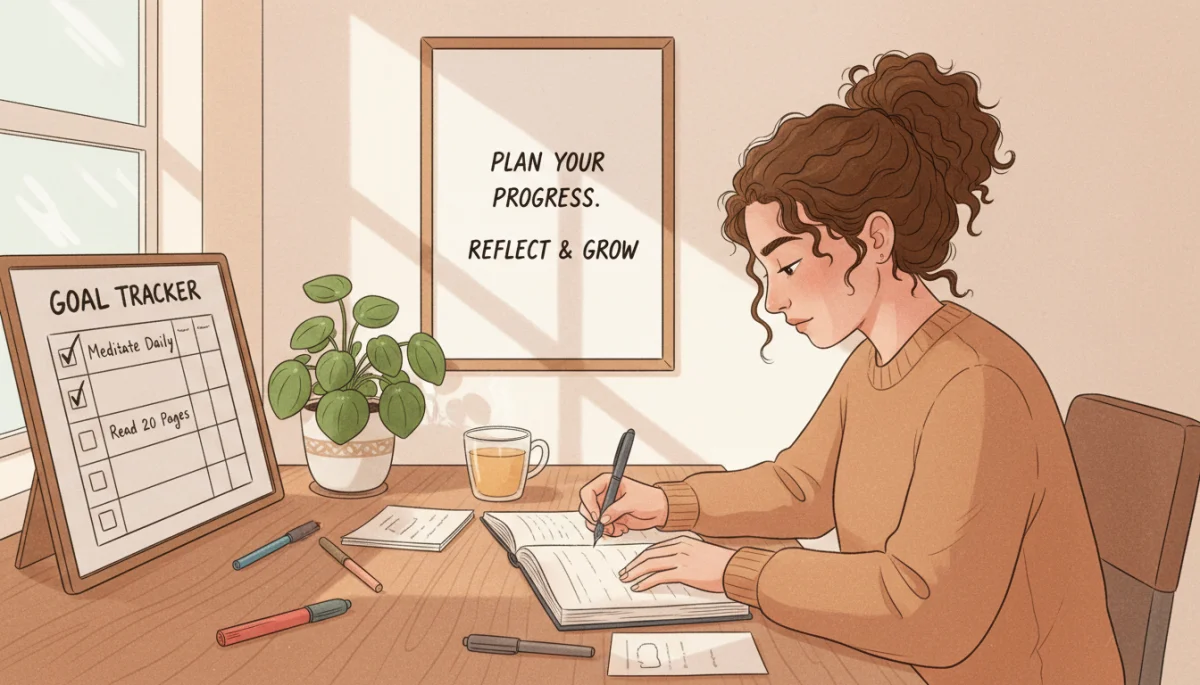
Strategies for staying motivated
- Revisit your vision: Regularly remind yourself of why these goals are important to you.
- Break down tasks further: If a task feels overwhelming, simplify it into even smaller steps.
- Seek support: Share your goals with a friend, mentor, or accountability partner.
- Practice self-compassion: Acknowledge setbacks as learning opportunities, not failures.
When faced with a challenge, take a moment to analyze it objectively. What caused the setback? What can you learn from it? How can you adjust your approach moving forward? This reflective process transforms obstacles into valuable lessons, strengthening your capacity for future growth.
Maintaining motivation also involves incorporating elements of enjoyment and reward into your cycle. Celebrate milestones, engage in activities that recharge you, and ensure your development journey doesn’t feel like a relentless grind. A balanced approach ensures sustained engagement and prevents burnout, keeping you energized for the entire 90 days and beyond.
Reflection, Adjustment, and Starting the Next Cycle
The culmination of each 90-day personal development cycle is not merely the achievement of goals, but the invaluable process of reflection and adjustment. This phase is critical for integrating lessons learned and preparing for subsequent cycles, ensuring continuous and intelligent growth. It’s where true mastery begins to emerge.
Dedicate specific time at the end of each cycle to conduct a thorough review. Ask yourself probing questions: What worked well? What didn’t go as planned? What new insights did you gain about yourself and your process? Be honest and analytical, without judgment.
Key reflection questions
- Did I achieve my primary goals for this cycle? Why or why not?
- What habits did I successfully build or reinforce?
- What were the biggest challenges I faced, and how did I overcome them?
- What could I have done differently to improve my results?
- What are my key learnings from this cycle that I can apply moving forward?
Based on your reflections, make concrete adjustments to your approach for the next cycle. This might involve refining your goal-setting process, altering your daily routines, or exploring new strategies for overcoming specific challenges. The aim is to continuously optimize your personal development framework.
The beauty of the 90-day cycle lies in its iterative nature. Each completed cycle provides a foundation of experience and knowledge upon which to build the next. This continuous loop of planning, acting, tracking, and reflecting ensures that your personal growth journey is dynamic, responsive, and consistently moving you towards higher levels of peak performance in 2026 and beyond.
| Key Aspect | Brief Description |
|---|---|
| Define Objectives | Set SMART goals for each 90-day cycle to ensure clarity and focus. |
| Strategic Planning | Break down goals into actionable steps and integrate them into daily routines. |
| Track Progress | Monitor KPIs regularly to assess performance and make timely adjustments. |
| Reflect and Adjust | Review each cycle for lessons learned and refine your approach for the next. |
Frequently asked questions about 90-day cycles
It’s generally recommended to focus on 1 to 3 primary goals per 90-day cycle. This allows for deep focus and prevents spreading your efforts too thin, maximizing your chances of achieving significant progress in each area. Quality over quantity is key for effective personal development.
Maintaining motivation involves several strategies: regularly revisiting your core ‘why,’ breaking down large tasks into smaller, more manageable ones, celebrating small wins, seeking accountability from others, and practicing self-compassion during setbacks. Consistency and positive reinforcement are crucial.
It’s important to view non-achievement not as failure, but as a learning opportunity. Reflect on what hindered your progress, adjust your strategy, and carry over unfinished goals or new insights into the next cycle. The process is iterative, focusing on continuous improvement rather than perfect execution.
Absolutely. The 90-day personal development cycle is highly versatile and can be applied to various aspects of life, including career advancement, health and fitness, learning new skills, financial growth, or improving relationships. The core principles of goal setting, planning, tracking, and reflection remain universal.
Regular reviews are essential. Daily check-ins for habit tracking, weekly reviews for task completion and minor adjustments, and monthly deep dives for overall progress and strategic realignment are highly effective. This layered approach ensures you stay on track and can adapt quickly.
Conclusion
Achieving Peak Performance: Implementing the 90-Day Personal Development Cycle for 2026 is more than just a methodology; it’s a commitment to intentional growth and continuous self-mastery. By embracing this structured approach, you equip yourself with the clarity, focus, and resilience needed to transform ambitious goals into tangible realities. The iterative nature of these cycles ensures that each period builds upon the last, fostering a dynamic and adaptable path toward your highest potential. As you embark on this journey, remember that consistency, reflection, and a willingness to adapt are your most powerful tools. Your digital journey starts here, with us. Welcome to your new experience. Discover endless possibilities today.
