AI for Business Process Automation: Boost Efficiency by 25%

Anúncios
Leveraging AI for business process automation is crucial for modern enterprises aiming to boost efficiency by 25% in 6 months through a strategic 5-step implementation guide.
Anúncios
In today’s fast-paced business landscape, the pursuit of efficiency is relentless. Companies are constantly seeking innovative solutions to streamline operations, reduce costs, and enhance productivity. This is where AI for business process automation emerges as a transformative force, promising not just incremental improvements but significant leaps in operational prowess. Imagine cutting down manual tasks, accelerating decision-making, and achieving a remarkable 25% efficiency boost within half a year. This guide will walk you through a practical 5-step implementation strategy to turn that vision into reality.
understanding the transformative power of AI in business
Artificial Intelligence (AI) is no longer a futuristic concept; it’s a present-day reality profoundly reshaping how businesses operate. By automating routine, repetitive tasks, AI frees up human capital to focus on strategic initiatives, complex problem-solving, and creative endeavors. This shift not only increases operational efficiency but also cultivates a more engaging and fulfilling work environment for employees.
Anúncios
The integration of AI into business processes extends beyond simple task automation. It involves sophisticated algorithms that can analyze vast datasets, identify patterns, predict outcomes, and even make autonomous decisions. This capability allows organizations to optimize workflows, personalize customer experiences, and gain unprecedented insights into their operations. The potential for competitive advantage is immense, making AI a critical component of any forward-thinking business strategy.
what is AI business process automation?
AI business process automation (BPA) refers to the application of artificial intelligence technologies to automate and optimize various business operations. This can range from simple data entry to complex decision-making processes, leveraging machine learning, natural language processing, and robotic process automation (RPA).
- Enhanced Accuracy: AI minimizes human error in data processing and task execution.
- Increased Speed: Automated processes run significantly faster than manual ones.
- Cost Reduction: Less manual intervention translates to lower operational costs.
- Scalability: AI systems can handle increased workloads without proportional increases in resources.
Ultimately, embracing AI for business process automation is about creating a more agile, responsive, and intelligent enterprise. It’s about empowering your organization to do more with less, adapt quickly to market changes, and consistently deliver superior value to customers. The journey begins with a clear understanding of what AI can achieve and a strategic plan for its integration.
step 1: defining clear objectives and identifying automation opportunities
The foundation of any successful AI implementation lies in a meticulously defined strategy. Before diving into technology, organizations must clearly articulate what they aim to achieve with AI-driven automation. This involves setting specific, measurable, achievable, relevant, and time-bound (SMART) objectives that align with overarching business goals.
Identifying the right processes for automation is equally crucial. Not all processes are suitable for AI, and attempting to automate unsuitable ones can lead to wasted resources and disappointing results. Focus on tasks that are repetitive, rule-based, high-volume, and prone to human error. These are the low-hanging fruits that can yield significant returns early in the automation journey.
conducting a process audit
A comprehensive process audit is the first practical step. This involves mapping out existing workflows, identifying bottlenecks, and understanding the interdependencies between different departments. Tools such as process mining software can be invaluable here, offering data-driven insights into how processes currently operate.
- Document current processes: Create detailed flowcharts and descriptions.
- Identify pain points: Pinpoint areas with high manual effort, errors, or delays.
- Quantify potential impact: Estimate the time and cost savings from automation.
Once potential automation candidates are identified, prioritize them based on their potential impact and feasibility. Start with projects that offer a clear return on investment and can demonstrate early successes. This not only builds momentum but also secures stakeholder buy-in for future, more ambitious AI initiatives. A well-defined objective and a clear understanding of automation opportunities pave the way for a smooth and effective implementation.
step 2: selecting the right AI technologies and platforms
With clear objectives and identified automation opportunities, the next critical step is to select the appropriate AI technologies and platforms. The AI landscape is vast and continually evolving, offering a myriad of tools and solutions. Making the right choice requires a deep understanding of your specific needs, existing IT infrastructure, and long-term strategic vision.
Consider solutions that offer scalability, robust security features, and seamless integration capabilities with your current systems. Vendor support, community resources, and ease of use are also important factors to evaluate. The goal is to choose technologies that not only address immediate automation needs but also provide a flexible foundation for future AI expansion.
key AI technologies for business automation
Several AI technologies play a pivotal role in business process automation. Understanding their strengths and applications is essential for making informed decisions.
- Robotic Process Automation (RPA): Best for automating repetitive, rule-based digital tasks.
- Machine Learning (ML): Enables systems to learn from data and make predictions or decisions without explicit programming, ideal for forecasting and anomaly detection.
- Natural Language Processing (NLP): Facilitates understanding and processing human language, crucial for chatbots, sentiment analysis, and document processing.
- Computer Vision: Allows systems to interpret and understand visual data from images and videos, useful for quality control and security.
The choice of platform might range from off-the-shelf software solutions to custom-built AI models. For many businesses, a hybrid approach combining commercial tools with bespoke development offers the best balance of efficiency and customization. Thorough due diligence, including pilot projects and vendor evaluations, is indispensable in this phase. Selecting the right technological stack is paramount to ensuring the long-term success and sustainability of your AI automation efforts.
step 3: developing and piloting AI solutions
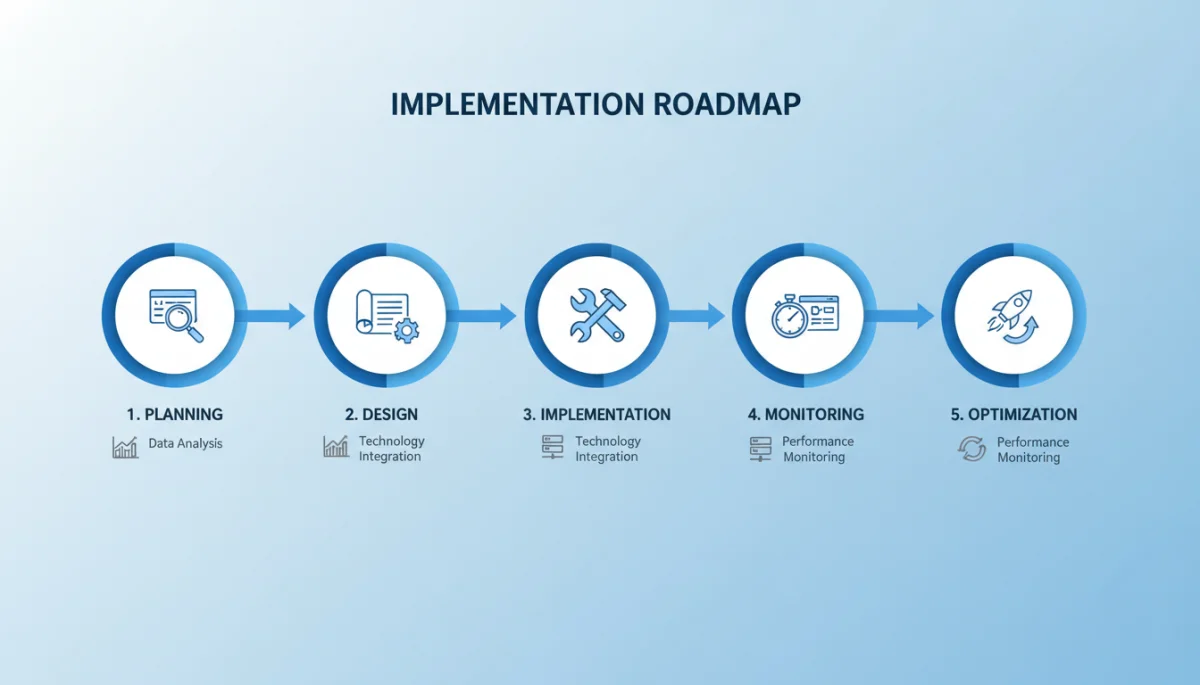
Once the objectives are set and technologies chosen, the focus shifts to developing and piloting the AI solutions. This phase is iterative, involving design, development, testing, and refinement. It’s crucial to adopt an agile methodology, allowing for continuous feedback and adjustments throughout the process.
Start with a small-scale pilot project. This allows your team to gain hands-on experience with the chosen technologies, identify potential challenges, and validate the solution’s effectiveness in a controlled environment. A successful pilot builds confidence and provides valuable insights before a broader rollout.
building your AI team
Successful development requires a skilled team. This might include data scientists, AI engineers, business analysts, and project managers. If in-house expertise is lacking, consider external consultants or training programs to upskill your existing workforce.
- Data preparation: Clean, label, and prepare data for AI model training.
- Model development: Design and train AI models using appropriate algorithms.
- Integration: Seamlessly connect AI solutions with existing business systems.
Rigorous testing is paramount during the piloting phase. This includes functional testing, performance testing, and user acceptance testing (UAT). Gather feedback from end-users to ensure the solution meets their needs and integrates smoothly into their daily workflows. The insights gained from the pilot will be instrumental in refining the AI solution and preparing it for enterprise-wide deployment.
step 4: scaling and integrating AI across the enterprise
After a successful pilot, the next challenge is to scale the AI solution across the entire enterprise and integrate it seamlessly into all relevant business processes. This phase requires careful planning, robust change management, and continuous monitoring to ensure widespread adoption and sustained performance.
Scaling isn’t just about deploying the technology to more users; it’s about embedding AI into the organizational culture and ensuring that employees are equipped to work alongside these new intelligent systems. This often involves comprehensive training programs and clear communication about the benefits and changes that AI brings.
managing change and adoption
Resistance to change is a common hurdle in any technological transformation. Proactive change management strategies are vital to foster a positive attitude towards AI adoption.
- Communicate benefits: Clearly articulate how AI will improve jobs and overall business outcomes.
- Provide training: Equip employees with the skills to interact with AI systems effectively.
- Establish support systems: Ensure readily available assistance for any issues or questions.
Integration with existing IT infrastructure is another critical aspect. AI solutions must communicate effectively with other enterprise systems, such as ERP, CRM, and legacy applications, to ensure data flow and operational continuity. This may involve developing APIs or using integration platforms. A phased rollout, starting with departments most receptive to change, can help manage the complexity of enterprise-wide integration and ensure a smoother transition.
step 5: continuous monitoring, optimization, and governance
Implementing AI for business process automation is not a one-time project; it’s an ongoing journey of continuous improvement. The final step involves establishing robust mechanisms for monitoring performance, optimizing AI models, and ensuring proper governance. This ensures that the AI solutions remain effective, relevant, and compliant with evolving business needs and regulatory requirements.
Regular performance reviews are essential to track key metrics, such as efficiency gains, cost savings, and error reduction. These metrics provide valuable insights into the actual impact of AI and help identify areas for further optimization. AI models can drift over time due to changes in data patterns or business environments, necessitating periodic retraining and fine-tuning.
establishing an AI governance framework
An effective AI governance framework is crucial for managing the ethical, legal, and operational aspects of AI. This includes defining clear policies for data privacy, algorithmic transparency, accountability, and security.
- Data privacy: Ensure compliance with regulations like GDPR and CCPA.
- Algorithmic transparency: Understand how AI models make decisions.
- Accountability: Define roles and responsibilities for AI system oversight.
Furthermore, fostering a culture of continuous learning and adaptation within the organization is vital. Encourage teams to experiment with new AI applications, share best practices, and stay abreast of emerging AI trends. By embracing continuous monitoring, optimization, and strong governance, businesses can ensure their AI automation initiatives deliver sustained value and contribute to long-term success.
measuring success: achieving a 25% efficiency boost in 6 months
The ultimate goal of leveraging AI for business process automation is to achieve tangible improvements, such as a 25% efficiency boost within six months. This ambitious target is attainable with a well-executed strategy and diligent measurement. Success in this endeavor hinges on establishing baseline metrics before implementation and consistently tracking progress against those benchmarks.
Key performance indicators (KPIs) should be directly linked to the objectives defined in Step 1. These might include metrics like process cycle time, error rates, resource utilization, and operational costs. By comparing post-implementation data with baseline figures, organizations can quantify the impact of AI and validate their investment. Transparency in reporting these results is crucial for maintaining stakeholder confidence and demonstrating the value of AI initiatives.
strategies for rapid efficiency gains
To accelerate efficiency gains, focus on processes that offer the quickest wins and highest impact. These often involve high-volume, repetitive tasks that consume significant human effort.
- Target high-impact processes: Automate workflows that free up substantial employee time.
- Iterate quickly: Deploy minimal viable products (MVPs) and refine based on feedback.
- Empower employees: Train staff to identify new automation opportunities.
Furthermore, fostering a culture of continuous improvement, where teams are encouraged to identify and propose new automation opportunities, can sustain momentum. Regular workshops and brainstorming sessions can uncover areas where AI can further optimize operations. Achieving a 25% efficiency boost in six months is an ambitious but realistic goal, provided there is a clear strategy, effective implementation, and a commitment to ongoing optimization and measurement.
| Key Step | Brief Description |
|---|---|
| Define Objectives | Clearly articulate goals and identify high-impact automation opportunities. |
| Select Technologies | Choose scalable and secure AI platforms suitable for your needs. |
| Develop & Pilot | Build and test solutions on a small scale, gathering feedback. |
| Monitor & Optimize | Continuously track performance, refine models, and ensure governance. |
frequently asked questions about AI business automation
AI in business process automation offers significant benefits, including increased efficiency, reduced operational costs, improved accuracy by minimizing human error, enhanced scalability, and faster decision-making. It also frees up human employees to focus on more strategic and creative tasks, boosting overall productivity and job satisfaction.
While the full benefits of AI automation unfold over time, organizations can expect to see significant initial results within 3 to 6 months. This rapid return on investment is often achieved by targeting high-impact, repetitive processes first, demonstrating early successes that build momentum for broader implementation.
No, not all business processes are ideal candidates for AI automation. Processes that are highly repetitive, rule-based, data-intensive, and prone to human error are the best fit. Creative, highly nuanced, or strategic decision-making processes often still require human oversight and intervention, though AI can support them.
A successful AI automation team typically includes a mix of data scientists, AI engineers, business analysts, and project managers. Additionally, IT specialists for integration and change management experts are crucial for ensuring smooth deployment and user adoption across the organization. External consultants can bridge skill gaps.
Ensuring ethical AI use requires establishing a robust governance framework. This includes defining clear policies for data privacy, algorithmic transparency, and accountability. Regular audits, compliance checks, and a commitment to understanding how AI models make decisions are vital for responsible and trustworthy AI deployment within any business.
conclusion
Leveraging AI for business process automation is no longer an option but a strategic imperative for companies striving for sustained growth and competitive advantage. The 5-step guide outlined provides a clear, actionable roadmap, from defining objectives to continuous optimization, enabling organizations to achieve significant efficiency gains, potentially boosting productivity by 25% in just six months. By embracing AI thoughtfully and strategically, businesses can unlock new levels of operational excellence, foster innovation, and empower their workforce for the future.
