Driving Customer Retention: 6 CRM Tactics for 18% Loyalty Boost
Anúncios
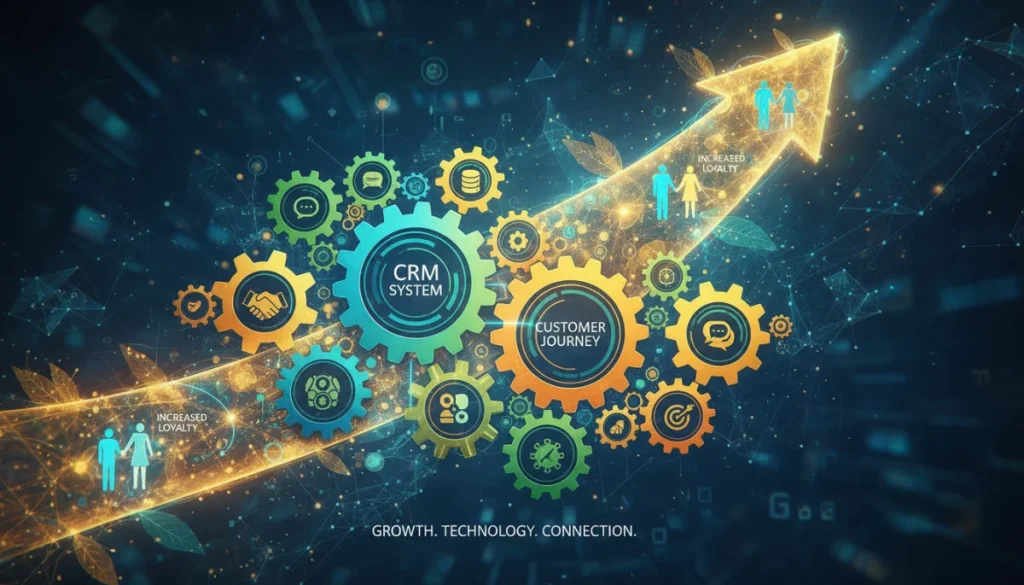
Implementing advanced customer relationship management (CRM) tactics is essential for businesses aiming to significantly enhance customer loyalty and achieve an 18% boost in retention by 2026 through strategic engagement.
Anúncios
In today’s competitive landscape, simply acquiring new customers is no longer enough; retaining existing ones is paramount for sustainable growth. This article delves into customer retention CRM, exploring six advanced tactics that businesses can leverage to significantly boost loyalty, aiming for an impressive 18% increase by 2026. Understanding and implementing these strategies can transform your customer relationships from transactional to enduring partnerships.
Understanding the imperative of customer retention
Customer retention is the ability of a company to retain its customers over a period of time. It’s a critical metric for business success, often overlooked in favor of customer acquisition. In the digital age, where choices are abundant and switching costs can be low, fostering loyalty is more challenging yet more rewarding than ever.
Anúncios
The cost of acquiring a new customer can be five to 25 times more expensive than retaining an existing one. Furthermore, a 5% increase in customer retention can lead to a 25% to 95% increase in profits. These statistics underscore why retention should be at the forefront of any business strategy, especially when aiming for ambitious growth targets like an 18% boost in loyalty by 2026.
The evolving customer expectation
Modern customers expect more than just a product or service; they demand personalized experiences, seamless interactions, and proactive support. Businesses that fail to meet these evolving expectations risk losing their customer base to competitors who prioritize customer-centric approaches. A robust CRM system serves as the backbone for delivering these elevated experiences.
- Personalized experiences are no longer a luxury, but a necessity.
- Seamless omnichannel interactions build trust and convenience.
- Proactive problem-solving prevents churn before it starts.
Ultimately, customer retention is not just about keeping customers; it’s about nurturing relationships, understanding their needs, and consistently delivering value that makes them choose your brand again and again. It’s a long-term investment that yields substantial returns.
Leveraging predictive analytics for proactive engagement
Predictive analytics, powered by advanced CRM systems, is a game-changer in customer retention. By analyzing historical customer data, businesses can anticipate future behaviors, identify potential churn risks, and proactively engage with customers before issues escalate. This proactive approach moves beyond reactive problem-solving to strategic customer relationship management.
CRM platforms equipped with AI and machine learning capabilities can process vast amounts of data, including purchase history, interaction logs, website behavior, and support tickets. This data is then used to create predictive models that highlight customers likely to churn, those ready for an upsell, or those who might benefit from specific interventions. The goal is to act before the customer even considers leaving.
Identifying churn risks early
One of the most powerful applications of predictive analytics is identifying customers at risk of churning. This involves looking for patterns and anomalies in customer behavior that often precede cancellation or disengagement. Early identification allows businesses to intervene with targeted offers, personalized communications, or enhanced support.
- Decreased engagement with product or service.
- Reduced frequency of purchases or interactions.
- Increased complaints or negative feedback.
- Changes in usage patterns compared to historical data.
By understanding these indicators, companies can develop specific strategies to re-engage these customers. This might involve a personalized email campaign, a special discount, or a direct call from a customer success manager to address concerns. The key is to make the customer feel valued and heard.
Hyper-personalization through segmented communication
In an age of information overload, generic messages are easily ignored. Hyper-personalization, driven by detailed customer segmentation within your CRM, ensures that every communication resonates with the individual recipient. This goes beyond simply using a customer’s name; it involves tailoring content, offers, and even communication channels based on their unique preferences, behaviors, and lifecycle stage.
A well-implemented CRM allows for granular segmentation, enabling businesses to divide their customer base into highly specific groups. These segments can be based on demographics, purchase history, engagement levels, product usage, or even psychological profiles. The more precise your segmentation, the more relevant and impactful your personalized communications will be, significantly contributing to customer retention.
Crafting tailored customer journeys
Beyond individual messages, hyper-personalization extends to crafting entire customer journeys. From the onboarding process to ongoing support and loyalty programs, every touchpoint should feel uniquely designed for the customer. This requires integrating CRM data with marketing automation and customer service platforms to ensure a consistent and personalized experience across all channels.
- Onboarding sequences tailored to specific product interests.
- Birthday messages with personalized offers.
- Product recommendations based on past purchases and browsing.
- Exclusive content or early access to features for loyal customers.
The result is a deeper connection with the customer, fostering a sense of belonging and appreciation. When customers feel truly understood and valued, their likelihood of remaining loyal dramatically increases.
Implementing multi-channel proactive customer support
Exceptional customer support is a cornerstone of retention. However, merely being responsive is no longer sufficient. Modern CRM strategies emphasize multi-channel proactive support, where businesses anticipate customer needs and address potential issues across various platforms before they become major problems. This shifts the paradigm from reactive problem-solving to preventative care.
A unified CRM system integrates all customer interaction channels – email, chat, social media, phone, self-service portals – providing a holistic view of every customer touchpoint. This allows support agents to have complete context, leading to faster resolution times and more satisfying experiences. Proactive support takes this a step further by using data to predict when and where a customer might need assistance.

Anticipating and resolving issues
Proactive support often involves leveraging CRM data to identify common pain points or emerging trends that could affect customer satisfaction. For instance, if a software update is known to cause a specific bug, a proactive message can be sent to affected users with a solution before they even encounter the problem. This builds immense goodwill and trust.
- Automated alerts for potential service disruptions.
- Personalized tips and tutorials based on product usage.
- Follow-up messages after a support interaction to ensure satisfaction.
- Offering help through preferred channels at optimal times.
By being present and helpful across multiple channels, and by anticipating needs, businesses can significantly reduce customer frustration, enhance their experience, and ultimately strengthen loyalty. This approach demonstrates a genuine commitment to customer success.
Building robust loyalty programs and community engagement
Loyalty programs are a classic retention tactic, but advanced CRM integration elevates them to new heights. Beyond simple points systems, modern loyalty programs are designed to create a sense of community and provide exclusive value, fostering a deeper emotional connection between the customer and the brand. This engagement goes beyond transactions, building a shared experience.
CRM systems enable businesses to track loyalty program participation, segment members based on their activity, and personalize rewards and communications. This ensures that rewards are relevant and appealing, increasing their perceived value. Community engagement, facilitated by CRM, allows customers to connect with each other and with the brand, creating a powerful network effect that enhances loyalty.
Creating exclusive experiences
The most effective loyalty programs offer more than just discounts; they provide exclusive access, unique experiences, and a sense of belonging. This could include early access to new products, invitations to special events, or personalized content. The CRM helps manage these exclusive benefits and ensures they are delivered effectively to the right customers.
- Tiered loyalty programs with escalating benefits.
- Exclusive online communities or forums.
- Personalized recommendations from brand ambassadors.
- Early access to beta programs or new features.
By fostering a strong community and offering meaningful rewards, businesses can cultivate a loyal customer base that not only continues to purchase but also advocates for the brand. This creates a powerful cycle of retention and growth.
Data-driven feedback loops and continuous improvement
The journey of customer retention is not static; it requires continuous adaptation and improvement. Advanced CRM tactics integrate robust data-driven feedback loops, ensuring that customer insights are not just collected but actively used to refine products, services, and overall customer experiences. This commitment to continuous improvement demonstrates a brand’s dedication to its customers.
CRM platforms facilitate the collection of feedback through various channels, including surveys, reviews, social media monitoring, and direct interactions. More importantly, they provide tools to analyze this feedback, identify recurring themes, and translate insights into actionable improvements. This systematic approach ensures that customer voices directly influence business decisions, making customers feel heard and valued.
Iterative optimization based on insights
An effective feedback loop involves not just collecting data but also closing the loop by communicating how customer input has led to changes. This transparency builds trust and encourages further engagement. For instance, if a feature is updated based on customer suggestions, highlighting this in an announcement reinforces the value of their feedback.
- Regular NPS (Net Promoter Score) and CSAT (Customer Satisfaction) surveys.
- Analyzing sentiment from social media and online reviews.
- Conducting user interviews and focus groups.
- Tracking feature requests and product usage data.
By consistently gathering and acting upon customer feedback, businesses can iteratively optimize their offerings and processes, leading to higher satisfaction and, consequently, superior customer retention rates. This ongoing dialogue is vital for long-term loyalty.
| Key Tactic | Brief Description |
|---|---|
| Predictive Analytics | Uses historical data to anticipate future customer behavior and identify churn risks. |
| Hyper-Personalization | Tailors communications and offers based on granular customer segmentation and preferences. |
| Proactive Support | Anticipates and addresses customer issues across multiple channels before they escalate. |
| Loyalty Programs | Creates exclusive experiences and community engagement to foster deeper customer connections. |
Frequently asked questions about customer retention CRM
The primary benefit of focusing on customer retention is increased profitability. Retaining existing customers is significantly cheaper than acquiring new ones, and loyal customers tend to spend more over time, provide valuable feedback, and act as brand advocates, driving sustainable growth and reducing marketing costs.
CRM technology centralizes customer data, enabling businesses to understand individual behaviors, preferences, and interactions. This holistic view facilitates personalized communication, targeted marketing campaigns, proactive support, and the identification of churn risks, all crucial elements for effective customer retention strategies.
Personalization is vital for boosting customer loyalty by making customers feel understood and valued. Tailored experiences, from product recommendations to customized communications, create stronger emotional connections, enhance satisfaction, and differentiate your brand, encouraging repeat business and long-term engagement.
Absolutely. While resources may differ, many scalable CRM solutions cater to small businesses, offering features like segmentation, automation, and analytics. The key is to start with a clear strategy, focus on the most impactful tactics, and leverage accessible tools to build strong customer relationships over time.
Success can be measured through various metrics, including customer retention rate, churn rate, customer lifetime value (CLTV), repeat purchase rate, and Net Promoter Score (NPS). Regularly tracking these metrics within your CRM provides insights into the effectiveness of your strategies and areas for improvement.
Conclusion
Achieving an 18% boost in customer loyalty by 2026 is an ambitious yet attainable goal for businesses willing to invest in advanced CRM tactics. By embracing predictive analytics, hyper-personalization, proactive support, robust loyalty programs, and continuous feedback loops, companies can transform their customer relationships. These strategies move beyond transactional interactions, fostering deep connections that not only retain customers but also turn them into enthusiastic advocates. In an ever-evolving market, prioritizing customer retention through intelligent CRM implementation is not just a best practice; it’s a strategic imperative for sustained success and exponential growth.
