IoT for Operational Efficiency: 20% Cost Reduction by 2026

Anúncios
Implementing IoT solutions offers a powerful pathway to enhanced operational efficiency, with a recent case study demonstrating a targeted 20% cost reduction in manufacturing by Q4 2026 through strategic deployment.
In an increasingly competitive global landscape, businesses are constantly seeking innovative strategies to optimize their operations and reduce costs. One of the most transformative technologies emerging today is the Internet of Things (IoT). This article explores how implementing IoT for operational efficiency can lead to significant financial gains, particularly focusing on a case study targeting a 20% cost reduction in manufacturing by Q4 2026.
Anúncios
The Strategic Imperative of IoT in Modern Manufacturing
The manufacturing sector, often characterized by complex processes and high operational costs, stands to gain immensely from IoT adoption. Integrating smart sensors, connected devices, and data analytics transforms traditional factories into intelligent, responsive ecosystems. This shift allows for unprecedented levels of visibility, control, and automation, directly impacting efficiency and profitability.
The strategic imperative for IoT in manufacturing extends beyond mere technological upgrade; it’s about creating a resilient, agile, and cost-effective operational model. Companies that embrace IoT are better positioned to respond to market demands, mitigate risks, and sustain growth in a dynamic economic environment. The data generated by IoT devices provides actionable insights that were previously unattainable, enabling proactive decision-making rather than reactive problem-solving.
Anúncios
Understanding the Core Principles of IoT Deployment
Successful IoT deployment in manufacturing hinges on several core principles. It requires a clear understanding of business objectives, a robust technology infrastructure, and a commitment to data-driven decision-making. Simply installing sensors is not enough; the true value lies in how the collected data is processed, analyzed, and integrated into existing operational workflows.
- Connectivity: Ensuring seamless and secure communication between devices, sensors, and central platforms.
- Data Collection: Gathering relevant data points from various stages of the manufacturing process.
- Analytics: Transforming raw data into meaningful insights through advanced analytical tools and algorithms.
- Actionable Insights: Translating insights into practical steps that improve efficiency and reduce waste.
Ultimately, the goal is to create a feedback loop where data continuously informs and refines operations, leading to continuous improvement. This systematic approach is crucial for achieving ambitious targets like a 20% cost reduction.
Leveraging IoT for Predictive Maintenance and Asset Optimization
One of the most immediate and impactful applications of IoT in manufacturing is predictive maintenance. Traditional maintenance schedules often lead to either premature servicing, which wastes resources, or unexpected equipment failures, which cause costly downtime. IoT-enabled predictive maintenance shifts this paradigm entirely.
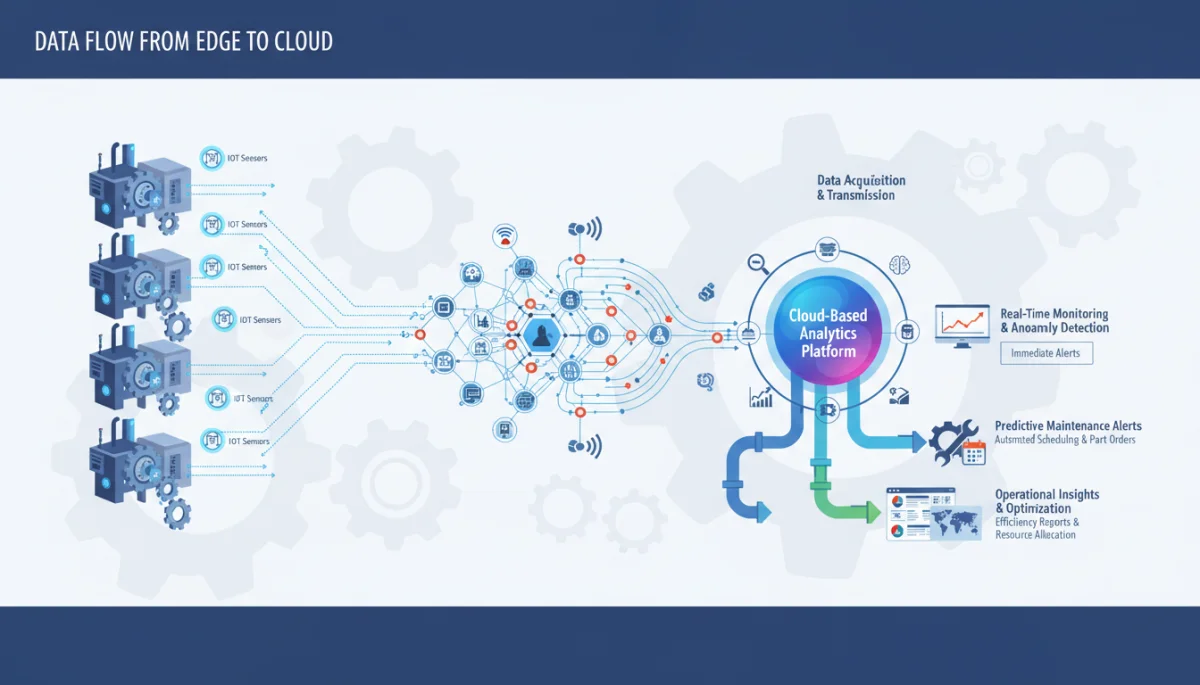
By deploying sensors on critical machinery, manufacturers can monitor key performance indicators such as vibration, temperature, pressure, and energy consumption in real-time. This continuous data stream, when analyzed with machine learning algorithms, can accurately predict when a piece of equipment is likely to fail. This allows maintenance teams to intervene precisely when needed, before a breakdown occurs, minimizing downtime and extending asset lifespan.
Real-time Monitoring and Anomaly Detection
Real-time monitoring is the backbone of effective predictive maintenance. IoT sensors provide a constant pulse of the factory floor, identifying even subtle deviations from normal operating parameters. These anomalies, often imperceptible to human observation, can be early indicators of impending issues.
- Temperature Sensors: Detect overheating in motors or bearings, preventing mechanical failures.
- Vibration Sensors: Identify imbalances or wear in rotating components, signaling potential damage.
- Acoustic Sensors: Pick up unusual noises that could indicate loose parts or friction.
- Pressure Sensors: Monitor fluid systems for leaks or blockages, ensuring optimal flow.
The ability to detect and address these issues proactively not only prevents costly repairs and production halts but also optimizes the utilization of maintenance resources. Technicians can focus on scheduled, necessary interventions rather than emergency repairs, improving overall productivity and safety.
Optimizing Production Processes with IoT Data Analytics
Beyond maintenance, IoT plays a pivotal role in optimizing the entire production process. By collecting data from every stage – from raw material intake to final product assembly – manufacturers gain an unparalleled view of their operations. This holistic data landscape allows for the identification of bottlenecks, inefficiencies, and areas for improvement that were previously hidden.
IoT data analytics can reveal patterns in production flow, machine performance, and material usage that impact overall efficiency. For instance, analyzing sensor data from assembly lines can pinpoint specific stations where delays frequently occur, or where material waste is higher than average. This granular insight empowers managers to make data-driven decisions to streamline processes, reallocate resources, and improve throughput.
Enhancing Quality Control and Waste Reduction
Quality control is another area where IoT delivers substantial benefits. Sensors can monitor product quality parameters in real-time, identifying defects early in the production cycle. This prevents the manufacturing of large batches of faulty products, significantly reducing rework, scrap, and associated costs.

For example, in a food processing plant, IoT sensors can continuously monitor temperature, humidity, and chemical composition to ensure product consistency and safety. In automotive manufacturing, vision systems integrated with IoT can detect minute imperfections on parts, preventing their use in final assemblies. This proactive quality assurance not only saves costs but also enhances brand reputation and customer satisfaction.
By integrating IoT into production, companies can move towards a ‘zero-defect’ manufacturing goal, where waste is minimized, and resource utilization is maximized. This directly contributes to the overarching goal of cost reduction and improved profitability.
Energy Management and Resource Conservation through IoT
Energy consumption is a major operational cost in manufacturing. IoT solutions offer powerful tools for monitoring, analyzing, and optimizing energy usage across the entire facility. Smart meters and sensors can track electricity, gas, and water consumption at a granular level, identifying energy waste and opportunities for conservation.
By understanding energy consumption patterns of individual machines, production lines, and even entire buildings, manufacturers can implement targeted strategies to reduce their energy footprint. This might involve optimizing machine schedules, identifying faulty equipment consuming excess energy, or implementing automated controls that power down non-essential systems during idle periods.
Implementing Smart Energy Systems
IoT facilitates the creation of intelligent energy management systems that can dynamically adjust to production demands and energy costs. These systems can integrate with renewable energy sources, optimize peak load management, and even participate in demand-response programs, further driving down utility bills.
- Real-time Energy Monitoring: Track consumption by device, department, and facility.
- Anomaly Detection: Identify sudden spikes or unusual energy usage that may indicate issues.
- Automated Controls: Implement rules for powering down equipment during non-production hours.
- Predictive Optimization: Use historical data and forecasts to anticipate energy needs and optimize supply.
The financial savings from optimized energy management can be substantial, directly contributing to the 20% cost reduction target. Beyond the financial benefits, improved energy efficiency also aligns with corporate sustainability goals, enhancing a company’s environmental responsibility.
The Role of Digital Twins and Simulation in IoT-driven Efficiency
Digital twins represent a groundbreaking application of IoT in manufacturing. A digital twin is a virtual replica of a physical asset, process, or system. It continuously receives data from its physical counterpart via IoT sensors, allowing for real-time monitoring, analysis, and simulation of performance. This technology offers an unprecedented ability to test scenarios, predict outcomes, and optimize operations in a risk-free virtual environment before implementing changes in the physical world.
For a manufacturing plant, a digital twin can simulate the impact of changing production schedules, reconfiguring assembly lines, or introducing new machinery. This allows engineers and managers to identify potential bottlenecks, optimize resource allocation, and fine-tune processes to maximize efficiency and minimize costs without disrupting actual production.
Simulation for Process Optimization and Risk Mitigation
The simulation capabilities offered by digital twins are invaluable for achieving significant cost reductions. By running various ‘what-if’ scenarios, companies can:
- Optimize Layouts: Determine the most efficient arrangement of machinery and workstations.
- Test New Processes: Validate new production methods or product designs virtually before physical implementation.
- Predict Failures: Simulate equipment wear and tear to refine predictive maintenance schedules.
- Train Staff: Provide realistic training environments for new employees or complex operations.
This proactive approach to optimization and risk mitigation is a cornerstone of achieving ambitious cost-reduction targets. By identifying and addressing potential inefficiencies or failures in a virtual space, manufacturers can avoid costly real-world mistakes and accelerate their journey towards operational excellence.
Case Study: Achieving 20% Cost Reduction in Manufacturing by Q4 2026
Let’s consider a hypothetical yet realistic case study of a large-scale automotive components manufacturer aiming for a 20% cost reduction by Q4 2026 through comprehensive IoT implementation. The company, facing intense market pressure and rising operational expenses, decided to invest heavily in a phased IoT strategy focusing on three key areas: predictive maintenance, production optimization, and energy management.
In Phase 1 (Q1 2024 – Q4 2024), the company deployed IoT sensors on all critical machinery in their stamping and assembly lines. This enabled real-time monitoring of machine health, leading to a 15% reduction in unplanned downtime within the first year. Predictive analytics identified early signs of wear in several high-value presses, allowing for scheduled maintenance that prevented catastrophic failures, saving an estimated $1.5 million in repair and lost production costs.
Phase 2 (Q1 2025 – Q4 2025) focused on production optimization. By integrating IoT data from various stages of the assembly process, the company identified several bottlenecks in material handling and quality inspection. Implementing automated guided vehicles (AGVs) managed by an IoT platform and optimizing inspection points based on real-time defect rates led to a 10% increase in throughput and a 5% reduction in scrap material. Furthermore, energy monitoring systems were installed across the plant, revealing significant energy waste during non-production hours. Automated energy management systems were implemented, resulting in a 12% decrease in electricity consumption.
Phase 3 (Q1 2026 – Q4 2026) aims to consolidate these gains and introduce advanced digital twin capabilities for further optimization. By Q4 2026, the cumulative effect of these IoT initiatives is projected to achieve the ambitious 20% overall operational cost reduction. This includes savings from reduced downtime, optimized production flow, waste reduction, and lower energy bills, significantly enhancing the company’s competitive edge and profitability.
| Key IoT Application | Impact on Operational Efficiency & Cost |
|---|---|
| Predictive Maintenance | Reduces unplanned downtime and extends asset lifespan, leading to significant savings. |
| Production Optimization | Identifies bottlenecks, reduces waste, and improves throughput for higher efficiency. |
| Energy Management | Monitors and optimizes energy consumption, leading to substantial utility cost reductions. |
| Digital Twins & Simulation | Enables virtual testing and optimization, preventing costly real-world errors. |
Frequently Asked Questions About IoT in Manufacturing
IoT in manufacturing refers to the network of connected sensors, devices, and software that collect and exchange data from the factory floor. This data is then analyzed to provide insights for optimizing operations, improving efficiency, and reducing costs across the production lifecycle.
IoT reduces costs by enabling predictive maintenance, minimizing downtime, optimizing energy consumption, reducing waste through improved quality control, and streamlining production processes. Real-time data allows for proactive problem-solving and efficient resource allocation, directly impacting the bottom line.
The main benefits include significantly reduced unplanned downtime, extended asset lifespan, lower maintenance costs, and improved operational safety. By predicting equipment failures, maintenance can be scheduled precisely when needed, avoiding costly emergency repairs and production interruptions.
While requiring careful planning, IoT implementation can be phased into existing factories. Starting with critical areas and scaling up allows for controlled integration. Modern IoT solutions are often designed to be interoperable with legacy systems, minimizing disruption and maximizing return on investment.
A digital twin is a virtual model of a physical asset or process, continuously updated with real-time data from IoT sensors. It helps by allowing manufacturers to simulate scenarios, predict performance, optimize processes, and identify potential issues in a virtual environment before making physical changes, saving time and resources.
Conclusion
The journey towards achieving substantial operational efficiency and cost reduction in manufacturing is increasingly intertwined with the adoption of IoT technologies. As demonstrated by the case study, a strategic and phased approach to implementing IoT for operational efficiency can realistically lead to significant financial gains, such as a 20% cost reduction by Q4 2026. From predictive maintenance to energy management and the innovative use of digital twins, IoT provides the tools necessary for manufacturers to not only survive but thrive in the rapidly evolving industrial landscape, ensuring a more productive, sustainable, and profitable future.
