Optimizing Remote Workflows: 95% Productivity for Hybrid Teams

Anúncios
To maintain 95% productivity with a hybrid team by 2026, businesses must implement integrated technology, clear communication protocols, and a culture of trust and accountability to optimize remote workflows effectively.
The landscape of work has irrevocably shifted, making the ability to maintain high productivity in hybrid environments a critical differentiator for businesses. As we approach 2026, the imperative for optimizing remote workflows has never been more pronounced, especially for organizations aiming to sustain or even exceed 95% productivity with their hybrid teams. This article delves into a strategic blueprint designed to help your organization not just adapt, but thrive, in this evolving professional world.
Anúncios
Understanding the hybrid work paradigm
The hybrid work model, a blend of in-office and remote work, offers unparalleled flexibility but also introduces complexities. Successfully navigating this model requires a deep understanding of its nuances and a proactive approach to workflow design. It’s not merely about where work gets done, but how it’s done, ensuring equity, efficiency, and engagement across all team members.
Effective hybrid models prioritize outcomes over location, fostering an environment where contributions are valued irrespective of physical presence. This shift demands rethinking traditional management styles, communication strategies, and technological infrastructure to support a distributed workforce.
Anúncios
defining hybrid work for your organization
Before optimizing, it’s crucial to define what hybrid work truly means for your specific organization. This involves assessing your unique operational needs, company culture, and employee preferences. A one-size-fits-all approach rarely yields the best results.
- Assess operational needs: Identify which roles benefit most from remote work and which require in-office presence.
- Evaluate company culture: Determine how existing cultural values can be adapted or reinforced in a hybrid setting.
- Survey employee preferences: Gather feedback from your team to understand their ideal work arrangements and potential challenges.
Ultimately, a well-defined hybrid strategy lays the groundwork for seamless workflow optimization, ensuring that every decision contributes to the overarching goal of sustained productivity.
Strategic technology integration for seamless operations
Technology forms the backbone of any successful remote or hybrid workflow. By 2026, organizations must leverage advanced tools and platforms that facilitate seamless collaboration, communication, and project management. The goal is to create a digital ecosystem that mirrors, and in many ways surpasses, the efficiency of a purely co-located environment.
Investing in the right technology isn’t just about purchasing software; it’s about integrating these tools into a cohesive system that empowers employees and streamlines processes. This includes everything from robust communication platforms to sophisticated project management software and secure cloud infrastructure.
core technological pillars for hybrid teams
To achieve 95% productivity, hybrid teams need a suite of integrated tools that support every aspect of their work. These pillars ensure that information flows freely, tasks are managed efficiently, and security remains paramount.
- Unified communication platforms: Tools like Microsoft Teams or Slack centralize chat, video conferencing, and file sharing, reducing communication silos.
- Advanced project management software: Platforms such as Asana, Monday.com, or Jira provide transparent task tracking, deadline management, and workload balancing.
- Secure cloud infrastructure: Ensuring all data and applications are accessible and secure from anywhere is non-negotiable for remote operations.
- Virtual whiteboards and collaboration tools: Miro or Mural enable real-time brainstorming and ideation, replicating in-person creative sessions.
The strategic integration of these technologies allows teams to operate as a unified unit, regardless of physical location, significantly contributing to workflow efficiency and overall productivity.
Fostering a culture of communication and trust
Beyond technology, the human element remains paramount. A strong culture of open communication and mutual trust is critical for hybrid teams to thrive. Without it, even the most sophisticated tools can fall short. By 2026, leaders must prioritize building an environment where transparency, empathy, and psychological safety are deeply embedded.
Effective communication in a hybrid setting means being intentional about how and when information is shared. It also involves creating avenues for both formal and informal interactions, ensuring that remote employees feel just as connected and informed as their in-office counterparts.
establishing clear communication protocols
Ambiguity is the enemy of productivity in hybrid teams. Clear protocols for communication help manage expectations and ensure that everyone is on the same page.
- Define communication channels: Specify which tools are used for urgent messages, project updates, and general discussions.
- Set response time expectations: Establish guidelines for how quickly team members should respond to various types of communications.
- Schedule regular check-ins: Implement consistent team meetings, one-on-ones, and informal gatherings to maintain connection and alignment.
Building trust is an ongoing process that requires consistent effort from leadership. This includes empowering employees with autonomy, recognizing contributions, and being transparent about company decisions and challenges. A trusting environment encourages proactive problem-solving and fosters a sense of shared responsibility, directly impacting productivity.
Optimizing processes for hybrid team efficiency
To achieve 95% productivity, organizations must critically evaluate and redesign their operational processes to suit the hybrid model. Traditional workflows often assume co-location and may create bottlenecks or inefficiencies when applied to a distributed team. The focus should be on creating agile, location-agnostic processes that maximize output while minimizing friction.
This optimization involves more than just digitizing existing processes; it requires a fundamental re-evaluation of how tasks are assigned, completed, and reviewed. The aim is to build workflows that are inherently flexible, adaptable, and resilient to the challenges of a dispersed workforce.
streamlining task management and accountability
Effective task management is central to maintaining high productivity. In a hybrid environment, clarity around roles, responsibilities, and deadlines is even more crucial.
- Implement clear task assignment: Use project management tools to assign tasks with specific deliverables and deadlines.
- Establish accountability frameworks: Regularly review progress and provide constructive feedback to keep projects on track.
- Automate repetitive tasks: Leverage automation tools to free up team members for more strategic work, reducing manual effort and errors.
By streamlining these processes, organizations can ensure that every team member understands their contribution to the larger goals, fostering a sense of ownership and driving collective productivity. Regular process audits are also vital to identify and address any emerging inefficiencies, ensuring continuous improvement.
Performance measurement and continuous improvement
Achieving and sustaining 95% productivity in a hybrid model by 2026 requires a robust framework for performance measurement and a commitment to continuous improvement. Relying on outdated metrics or subjective assessments can lead to inaccurate insights and hinder progress. Instead, organizations must adopt data-driven approaches to evaluate individual and team performance, identify areas for improvement, and adapt strategies as needed.
This involves defining clear, measurable key performance indicators (KPIs) that are relevant to a hybrid setting and regularly analyzing these metrics to inform decision-making. The goal is to create a feedback loop that allows for agile adjustments to workflows, tools, and cultural practices.
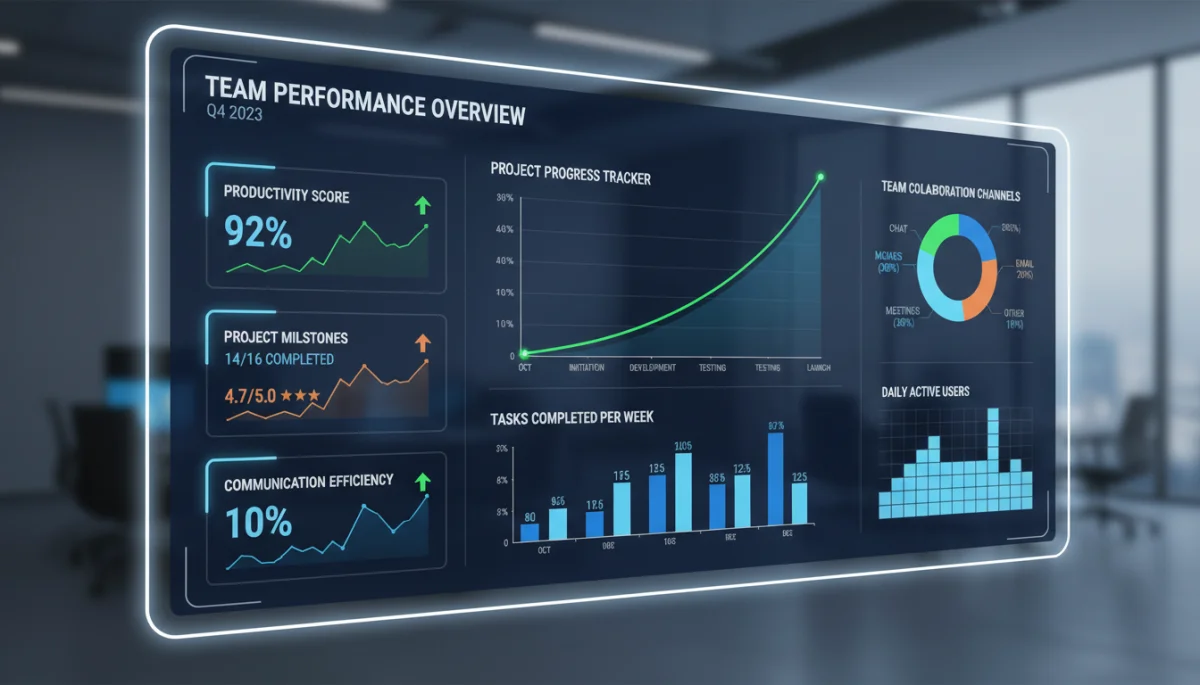
key performance indicators for hybrid teams
Effective KPIs for hybrid teams go beyond traditional output metrics to include indicators of collaboration, engagement, and well-being. A holistic view ensures that productivity gains are sustainable and do not come at the expense of employee health or satisfaction.
- Project completion rates: Track the percentage of projects completed on time and within budget.
- Communication effectiveness: Monitor response times, meeting attendance, and engagement in collaborative platforms.
- Employee engagement scores: Conduct regular surveys to gauge satisfaction, connection, and psychological safety.
- Individual and team output: Measure the quantity and quality of work produced, adjusting for role-specific variations.
Regular analysis of these KPIs, combined with qualitative feedback, enables organizations to pinpoint areas where workflows can be refined, technology can be better utilized, or cultural initiatives can be strengthened. This iterative process of measurement, analysis, and adaptation is crucial for maintaining high productivity in the long term.
Employee well-being and engagement in hybrid settings
Sustaining high productivity is inextricably linked to employee well-being and engagement. In a hybrid environment, the lines between work and personal life can blur, leading to burnout and decreased morale if not managed effectively. By 2026, organizations must prioritize comprehensive strategies to support the mental, physical, and emotional health of their hybrid workforce, ensuring that employees feel valued, connected, and motivated.
This means going beyond superficial perks and embedding well-being into the core of the company culture. It involves providing resources, promoting work-life balance, and fostering an inclusive environment where every team member feels they belong and can contribute their best work.
strategies for enhancing well-being and engagement
Proactive measures are essential to create a supportive and engaging environment for hybrid teams. These strategies address both the practical and emotional needs of employees.
- Flexible work policies: Empower employees with autonomy over their schedules and work locations, within defined parameters.
- Mental health resources: Provide access to counseling services, stress management programs, and mental health days.
- Virtual social events: Organize online team-building activities, virtual coffee breaks, and informal gatherings to foster connection.
- Professional development opportunities: Invest in training and growth pathways to keep employees engaged and skilled for future challenges.
By genuinely investing in employee well-being and engagement, organizations can cultivate a resilient, high-performing hybrid team that consistently delivers exceptional results. A happy and healthy workforce is, after all, the most productive workforce.
Preparing for the future: adaptability and foresight
The business world is in constant flux, and the hybrid work model itself will continue to evolve. To maintain 95% productivity by 2026 and beyond, organizations must cultivate a culture of adaptability and foresight. This means not just reacting to changes but proactively anticipating future trends and preparing for them. It involves continuous learning, experimentation, and a willingness to iterate on existing strategies.
Embracing a mindset of continuous improvement and innovation is vital. This prepares teams for unforeseen challenges and enables them to capitalize on new opportunities that emerge in the dynamic landscape of work.
building an adaptable hybrid framework
An adaptable framework is built on principles that allow for flexibility and responsiveness. This ensures that the organization can pivot quickly when circumstances change.
- Regularly review and update policies: Periodically assess the effectiveness of hybrid work policies and make adjustments based on feedback and performance data.
- Invest in future-proof technology: Choose scalable and versatile tools that can adapt to evolving technological landscapes and business needs.
- Foster a learning culture: Encourage employees to continuously upskill and reskill, preparing them for new roles and challenges.
- Monitor industry trends: Stay informed about best practices and emerging innovations in remote and hybrid work to maintain a competitive edge.
By fostering adaptability and foresight, businesses can ensure their remote workflows remain robust and productive, securing their success in the ever-changing professional environment.
| Key Aspect | Brief Description |
|---|---|
| Technology Integration | Leveraging advanced tools for collaboration, communication, and project management to create a seamless digital ecosystem. |
| Communication & Trust | Fostering open dialogue, clear protocols, and psychological safety to enhance team cohesion and transparency. |
| Process Optimization | Redesigning workflows to be agile, location-agnostic, and efficient for distributed teams, focusing on clear task management. |
| Well-being & Engagement | Prioritizing employee health, work-life balance, and professional development to cultivate a motivated and productive workforce. |
Frequently asked questions about hybrid work optimization
The biggest challenge often lies in ensuring equitable communication and collaboration between in-office and remote employees. Bridging the physical gap to create a unified team experience requires intentional strategies and the right technology to prevent a two-tiered system from emerging.
Technology enhances productivity by centralizing communication, streamlining project management, automating repetitive tasks, and providing secure access to resources from anywhere. Integrated platforms reduce friction, improve information flow, and allow teams to focus on high-value work, simulating a cohesive environment.
Company culture is foundational. A culture built on trust, transparency, and empathy ensures employees feel valued and connected, regardless of location. This fosters psychological safety, encourages open communication, and motivates team members to perform their best, directly impacting productivity and retention.
Measuring productivity involves a blend of quantitative and qualitative metrics. Beyond project completion rates, focus on KPIs like communication effectiveness, employee engagement scores, and individual output. Regular feedback and performance reviews also provide crucial insights into overall team health and efficiency.
Beyond productivity, optimized remote workflows lead to increased employee satisfaction, reduced operational costs, enhanced talent acquisition by expanding hiring pools, and greater business resilience. They also foster a more inclusive work environment and promote a better work-life balance for employees.
Conclusion
The journey towards optimizing remote workflows for a hybrid team to achieve 95% productivity by 2026 is multifaceted, demanding strategic foresight, technological prowess, and a human-centric approach. It’s about building a resilient, adaptable, and highly engaged workforce capable of thriving in any environment. By prioritizing robust technology integration, fostering a culture of trust and transparent communication, streamlining processes, and continually investing in employee well-being, organizations can not only meet but exceed their productivity goals. The future of work is hybrid, and those who master its intricacies will undoubtedly lead the way.
