Top 5 AI Innovations Reshaping US Industries in 2026
Anúncios
Artificial intelligence is poised to revolutionize US industries by 2026, with key innovations such as advanced automation, hyper-personalized customer experiences, and sophisticated predictive analytics driving significant operational and strategic shifts.
Anúncios
The landscape of American business is on the cusp of a profound transformation, driven by the relentless march of artificial intelligence. Understanding The Top 5 AI Innovations Reshaping US Industries in 2026: An Insider’s Guide to Adoption is no longer optional; it’s a critical imperative for survival and growth. This guide will illuminate the pivotal AI advancements poised to redefine operational paradigms and strategic advantages across diverse sectors.
The Rise of Autonomous Systems and Robotics
Autonomous systems and advanced robotics are moving beyond the factory floor, fundamentally altering how industries operate. These innovations are enhancing safety, precision, and efficiency in ways previously unimaginable, from logistics to healthcare. Their integration promises a future where routine and hazardous tasks are handled by intelligent machines, freeing human capital for more complex problem-solving and innovation.
Anúncios
Transforming Manufacturing and Logistics
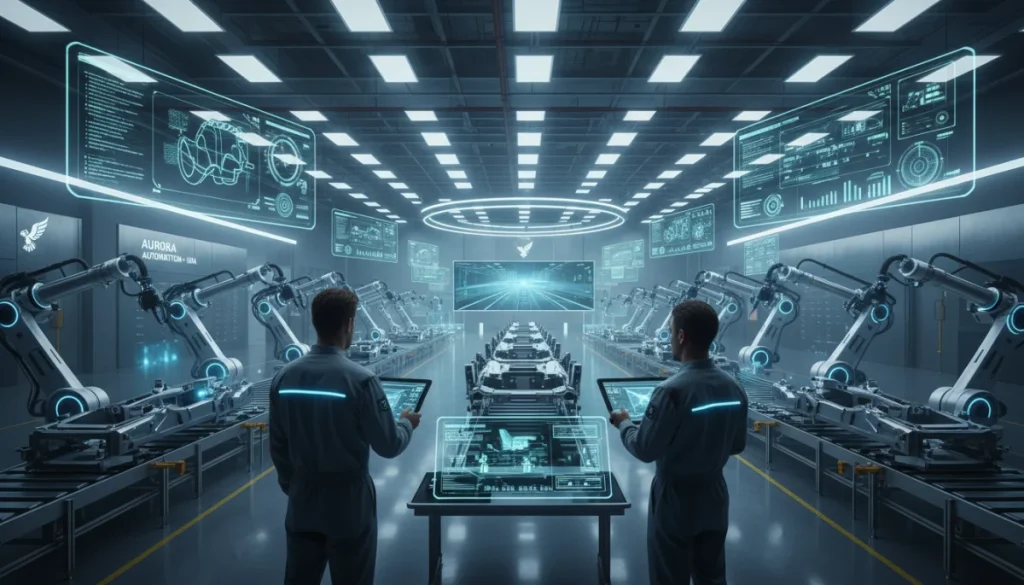
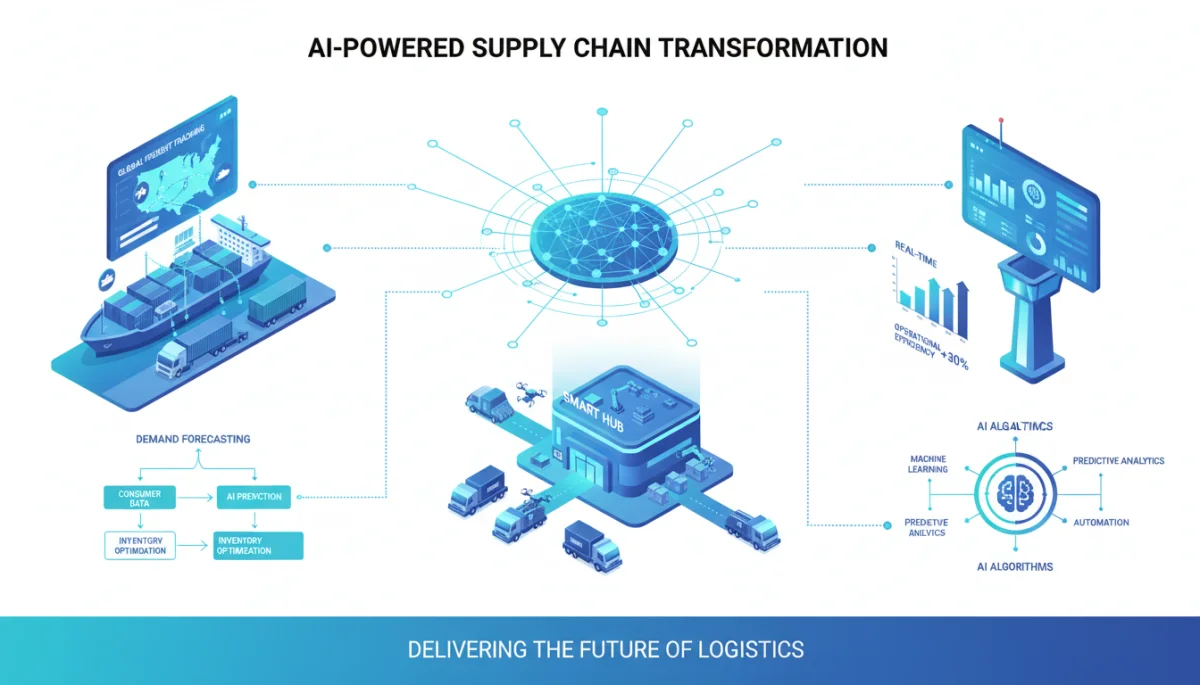
In manufacturing, autonomous robots are performing intricate assembly tasks with unparalleled accuracy and speed, leading to higher quality products and reduced waste. In logistics, autonomous vehicles, drones, and warehouse robots are streamlining supply chains, ensuring faster delivery times and lower operational costs. The impact is a more resilient and responsive industrial backbone.
- Precision Manufacturing: Robots with AI vision systems can detect minute defects, ensuring superior product quality.
- Automated Warehousing: AI-driven systems optimize storage, retrieval, and inventory management, significantly cutting operational expenses.
- Last-Mile Delivery: Autonomous drones and ground vehicles are making urban and rural deliveries more efficient and eco-friendly.
The shift towards greater autonomy also brings challenges, particularly in workforce retraining and ethical considerations. Companies must invest in upskilling their employees to manage and maintain these advanced systems, fostering a collaborative environment between humans and AI. This symbiotic relationship will be key to unlocking the full potential of autonomous technologies.
Hyper-Personalization at Scale
The ability of AI to analyze vast datasets and understand individual preferences is leading to an era of hyper-personalization. This innovation is reshaping customer engagement, product development, and service delivery across consumer-facing industries. Businesses can now tailor experiences with unprecedented accuracy, fostering deeper customer loyalty and driving sales growth.
Redefining Customer Experiences in Retail and Healthcare
In retail, AI algorithms analyze browsing history, purchase patterns, and even social media activity to offer highly relevant product recommendations. This goes beyond simple suggestions, extending to dynamic pricing, personalized marketing campaigns, and customized product configurations. Customers receive offers that feel uniquely crafted for them, enhancing satisfaction and conversion rates.
Healthcare is also seeing transformative changes. AI-powered diagnostic tools can analyze patient data to recommend personalized treatment plans, predict disease progression, and even tailor medication dosages based on individual genetic profiles. This leads to more effective treatments and improved patient outcomes, shifting healthcare towards a more proactive and preventive model.
Implementing hyper-personalization requires robust data infrastructure and a commitment to data privacy. Companies must navigate the delicate balance between leveraging customer data for enhanced experiences and safeguarding individual privacy. Transparent data practices and strong security measures are essential for building trust in this new personalized landscape.
Predictive Analytics and AI-Driven Decision Making
Predictive analytics, powered by sophisticated AI and machine learning models, is enabling businesses to anticipate future trends, mitigate risks, and make data-driven decisions with greater confidence. This innovation moves companies from reactive to proactive strategies, offering a significant competitive edge.
Optimizing Operations and Strategic Planning
Across industries, predictive analytics is being used to forecast demand, optimize inventory levels, and schedule maintenance for critical equipment before failures occur. In finance, AI models predict market fluctuations and identify potential fraud patterns, protecting assets and informing investment strategies. For energy companies, AI predicts consumption patterns, optimizing power distribution and reducing waste.
The core strength of AI-driven decision making lies in its capacity to process and interpret complex data far beyond human capabilities. This allows for the identification of subtle patterns and correlations that might otherwise go unnoticed, leading to more accurate forecasts and more effective operational adjustments. Businesses can better allocate resources, anticipate supply chain disruptions, and refine their strategic direction based on actionable insights.
Adopting predictive analytics effectively requires not just the technology but also a culture of data literacy within the organization. Employees need to understand how to interpret AI-generated insights and integrate them into their decision-making processes. This ensures that the technology serves as an augmentation to human intelligence, rather than a replacement.
Generative AI for Content and Design
Generative AI, once a niche academic pursuit, has rapidly evolved into a powerful tool for content creation, design, and innovation. This technology can produce original text, images, audio, and even code, revolutionizing creative industries and accelerating product development cycles.
Revolutionizing Creative Workflows and Product Development
In marketing and advertising, generative AI can produce compelling ad copy, personalized marketing materials, and even entire campaigns in a fraction of the time it would take human creatives. This allows for rapid iteration and A/B testing, leading to more effective communication strategies. Designers are using AI to generate multiple design concepts for products, architecture, and fashion, exploring possibilities that might be overlooked through traditional methods.
The impact extends to software development, where generative AI assists in writing code, debugging, and even creating entire software modules. This significantly speeds up development cycles, reduces costs, and allows developers to focus on higher-level architectural challenges and innovation. The ability to rapidly prototype and test new ideas is a game-changer for businesses seeking to stay ahead in competitive markets.
While generative AI offers immense potential, ethical considerations around authorship, bias in generated content, and intellectual property remain critical. Companies must establish clear guidelines for its use, ensuring that AI-generated content is reviewed, refined, and aligned with human values and brand integrity. The goal is to augment human creativity, not replace it blindly.
AI-Powered Cybersecurity and Threat Detection
As digital threats grow in sophistication, AI-powered cybersecurity solutions are becoming indispensable. These innovations leverage machine learning to detect, analyze, and respond to cyberattacks in real-time, offering a crucial layer of defense for businesses and critical infrastructure.
Strengthening Digital Defenses in an Evolving Threat Landscape
Traditional cybersecurity measures often struggle to keep pace with rapidly evolving threats. AI systems, however, can learn from vast amounts of data to identify anomalous behavior, zero-day exploits, and sophisticated phishing attempts that might bypass conventional defenses. They can analyze network traffic, user behavior, and system logs to pinpoint potential breaches before they cause significant damage.
- Real-time Threat Detection: AI monitors network activity 24/7, identifying and flagging suspicious patterns instantly.
- Automated Incident Response: AI can automatically quarantine infected systems, block malicious IPs, and alert security teams, minimizing breach impact.
- Predictive Security: AI analyzes global threat intelligence to anticipate new attack vectors and proactively strengthen defenses.
The continuous learning capabilities of AI mean that cybersecurity systems become more effective over time, adapting to new threats as they emerge. This dynamic defense mechanism is vital for protecting sensitive data, maintaining operational continuity, and preserving customer trust in an increasingly interconnected world. For US industries, robust cybersecurity is not just an IT concern but a fundamental business imperative.
Implementing AI in cybersecurity requires specialized expertise and ongoing investment. Organizations need to ensure their AI models are regularly updated and trained on the latest threat intelligence to remain effective. Collaboration between AI security vendors and internal IT teams is essential for building a comprehensive and resilient defense strategy.
| AI Innovation | Brief Impact on US Industries |
|---|---|
| Autonomous Systems | Enhances efficiency, safety, and precision in manufacturing, logistics, and beyond. |
| Hyper-Personalization | Revolutionizes customer engagement, product development, and service delivery. |
| Predictive Analytics | Enables proactive decision-making, risk mitigation, and operational optimization. |
| Generative AI | Accelerates content creation, design processes, and product development cycles. |
Frequently Asked Questions About AI in US Industries
Manufacturing, healthcare, retail, logistics, and finance are expected to experience the most significant transformations. AI will drive efficiencies, personalize services, and enhance decision-making across these sectors, leading to substantial operational shifts and competitive advantages for early adopters.
Key challenges include data privacy concerns, the need for skilled talent, integrating AI with legacy systems, and managing ethical implications. Companies must invest in robust data governance, workforce training, and strategic planning to overcome these hurdles effectively and ensure successful AI implementation.
AI will automate many routine tasks, potentially displacing some jobs but also creating new roles requiring different skill sets, such as AI trainers, data scientists, and AI ethics officers. The focus will shift towards human-AI collaboration, necessitating continuous upskilling and reskilling of the workforce to adapt to evolving demands.
Generative AI offers immense potential but requires careful management. Businesses must address issues like data privacy, potential biases in generated content, and intellectual property rights. Implementing clear guidelines, human oversight, and robust verification processes is crucial to ensure its safe and effective deployment for business applications.
Businesses should start by assessing their current digital infrastructure, investing in data quality, fostering an AI-friendly culture, and developing a clear AI strategy. Prioritizing pilot projects, upskilling employees, and partnering with AI experts can facilitate a smoother transition and maximize the benefits of AI integration.
Conclusion
The five AI innovations discussed—autonomous systems, hyper-personalization, predictive analytics, generative AI, and AI-powered cybersecurity—are not merely technological advancements; they are foundational shifts that will redefine competitive landscapes across US industries by 2026. For businesses to thrive in this evolving environment, strategic adoption, continuous learning, and an ethical approach to AI implementation will be paramount. Embracing these changes proactively will unlock unprecedented opportunities for efficiency, innovation, and sustained growth, ensuring that American enterprises remain at the forefront of global industrial evolution.
