Generative AI’s Impact on US Digital Marketing by 2027
Anúncios
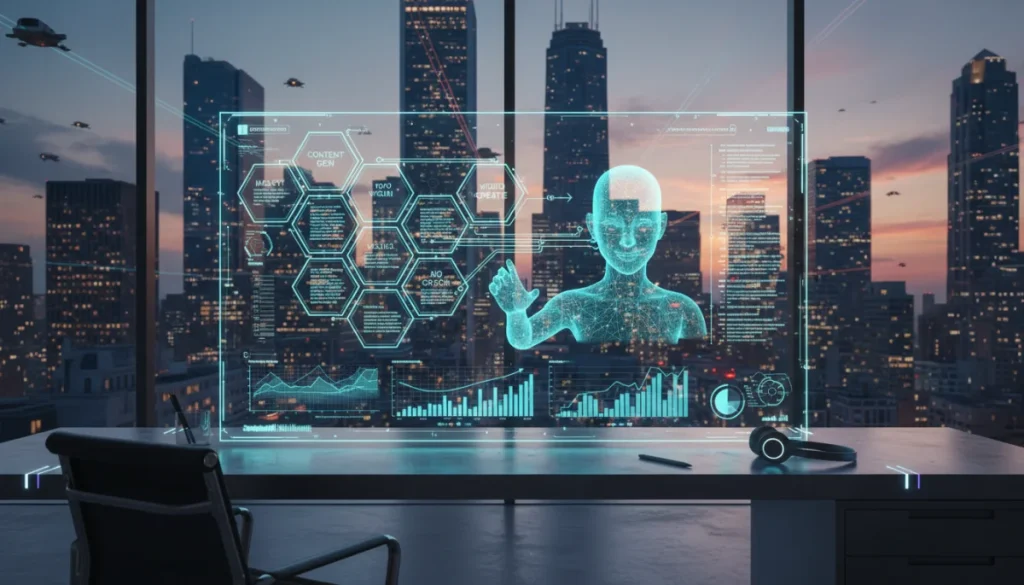
Generative AI will fundamentally reshape US digital marketing by 2027, automating content creation, hyper-personalizing customer experiences, and optimizing campaign strategies for unprecedented efficiency and impact.
The landscape of digital marketing is perpetually evolving, but few advancements promise a disruption as profound as generative AI marketing. By 2027, this innovative technology will not merely be a tool; it will be an indispensable partner, fundamentally reshaping how businesses in the US connect with their audiences, create compelling content, and drive measurable results. Are you ready for this paradigm shift?
Anúncios
The Dawn of Autonomous Content Creation
Generative AI, in its essence, refers to algorithms capable of producing novel content, whether it’s text, images, audio, or video, based on learned patterns from vast datasets. In digital marketing, this translates into an unprecedented ability to automate and scale content creation, moving beyond mere templated responses to genuinely original and contextually relevant outputs.
This shift means marketing teams will spend less time on repetitive content generation and more on strategic oversight, creative direction, and audience engagement. AI will become the workhorse, freeing up human talent for higher-level tasks that demand nuanced understanding and emotional intelligence.
Anúncios
Automating diverse content formats
The scope of generative AI in content creation is vast and rapidly expanding. Marketers can leverage these tools to produce a multitude of assets efficiently.
- Copywriting: AI can generate blog posts, ad copy, social media updates, email newsletters, and even product descriptions tailored to specific brand voices and target demographics.
- Visual Assets: From unique illustrations and stock-like photos to video snippets and animated graphics, generative AI can create visuals that resonate with campaign themes.
- Audio Content: Podcasts, voiceovers for videos, and even personalized audio ads can be generated, offering new avenues for engaging listeners.
The integration of these capabilities will lead to a significant increase in content volume and diversity, allowing brands to maintain a fresh and dynamic presence across all digital channels without proportional increases in human resources. This efficiency will be a key differentiator for competitive advantage.
Hyper-Personalization at Unprecedented Scale
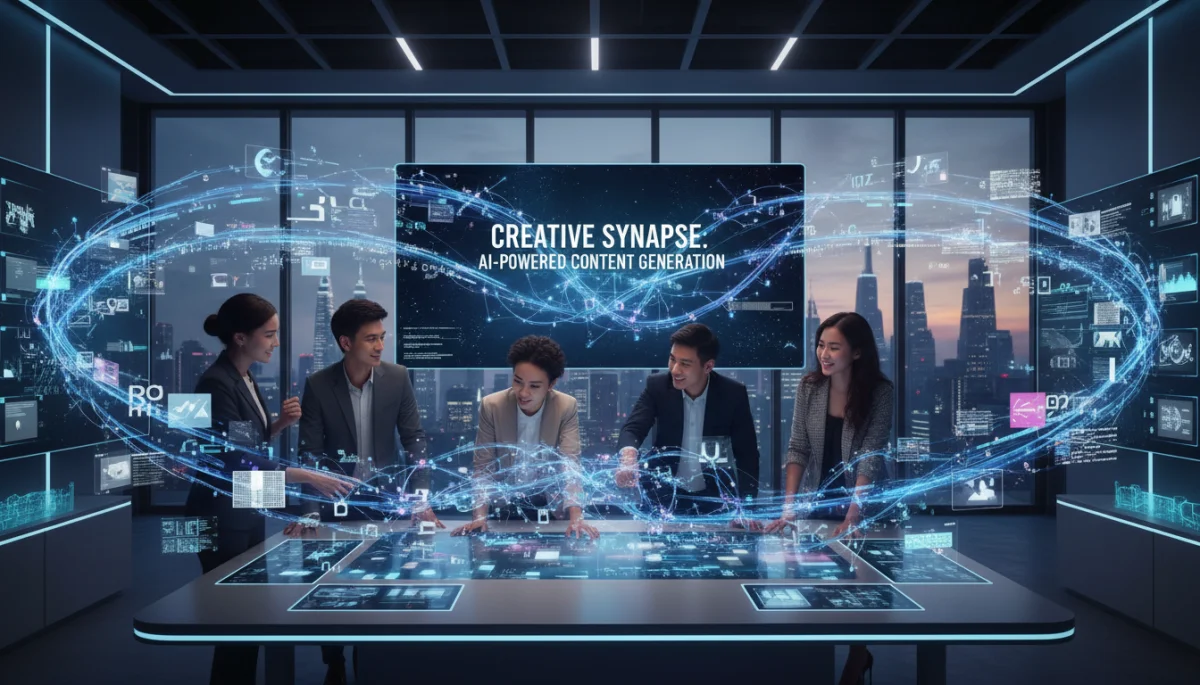
One of the most significant impacts of generative AI will be its ability to deliver hyper-personalized experiences to individual consumers. Traditional personalization often relies on segmentation and rule-based systems, but generative AI takes this to an entirely new level by creating unique content and interactions for each user.
Imagine every email, every ad, and every website interaction being dynamically generated to perfectly match a user’s current intent, preferences, and journey stage. This isn’t just about inserting a name into an email; it’s about crafting the entire message, visual, and call-to-action specifically for that person, in real-time.
Tailoring customer journeys with AI
Generative AI will enable marketers to map and adapt customer journeys with incredible precision, responding to micro-moments and evolving needs.
- Dynamic Ad Creatives: AI can generate multiple versions of an ad creative, testing and optimizing them on the fly to show the most effective variant to each user based on their historical data and real-time behavior.
- Personalized Landing Pages: Website content and layout can be customized for individual visitors, presenting information and offers most relevant to them upon arrival.
- Conversational AI Assistants: Chatbots and virtual assistants powered by generative AI will provide more natural, human-like interactions, answering complex queries and guiding users through sales funnels with personalized recommendations.
This level of personalization fosters deeper engagement, builds stronger brand loyalty, and ultimately drives higher conversion rates by making every customer feel uniquely understood and valued. The era of one-size-fits-all marketing is rapidly fading.
Optimizing Campaign Performance and Strategy
Beyond content creation and personalization, generative AI will revolutionize how digital marketing campaigns are planned, executed, and optimized. Its analytical capabilities, combined with its ability to generate hypotheses and solutions, will empower marketers with unprecedented strategic insights.
AI can analyze vast amounts of data—customer behavior, market trends, competitor strategies, and campaign performance—to identify patterns and predict outcomes that human analysis alone might miss. This predictive power allows for proactive adjustments and more effective resource allocation.
AI-driven insights and automation
The impact on campaign optimization will be multifaceted, touching various aspects of the marketing funnel.
- Predictive Analytics: Generative AI will forecast campaign effectiveness, identify optimal spending across channels, and predict customer lifetime value, enabling smarter budget allocation.
- A/B Testing on Steroids: Instead of manually testing a few variants, AI can generate and test thousands of content and creative permutations simultaneously, rapidly identifying winning combinations.
- Real-time Bid Management: Programmatic advertising will become even more sophisticated, with AI dynamically adjusting bids and targeting parameters in real-time to maximize ROI.
The ability to continuously learn and adapt makes generative AI an invaluable asset for achieving superior campaign performance, ensuring marketing efforts are always aligned with the most effective strategies.
Ethical Considerations and the Human Element
While the benefits of generative AI are immense, its widespread adoption also brings forth crucial ethical considerations and the need to preserve the human element in marketing. Issues such as data privacy, algorithmic bias, and the potential for misinformation must be carefully addressed.
Marketers will need to establish clear guidelines and oversight mechanisms to ensure AI tools are used responsibly and ethically. Transparency with consumers about AI-generated content and interactions will be paramount for maintaining trust.
Navigating the ethical landscape
Responsible implementation of generative AI requires a thoughtful approach to potential pitfalls.
- Algorithmic Bias: Ensuring AI models are trained on diverse and unbiased data sets to prevent discriminatory outputs in targeting or content generation.
- Data Privacy: Adhering to strict data protection regulations and ensuring consumer data used by AI is handled securely and transparently.
- Authenticity and Trust: Striking a balance between AI-generated content and maintaining a genuine brand voice that resonates with human values and emotions.
Ultimately, the role of the human marketer will evolve, not diminish. Instead of being replaced, marketers will become curators, strategists, and ethical guardians, leveraging AI as a powerful co-pilot rather than a replacement.
The Evolving Role of the Digital Marketer
As generative AI assumes more operational tasks, the skills required for digital marketers will shift dramatically. The emphasis will move from execution to strategy, critical thinking, data interpretation, and creative direction. Marketers will need to understand how to effectively prompt and guide AI tools to achieve desired outcomes.
This transformation demands a new set of competencies: data literacy, prompt engineering, ethical AI understanding, and an enhanced focus on human psychology and emotional connection. The future marketer will be less of a doer and more of a conductor, orchestrating AI-powered symphonies of engagement.
New skill sets for the AI era
Preparing for 2027 means embracing continuous learning and adapting to new technological paradigms.
- Prompt Engineering: The ability to craft effective queries and instructions for generative AI to produce high-quality, relevant outputs.
- Data Interpretation: Understanding and acting upon the insights provided by AI, rather than just collecting raw data.
- Strategic Oversight: Developing overarching marketing strategies that effectively integrate AI capabilities to achieve business objectives.
The digital marketer of 2027 will be a hybrid professional, deeply knowledgeable in both marketing principles and AI capabilities, capable of harnessing technology to unlock new levels of creativity and efficiency.
Challenges and Adaptation for US Businesses
The rapid integration of generative AI presents both immense opportunities and significant challenges for US businesses. Adapting to this new technological frontier requires investment, strategic planning, and a willingness to rethink traditional marketing paradigms. Companies that embrace this change proactively will gain a significant competitive edge.
Key challenges include the cost of implementation, the need for skilled talent, and overcoming organizational inertia. Businesses must also navigate the dynamic regulatory landscape surrounding AI and data usage, ensuring compliance and building consumer trust in an increasingly AI-driven environment.
Overcoming implementation hurdles
Successful adoption of generative AI will hinge on how effectively businesses address these critical areas.
- Investment in Technology: Allocating resources for AI tools, infrastructure, and potentially custom model development.
- Talent Development: Training existing marketing teams and recruiting new talent with AI-specific skills to manage and leverage these technologies.
- Change Management: Fostering a culture of innovation and adaptability within the organization to embrace new workflows and AI-driven processes.
Ultimately, the businesses that will thrive by 2027 are those that view generative AI not as a threat, but as a catalyst for innovation, efficiency, and a deeper, more meaningful connection with their customers. Proactive adaptation is not just an advantage; it’s a necessity.
| Key Aspect | Impact by 2027 |
|---|---|
| Content Creation | Automated generation of diverse, high-volume content (text, visuals, audio). |
| Personalization | Hyper-tailored customer experiences across all touchpoints in real-time. |
| Campaign Optimization | AI-driven insights for predictive analytics and real-time ad adjustments. |
| Marketer’s Role | Shift to strategic oversight, ethical guidance, and prompt engineering. |
Frequently Asked Questions About Generative AI in Marketing
Generative AI is expected to significantly enhance content quality by enabling rapid iteration and optimization. It can produce diverse drafts, allowing human marketers to refine and elevate the final output, ensuring higher relevance and engagement while maintaining brand voice and accuracy. This collaboration fosters both quantity and quality.
No, generative AI is unlikely to fully replace human digital marketers by 2027. Instead, it will augment their capabilities, automating repetitive tasks and providing advanced insights. Marketers will evolve into strategists, curators, and ethical overseers, focusing on creative direction, emotional intelligence, and complex decision-making that AI cannot replicate.
Key ethical concerns include algorithmic bias, which can lead to discriminatory targeting or content, and data privacy issues related to how consumer data is used for AI training. There are also concerns about maintaining authenticity in brand communication and preventing the spread of misinformation through AI-generated content. Transparency is crucial.
Businesses should prepare by investing in AI tools and infrastructure, upskilling their marketing teams in AI literacy and prompt engineering, and fostering a culture of innovation. Developing clear ethical guidelines for AI use and focusing on data governance will also be essential to ensure responsible and effective adoption. Proactive planning is key.
Personalization will reach unprecedented levels with generative AI. It will enable hyper-tailored content, ads, and customer interactions for individual users in real-time. This goes beyond basic segmentation, creating truly unique experiences that adapt dynamically to user behavior and preferences, fostering deeper engagement and significantly improving conversion rates.
Conclusion
The trajectory of generative AI marketing in the US by 2027 points towards a revolutionary transformation, not just an incremental change. From automating content creation and enabling hyper-personalization to optimizing complex campaign strategies, AI will redefine efficiency and effectiveness in digital marketing. While challenges related to ethics and adaptation remain, the overarching message is clear: businesses and marketers who embrace and strategically integrate generative AI will be at the forefront of this new digital era, unlocking unparalleled opportunities for growth and innovation. The future of marketing is intelligent, adaptive, and profoundly human-augmented.
