The Future of Work: 4 AI Tools Boosting US Productivity by 10% This Year

Anúncios
AI-powered tools are fundamentally reshaping the American workplace, with four key innovations poised to deliver a significant 10% increase in US productivity this year, streamlining tasks and empowering a more efficient workforce.
Anúncios
The Future of Work: 4 AI-Powered Tools Boosting US Productivity by 10% This Year
The landscape of the American workforce is undergoing a profound transformation, driven by the relentless advancement of artificial intelligence. Experts predict that The Future of Work: 4 AI-Powered Tools Boosting US Productivity by 10% This Year is not just a bold statement, but a tangible reality that is already beginning to unfold. This shift promises to redefine how businesses operate, how employees engage with their tasks, and ultimately, how the nation’s economic output is measured.
The AI Revolution in the American Workplace
The integration of artificial intelligence into daily business operations is no longer a futuristic concept; it’s a present-day imperative. Across various sectors in the United States, companies are leveraging AI to automate repetitive tasks, analyze vast datasets, and provide insights that were previously unattainable. This revolution is fundamentally altering job roles, demanding new skill sets, and, most importantly, significantly enhancing overall productivity.
Anúncios
Understanding the scope of this transformation requires looking beyond simple automation. AI tools are becoming intelligent collaborators, capable of learning, adapting, and even predicting outcomes. This capability allows businesses to optimize resources, reduce operational costs, and innovate at an unprecedented pace. The impact on the US economy is projected to be substantial, with a tangible boost in productivity expected to materialize this year.
Redefining Efficiency with AI Automation
AI’s core strength lies in its ability to handle routine and data-intensive tasks with unparalleled speed and accuracy. This frees human employees to focus on more complex, creative, and strategic endeavors, ultimately leading to a more engaged and productive workforce. The ripple effect extends from small businesses to large corporations, creating a more dynamic and competitive market.
- Task Automation: AI handles repetitive administrative duties, data entry, and scheduling, minimizing human error and maximizing speed.
- Data Analysis: Advanced algorithms process complex datasets to identify trends, predict market shifts, and inform strategic decisions.
- Resource Optimization: AI allocates resources more effectively, from supply chain management to energy consumption, leading to significant savings.
- Enhanced Decision-Making: Real-time insights from AI-driven analytics empower leaders to make faster, more informed choices.
The shift towards AI-driven efficiency is not merely about doing more with less; it’s about doing things better. By offloading mundane tasks, employees can dedicate their cognitive capacities to problem-solving, innovation, and client engagement, aspects that truly drive business growth and employee satisfaction. This fundamental change in workflow is a cornerstone of the projected productivity increase.
AI-Powered Tool 1: Advanced Predictive Analytics Platforms
Predictive analytics, supercharged by AI, represents a monumental leap in business intelligence. These platforms go beyond traditional data analysis, using machine learning algorithms to forecast future trends and behaviors with remarkable accuracy. For US businesses, this means being able to anticipate market changes, customer needs, and operational challenges before they fully materialize.
The ability to look into the future, even with a degree of uncertainty, provides a significant competitive advantage. Companies can proactively adjust strategies, optimize inventory, personalize customer experiences, and mitigate risks. This foresight translates directly into improved operational efficiency and, consequently, higher productivity across various departments.
Forecasting Business Outcomes with Precision
Traditional forecasting methods often rely on historical data and human intuition, which can be prone to biases and limitations. AI-powered predictive analytics, however, can process vast quantities of diverse data points, including real-time information, to create dynamic and highly accurate models. This precision allows for more effective resource allocation and strategic planning.
- Sales Forecasting: Predicts future sales volumes based on historical data, economic indicators, and seasonal trends, optimizing inventory and marketing efforts.
- Customer Behavior Prediction: Identifies purchasing patterns and preferences, enabling personalized marketing campaigns and improved customer retention.
- Risk Management: Anticipates potential operational disruptions, financial risks, and cybersecurity threats, allowing for proactive mitigation strategies.
- Supply Chain Optimization: Forecasts demand fluctuations to ensure optimal stock levels, reducing waste and improving delivery times.
The impact of these platforms is profound. By providing actionable insights into future scenarios, businesses can move from reactive problem-solving to proactive strategic development. This forward-looking approach minimizes wasted effort and capital, directly contributing to the projected 10% productivity boost across the US economy.
AI-Powered Tool 2: Intelligent Automation and Robotic Process Automation (RPA)
Intelligent Automation (IA) and RPA are at the forefront of streamlining operational workflows within US organizations. These technologies automate rule-based, repetitive tasks that typically consume significant human effort and time. Unlike simple macros, IA and RPA leverage AI to handle more complex scenarios, adapt to changes, and even learn from interactions.
From processing invoices and managing customer inquiries to onboarding employees and generating reports, these tools are freeing up countless hours that human workers can then redirect towards more value-added activities. The result is a significant increase in processing speed, accuracy, and overall operational efficiency, which is critical for boosting national productivity.
Streamlining Operations with Digital Workers
The deployment of RPA bots acts like having a tireless digital workforce that can execute tasks around the clock without errors. When combined with AI, these bots gain cognitive capabilities, allowing them to interpret unstructured data, make decisions, and even interact with customers. This synergy creates a powerful force for efficiency.
- Financial Operations: Automates invoice processing, expense reporting, and reconciliation, reducing manual errors and accelerating financial close cycles.
- Customer Service: AI-powered chatbots and virtual assistants handle routine customer queries, resolve common issues, and route complex cases to human agents.
- Human Resources: Automates employee onboarding, payroll processing, and benefits administration, improving efficiency and compliance.
- Data Migration: Facilitates seamless data transfer between systems, reducing manual effort and ensuring data integrity during system upgrades or integrations.
The adoption of IA and RPA is not just about cost reduction; it’s about creating a more agile and responsive business environment. By automating the mundane, businesses can reallocate human talent to innovation, strategic planning, and building stronger customer relationships, driving a substantial portion of the expected productivity growth.
AI-Powered Tool 3: Advanced Natural Language Processing (NLP) Assistants
Natural Language Processing (NLP) has evolved dramatically, giving rise to sophisticated AI assistants that can understand, interpret, and generate human language with impressive accuracy. These tools are transforming communication, content creation, and information retrieval across various industries in the US, acting as powerful accelerators for knowledge workers.
From generating detailed reports and drafting emails to summarizing lengthy documents and providing instant answers to complex queries, NLP assistants are becoming indispensable. They reduce the time spent on administrative communication and research, allowing professionals to focus on the core aspects of their jobs, thereby enhancing their individual and collective output.
Enhancing Communication and Content Creation
The ability of NLP tools to interact with human language enables them to perform a wide array of tasks that traditionally required significant human cognitive effort. This includes not only understanding what is said or written but also responding in a contextually relevant and coherent manner, making them powerful allies in the workplace.
- Content Generation: AI writers assist in drafting marketing copy, technical documentation, and internal communications, speeding up content pipelines.
- Information Retrieval: Smart search engines and knowledge management systems leverage NLP to quickly find relevant information from vast databases.
- Meeting Transcription & Summarization: AI tools transcribe meetings in real-time and generate concise summaries, saving hours of manual note-taking.
- Sentiment Analysis: Analyzes customer feedback and social media posts to gauge public opinion and inform product development or marketing strategies.
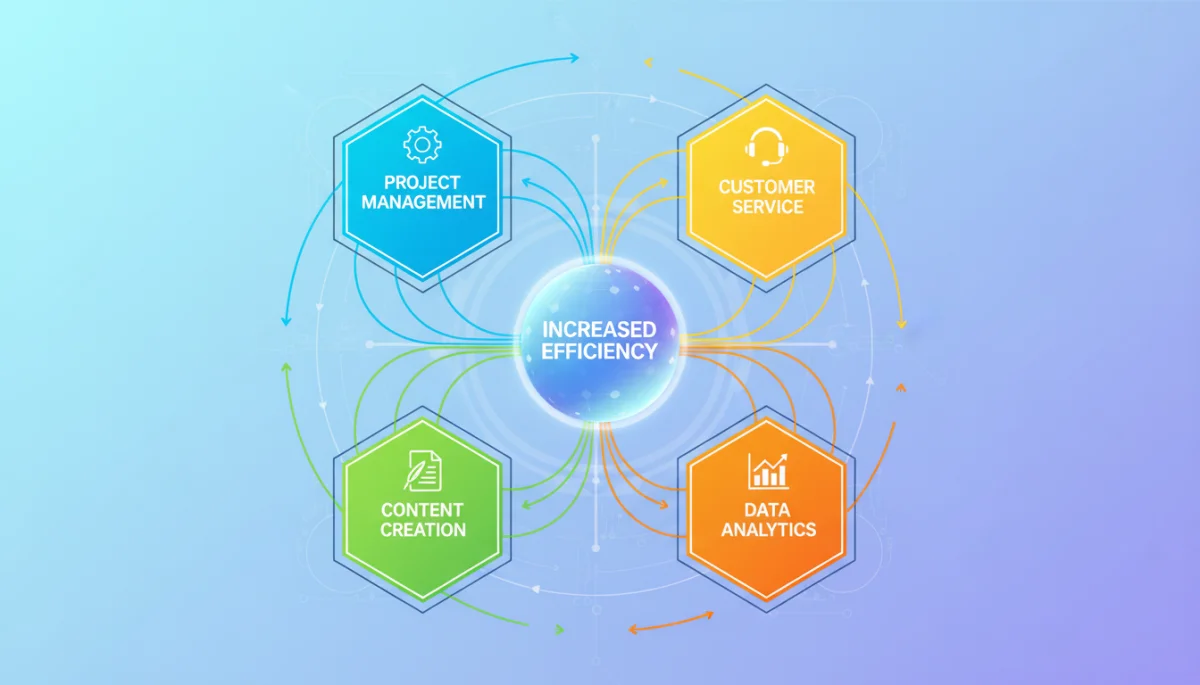
The impact of advanced NLP assistants extends beyond mere convenience; they are fundamentally changing how knowledge is created, shared, and consumed. By reducing the friction in communication and information handling, these tools are directly contributing to the projected 10% productivity increase by making every interaction more efficient and impactful.
AI-Powered Tool 4: Personalized Learning and Development Platforms
In a rapidly evolving job market, continuous learning is paramount. AI-powered personalized learning and development platforms are revolutionizing how US employees acquire new skills and adapt to technological changes. These platforms use AI to assess individual learning styles, knowledge gaps, and career goals, then curate tailored educational content and pathways.
This personalized approach ensures that training is highly relevant and effective, maximizing the return on investment for both employees and employers. By upskilling the workforce more efficiently, these platforms directly contribute to increased productivity, as employees are better equipped to handle new technologies and more complex tasks.
Tailoring Skill Development for the Modern Workforce
Gone are the days of one-size-fits-all training programs. AI platforms analyze performance data, industry trends, and individual preferences to recommend courses, modules, and practical exercises that are most beneficial for each employee. This adaptive learning environment fosters continuous growth and ensures the workforce remains competitive.
- Skill Gap Identification: AI assesses current skills against industry demands and identifies specific areas where employees need development.
- Customized Learning Paths: Generates personalized curricula, recommending courses and resources based on individual roles, goals, and learning pace.
- Adaptive Assessments: Provides real-time feedback and adjusts difficulty levels of quizzes and exercises to optimize knowledge retention.
- Career Progression Guidance: Recommends career paths and necessary skill acquisitions for advancement, aligning individual growth with organizational needs.
By empowering employees with the exact skills they need, precisely when they need them, these AI-powered platforms are a crucial driver of productivity. A highly skilled and adaptable workforce is better prepared to tackle new challenges and leverage emerging technologies, solidifying their role in boosting the overall output of the US economy.
Overcoming Challenges and Ethical Considerations
While the benefits of AI in boosting US productivity are undeniable, the journey is not without its challenges. Implementing AI tools effectively requires careful planning, significant investment, and a commitment to continuous adaptation. Furthermore, ethical considerations surrounding data privacy, algorithmic bias, and job displacement must be addressed proactively to ensure a just and equitable transition.
Companies must invest in retraining programs for employees whose roles might be impacted by automation, focusing on developing skills that complement AI technologies rather than compete with them. Transparent AI governance frameworks are also essential to build trust and ensure that these powerful tools are used responsibly and ethically. Addressing these challenges head-on will be crucial for realizing the full potential of AI in the workplace.
Navigating the AI Integration Landscape
The successful integration of AI into existing business processes requires more than just purchasing software. It demands a cultural shift, robust infrastructure, and a clear understanding of both the opportunities and the risks involved. Proactive management of these factors will determine the extent to which organizations can truly harness AI’s power.
- Data Security: Implementing strong cybersecurity measures to protect sensitive data processed by AI systems.
- Ethical AI Frameworks: Developing guidelines to ensure AI algorithms are fair, transparent, and unbiased in their decision-making.
- Workforce Retraining: Investing in upskilling and reskilling programs to prepare employees for new roles alongside AI.
- Regulatory Compliance: Staying abreast of evolving data privacy laws and AI regulations to ensure legal and ethical operation.
By thoughtfully addressing these multifaceted challenges, businesses can ensure that the adoption of AI tools leads to sustainable productivity gains without compromising ethical standards or employee well-being. This balanced approach is key to securing a prosperous future for the American workforce powered by intelligent technologies.
| Key AI Tool | Productivity Impact |
|---|---|
| Predictive Analytics | Enables proactive decision-making and resource optimization, reducing waste and improving efficiency. |
| Intelligent Automation (RPA) | Automates repetitive tasks, freeing human employees for higher-value, strategic work. |
| Natural Language Processing (NLP) | Streamlines communication, content creation, and information retrieval, enhancing knowledge worker output. |
| Personalized Learning Platforms | Efficiently upskills workforce, ensuring employees have relevant competencies for evolving job roles. |
Frequently Asked Questions About AI and Productivity
AI tools like predictive analytics, intelligent automation, NLP assistants, and personalized learning platforms will collectively enhance efficiency. They automate tasks, provide actionable insights, streamline communication, and upskill the workforce, leading to a significant increase in output per worker across various sectors.
Yes, many AI tools are now offered as cloud-based services with scalable pricing models, making them increasingly accessible to SMBs. This democratization of AI technology allows smaller companies to leverage advanced capabilities without substantial upfront infrastructure investments, fostering broader adoption.
Key challenges include data privacy concerns, integrating AI with existing legacy systems, managing potential job displacement through reskilling programs, and ensuring ethical AI use. Overcoming these requires strategic planning, investment in training, and robust governance frameworks.
These platforms use AI to identify individual skill gaps and deliver tailored training. By ensuring employees gain relevant competencies efficiently, they become more effective in their roles, adapt faster to new technologies, and contribute more significantly to organizational goals, boosting overall output.
While some roles may be automated, AI is more likely to transform existing jobs and create new ones. The focus is shifting towards human-AI collaboration, requiring employees to develop new skills. Strategic retraining and upskilling initiatives are crucial to manage this transition effectively.
Conclusion
The integration of advanced AI-powered tools is not merely an incremental improvement but a foundational shift poised to deliver a remarkable 10% boost in US productivity this year. From sophisticated predictive analytics that offer unparalleled foresight to intelligent automation streamlining mundane tasks, and from advanced NLP assistants enhancing communication to personalized learning platforms upskilling the workforce, these innovations are collectively redefining efficiency. While challenges related to ethics, data security, and workforce adaptation remain, proactive engagement with these issues will ensure that the American economy fully harnesses the transformative power of AI, ushering in an era of unprecedented growth and innovation.
