Space Economy 2.0: US Business Opportunities in the Next Decade
Anúncios
The Space Economy 2.0 offers unparalleled commercial opportunities for US businesses in the coming decade, particularly in advanced satellite technology, burgeoning space tourism, and essential in-orbit servicing and manufacturing.
Anúncios
The cosmos, once the exclusive domain of governments, is rapidly transforming into a dynamic commercial frontier. The rise of the US space economy opportunities is not just a scientific marvel but a fertile ground for American ingenuity and enterprise. As technology advances and access to space becomes more democratized, what groundbreaking commercial avenues will emerge for US businesses in the next ten years?
The Dawn of Space Economy 2.0: A New Frontier for Commerce
The space industry is undergoing a profound metamorphosis, shifting from government-led missions to a vibrant commercial ecosystem. This transition, often dubbed Space Economy 2.0, is characterized by private sector innovation, reduced launch costs, and a broader range of accessible space-based services. For US businesses, this era represents an unprecedented chance to pioneer new markets and redefine existing ones, leveraging capabilities that were unimaginable just a few decades ago.
Anúncios
The foundational elements driving this growth include advancements in rocket technology, miniaturization of satellites, and increased private investment. These factors collectively lower barriers to entry, making space a more viable and attractive arena for commercial ventures. Understanding these underlying shifts is crucial for any business looking to capitalize on this evolving landscape.
Technological Advancements Fueling Growth
Several key technological breakthroughs are accelerating the pace of commercialization in space. Reusable rocket technology, championed by companies like SpaceX, has drastically cut the cost of launching payloads into orbit, making frequent access to space economically feasible for a wider array of businesses.
- Reusable Launch Vehicles: Significant cost reductions and increased launch frequency.
- Small Satellite Revolution: Enables diverse applications and constellations at lower costs.
- Advanced Propulsion Systems: Enhances mission capabilities and extends operational lifespans.
- Artificial Intelligence and Automation: Improves operational efficiency and data analysis in space.
These innovations are not isolated; they interact synergistically to create a robust foundation for new commercial models. The ability to deploy numerous small satellites, for instance, has unlocked new possibilities for global connectivity and Earth observation, which in turn fuels demand for more efficient launch services.
Investment and Policy Landscape
The investment climate for space ventures is exceptionally strong, with venture capital pouring into startups and established companies alike. This financial backing is complemented by supportive government policies aimed at fostering private sector growth and maintaining US leadership in space. Regulatory frameworks are also adapting to accommodate the rapid pace of innovation, creating a more predictable environment for businesses.
The Space Economy 2.0 is not just about technology; it’s about a complete paradigm shift in how humanity interacts with and utilizes space for economic gain. US businesses are uniquely positioned to lead this charge, given the nation’s historical expertise, technological prowess, and robust entrepreneurial spirit.
Opportunity 1: Advanced Satellite Services and Data Analytics
One of the most immediate and impactful commercial opportunities for US businesses lies in the expansion of advanced satellite services and the subsequent data analytics. As the number of satellites in orbit continues to grow, so does the volume and variety of data they collect. This data, ranging from high-resolution imagery to global connectivity metrics, holds immense value for a multitude of industries on Earth.
The demand for precise, timely, and comprehensive satellite data is escalating across sectors such as agriculture, environmental monitoring, urban planning, and defense. US companies can carve out significant market shares by developing sophisticated satellite constellations and, crucially, by creating innovative platforms and algorithms to process and interpret this vast influx of information.
Next-Generation Earth Observation
Earth observation satellites are no longer just for weather forecasting. New constellations are offering unprecedented detail and frequency, enabling real-time monitoring of everything from crop health to infrastructure development. Businesses can specialize in providing tailored data solutions that offer actionable insights to specific industries.
- Precision Agriculture: Monitoring crop health, soil moisture, and yield predictions.
- Environmental Monitoring: Tracking deforestation, pollution, and climate change impacts.
- Disaster Response: Providing rapid assessment and mapping of disaster-affected areas.
- Resource Management: Overseeing water resources, mining operations, and energy infrastructure.
The ability to deliver this information quickly and in an easily digestible format is paramount. This creates opportunities not only for satellite operators but also for software developers and data scientists who can build the tools necessary to unlock the full potential of satellite imagery and other remote sensing data.
Global Satellite Internet Connectivity
The pursuit of global internet connectivity from space is another monumental opportunity. Projects like Starlink demonstrate the immense potential to provide high-speed, low-latency internet access to underserved regions worldwide. For US businesses, this means not only building and launching these constellations but also developing the ground infrastructure, user terminals, and service packages.
Beyond direct consumer internet, satellite-based connectivity is vital for the Internet of Things (IoT) in remote areas, maritime operations, and aviation. Companies specializing in secure satellite communications, network management, and hybrid terrestrial-satellite systems will find a booming market in the coming decade. The sheer scale of this endeavor requires significant investment and innovation, positioning US companies at the forefront of this global digital transformation.
Opportunity 2: The Rise of Space Tourism and Commercial Human Spaceflight
What once seemed like science fiction is rapidly becoming a commercial reality: space tourism. This nascent but rapidly expanding sector offers a unique blend of adventure, luxury, and technological prowess. For US businesses, this presents a multi-faceted opportunity, ranging from suborbital joyrides to orbital hotel stays and beyond. The market for space tourism is driven by a growing number of high-net-worth individuals willing to pay a premium for this unparalleled experience.
Beyond the direct experience of spaceflight, there are numerous ancillary services and supporting industries that will flourish. This includes specialized training, bespoke equipment, medical support, and even space-themed entertainment and education. The commercial human spaceflight sector is not just about ferrying passengers; it’s about creating an entirely new experiential economy.
Suborbital and Orbital Tourism
Current offerings primarily focus on suborbital flights, providing a few minutes of weightlessness and stunning views of Earth. Companies like Virgin Galactic are pioneering this segment. However, the next decade will likely see an increase in orbital tourism, offering longer stays and more extensive experiences, potentially including visits to private space stations.
The development of these capabilities requires significant investment in spacecraft design, safety protocols, and operational logistics. US companies with expertise in aerospace engineering, hospitality, and high-end experiential travel are particularly well-suited to capitalize on these trends. The safety and reliability of these services will be paramount, demanding rigorous engineering and operational excellence.
Space Habitats and Infrastructure
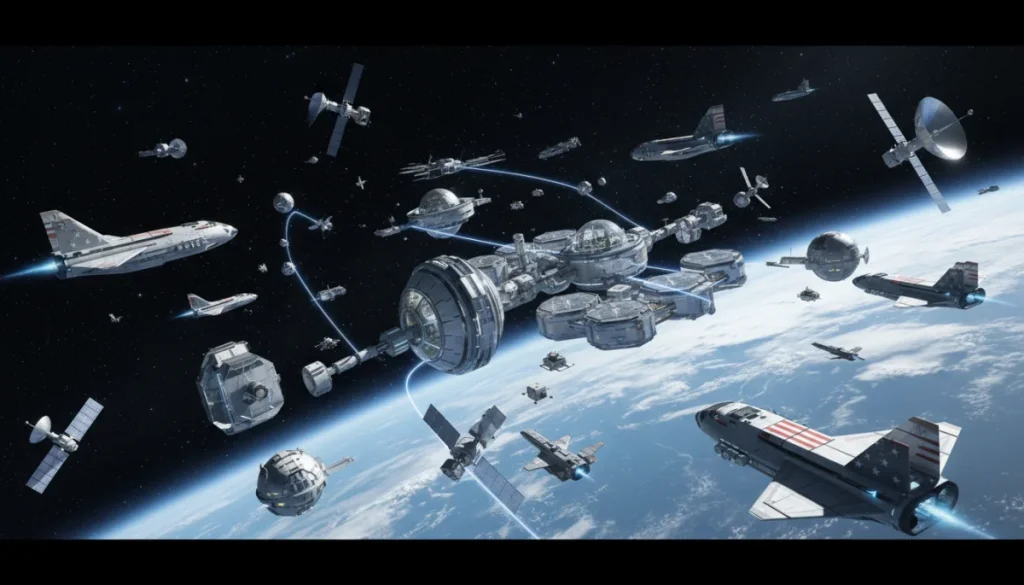
As space tourism evolves, the need for orbital habitats and supporting infrastructure will become critical. This includes everything from modules for space stations to specialized vehicles for lunar or Martian excursions. US businesses can lead in designing, manufacturing, and operating these complex systems, creating entirely new supply chains and service models.
The concept of ‘space hotels’ or research outposts that double as tourist destinations could become a reality within the next decade. These ventures will require innovative approaches to life support, waste management, and power generation in microgravity environments. The opportunities extend to architectural firms, materials science companies, and even food service providers specializing in space-appropriate cuisine.
Opportunity 3: In-Orbit Servicing, Assembly, and Manufacturing (ISAM)
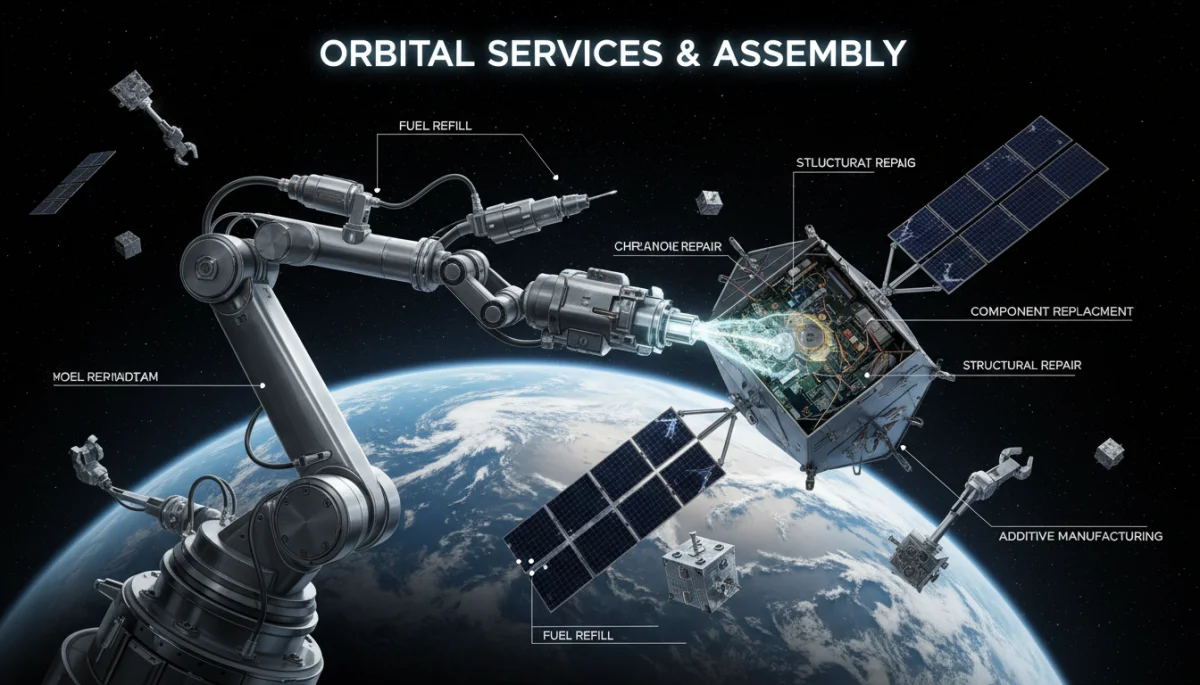
The third major commercial opportunity for US businesses in the Space Economy 2.0 centers around In-orbit Servicing, Assembly, and Manufacturing (ISAM). This sector is poised to revolutionize how we manage, extend the life of, and even build assets in space. Instead of launching entirely new satellites when one malfunctions or runs out of fuel, ISAM capabilities allow for repairs, refueling, and upgrades directly in orbit.
This capability promises significant cost savings, reduced space debris, and enhanced operational flexibility for both government and commercial satellite operators. US companies that can develop and deploy robotic systems, advanced materials, and autonomous manufacturing processes for space will find themselves at the forefront of this transformative industry.
Satellite Life Extension and Repair
The ability to extend the operational life of expensive satellites through refueling or repair offers an enormous value proposition. Many satellites are decommissioned not due to fundamental failure, but due to running out of propellant or experiencing minor component issues. ISAM services can address these problems, keeping valuable assets operational for longer and delaying the need for costly replacements.
- Refueling Services: Extending mission life by replenishing propellant.
- Component Replacement: Swapping out faulty parts with robotic precision.
- Orbital Relocation: Moving satellites to new positions for different mission profiles.
- Debris Removal: Actively removing defunct satellites and space junk to ensure orbital safety.
This market segment requires highly specialized robotic systems, advanced navigation and docking technologies, and sophisticated mission planning. US companies with expertise in robotics, AI, and precision engineering are well-positioned to lead in this area, developing the tools and techniques necessary for reliable in-orbit operations.
In-Orbit Assembly and Manufacturing
Beyond servicing existing assets, the ultimate goal of ISAM is to enable the assembly and manufacturing of large structures directly in space. This would allow for the construction of much larger telescopes, power stations, or habitats that would be impossible to launch fully assembled from Earth. It also opens the door to using extraterrestrial resources for manufacturing, potentially reducing reliance on Earth-based supply chains.
Imagine massive solar power satellites beaming energy back to Earth, or vast observatories built with components assembled hundreds of miles above our planet. These ambitious projects will require breakthroughs in automated assembly, additive manufacturing (3D printing) in space, and the development of space-hardened materials. US businesses that invest in these cutting-edge technologies now will be vital players in shaping the future of space infrastructure.
Navigating the Regulatory and Ethical Landscape
As the Space Economy 2.0 flourishes, so too does the complexity of its regulatory and ethical considerations. For US businesses, understanding and actively engaging with these evolving frameworks is not merely a compliance issue but a strategic imperative. The ‘wild west’ days of space are giving way to a more structured environment, driven by international treaties, national laws, and emerging industry standards.
Navigating this landscape requires foresight, legal expertise, and a commitment to responsible space operations. Companies that prioritize ethical practices and contribute to the development of clear, fair regulations will foster trust and ensure long-term sustainability in this rapidly expanding domain.
Developing Robust Regulatory Frameworks
The US government, through agencies like the FAA, FCC, and NASA, is actively working to update and create new regulations that keep pace with technological advancements. These frameworks address critical areas such as launch and re-entry licensing, spectrum allocation for satellite communications, and orbital debris mitigation. Businesses must stay abreast of these changes to ensure their operations remain legal and viable.
- Launch and Re-entry Licensing: Ensuring safety and adherence to international obligations.
- Spectrum Management: Allocating frequencies for satellite communication to prevent interference.
- Orbital Debris Mitigation: Implementing strategies to reduce space junk and promote sustainable operations.
- International Cooperation: Aligning national policies with global agreements like the Outer Space Treaty.
Proactive engagement with policymakers and industry consortia can help shape regulations that are both effective and conducive to innovation. This collaborative approach is essential for creating a stable and predictable operating environment for all stakeholders in the space economy.
Ethical Considerations and Sustainability
Beyond legality, ethical considerations play an increasingly important role. Issues such as the equitable use of space resources, the potential for space militarization, and the long-term environmental impact of increased space activity demand careful thought. US businesses have an opportunity to lead by example, adopting sustainable practices and advocating for ethical guidelines.
This includes designing satellites for deorbiting at the end of their lives, exploring ways to minimize light pollution from large constellations, and ensuring that space activities benefit all of humanity, not just a select few. Companies that integrate these ethical considerations into their business models will not only enhance their reputation but also contribute to a more responsible and sustainable future for space exploration and utilization.
The Future is Now: Preparing for Space Economy 2.0
The opportunities within the Space Economy 2.0 are vast and varied, promising significant growth for US businesses over the next decade. From advanced satellite services that revolutionize Earth-based industries to the thrilling prospect of commercial human spaceflight and the transformative potential of in-orbit servicing, assembly, and manufacturing, the possibilities are boundless. These aren’t distant dreams but tangible realities taking shape today.
For American enterprises, preparing for this future means fostering innovation, investing in cutting-edge research and development, and building strategic partnerships. It also requires a keen understanding of the evolving regulatory landscape and a commitment to ethical and sustainable practices. The businesses that embrace these challenges and opportunities will not only thrive but will also play a pivotal role in shaping humanity’s future in space.
The next decade will be defined by those who dare to look beyond Earth’s atmosphere for their next commercial venture. The competitive edge will belong to those who are agile, innovative, and willing to invest in the long-term vision of a thriving space-based economy. The time to engage with Space Economy 2.0 is now, ensuring US businesses remain at the forefront of this exciting new frontier.
| Key Opportunity | Brief Description |
|---|---|
| Advanced Satellite Services | Developing and utilizing next-gen satellite constellations for Earth observation, global internet, and data analytics. |
| Space Tourism & Commercial Human Spaceflight | Providing suborbital and orbital travel experiences, along with supporting infrastructure and services. |
| In-Orbit Servicing, Assembly, Manufacturing (ISAM) | Repairing, refueling, and assembling assets in space to extend life and build new structures. |
Frequently Asked Questions about the Space Economy
Space Economy 2.0 refers to the current phase of space commercialization, characterized by significant private sector involvement, reduced launch costs, and a broader array of commercial activities beyond traditional government missions, driving innovation and new market opportunities.
Satellite services will evolve significantly with next-generation constellations offering enhanced Earth observation capabilities, global high-speed internet, and advanced data analytics, providing critical insights for diverse industries and connecting remote areas worldwide.
Yes, space tourism is rapidly becoming a viable commercial opportunity. It encompasses suborbital and orbital flights, space habitats, and related services, catering to a growing market of individuals seeking unique experiential travel and opening new avenues for aerospace and hospitality businesses.
ISAM involves performing maintenance, repairs, refueling, and assembly of satellites and other structures directly in space. This capability extends the lifespan of assets, reduces space debris, and enables the construction of larger, more complex systems not feasible to launch from Earth.
Key challenges include navigating evolving regulatory frameworks, ensuring financial sustainability for long-term projects, managing technological risks, and adhering to ethical considerations and international treaties to promote responsible and equitable use of space resources.
Conclusion
The Space Economy 2.0 represents a pivotal moment for US businesses, offering a diverse array of commercial opportunities that promise to reshape global industries and redefine human interaction with the cosmos. The next decade will be characterized by unprecedented innovation in advanced satellite services, the flourishing of space tourism, and the transformative potential of in-orbit servicing, assembly, and manufacturing. Success in this new frontier will depend on a blend of technological prowess, strategic investment, and a commitment to navigating the complex regulatory and ethical dimensions of space. By embracing these challenges, US businesses are poised not only to achieve significant economic growth but also to lead the world into an exciting new era of space commercialization.
