Circular Economy: US Business Models Reducing Waste 20% Annually
Anúncios
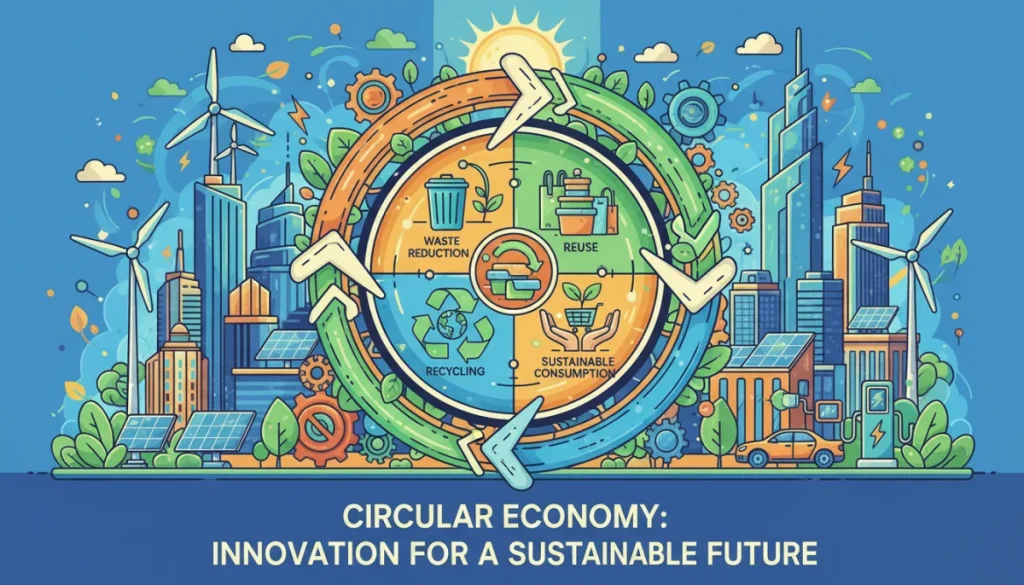
Innovative US business models are spearheading the circular economy, demonstrating remarkable success in waste reduction by an average of 20% annually, fostering both environmental stewardship and economic growth.
Anúncios
The concept of a linear economy, characterized by a ‘take-make-dispose’ approach, is increasingly unsustainable. However, a transformative shift is underway in the United States, with a growing number of enterprises embracing the circular economy. These forward-thinking businesses are not only redefining resource management but are also achieving significant waste reduction, often exceeding 20% annually. This article explores how The Circular Economy: 3 Innovative US Business Models Reducing Waste by 20% Annually are leading this charge, demonstrating a viable path to a more sustainable future.
Understanding the Circular Economy Paradigm
The circular economy represents a fundamental rethink of how products are designed, manufactured, used, and disposed of. It moves beyond traditional recycling, aiming to eliminate waste and pollution, circulate products and materials, and regenerate nature. This holistic approach seeks to keep resources in use for as long as possible, extract the maximum value from them while in use, then recover and regenerate products and materials at the end of each service life.
Anúncios
Unlike the linear model, which inherently generates waste at every stage, the circular economy is designed to be restorative and regenerative by intention. It emphasizes durability, reusability, repairability, and recyclability, ensuring that materials retain their value. This paradigm shift offers substantial environmental benefits, reducing the demand for virgin resources and minimizing landfill waste, while also presenting significant economic opportunities through new business models and job creation.
Core Principles of Circularity
At its heart, the circular economy is guided by several key principles that distinguish it from conventional economic models. These principles provide a framework for businesses to innovate and operate more sustainably.
- Design out Waste and Pollution: This principle focuses on proactive measures to prevent waste and pollution from being created in the first place, rather than managing it after it’s been generated.
- Keep Products and Materials in Use: Maximizing the lifespan of products and their components through reuse, repair, refurbishment, and remanufacturing is crucial.
- Regenerate Natural Systems: Moving beyond merely minimizing harm, this principle aims to actively improve and restore natural capital, for instance, by returning biological materials to the earth safely.
Embracing these principles allows companies to not only reduce their environmental footprint but also to enhance their resilience against resource scarcity and price volatility. It fosters innovation in product design, supply chain management, and consumption patterns, leading to more sustainable and profitable operations.
Model 1: Product-as-a-Service (PaaS) – Extending Product Lifecycles
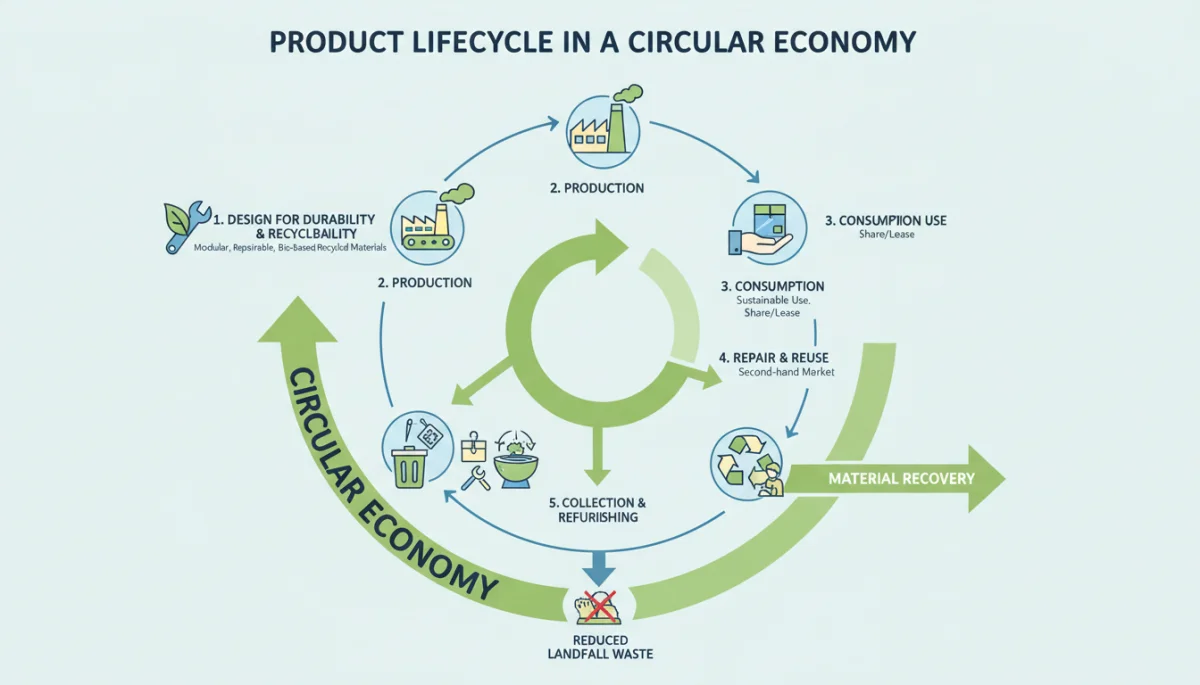
One of the most impactful business models driving the circular economy in the US is the Product-as-a-Service (PaaS) model. Instead of selling products outright, companies retain ownership and lease them to customers. This fundamentally alters the incentive structure, encouraging manufacturers to design for durability, repairability, and upgradability, as they are responsible for the product’s entire lifecycle. This model has shown remarkable success in reducing waste by keeping high-value items in circulation longer.
A prime example of PaaS contributing to The Circular Economy: 3 Innovative US Business Models Reducing Waste by 20% Annually is demonstrated by companies offering commercial lighting or carpet tiles as a service. Instead of businesses purchasing light fixtures or flooring, they pay for the illumination or floor covering as a utility. When a component fails or needs an upgrade, the provider replaces or repairs it, ensuring materials are recovered and reused rather than discarded. This significantly extends the functional life of products and minimizes material consumption.
Benefits of the PaaS Approach
The PaaS model offers a multitude of benefits for both businesses and consumers, solidifying its role in a sustainable future.
- Reduced Waste Generation: By maintaining ownership, companies are incentivized to design products that last longer and are easily repairable, leading to less waste ending up in landfills.
- Optimized Resource Use: Products are utilized more efficiently, often through shared access or by ensuring they are consistently in optimal working condition, reducing the need for new raw materials.
- New Revenue Streams: Companies can generate recurring revenue through subscriptions or service fees, fostering a more stable and predictable financial model.
- Enhanced Customer Relationships: Continuous interaction with customers for maintenance and upgrades builds stronger, long-term relationships and opportunities for tailored services.
Companies adopting PaaS often report substantial reductions in material waste and energy consumption. Their focus shifts from selling units to delivering performance and value over time, aligning economic success with environmental stewardship. This model proves that sustainability can be a powerful driver for business innovation and profitability.
Model 2: Industrial Symbiosis and By-product Valorization
Industrial symbiosis is another powerful model contributing to The Circular Economy: 3 Innovative US Business Models Reducing Waste by 20% Annually. This approach involves collaboration between different industries to transform one company’s waste or by-product into a valuable input for another. It effectively closes material loops within industrial ecosystems, drastically reducing the amount of waste sent to landfills and decreasing the demand for virgin resources.
In the US, industrial parks are emerging where companies are strategically co-located to facilitate the exchange of materials, energy, and water. For instance, a power plant’s waste heat might be used by a nearby greenhouse, or the ash from a factory could be repurposed as a raw material in construction. This interconnectedness creates a more resilient and resource-efficient industrial landscape, moving away from isolated operations to integrated, symbiotic systems.
Creating Value from ‘Waste’
The core of by-product valorization lies in seeing waste not as an end-product, but as an untapped resource. This requires innovative thinking and often, technological advancements to process and refine these materials into usable forms.
- Material Exchange Platforms: Digital platforms are emerging that connect businesses with surplus materials to those that can utilize them, creating efficient marketplaces for industrial by-products.
- Cross-Industry Collaboration: Fostering partnerships between seemingly disparate industries to identify synergistic opportunities for waste and resource exchange.
- Technological Innovation: Investing in research and development to find new ways to process and upgrade waste streams into high-value products.
The economic benefits are significant, including reduced waste disposal costs, lower raw material expenses, and the creation of new revenue streams from former waste. Environmentally, it leads to a substantial decrease in landfill volume and greenhouse gas emissions. This model highlights the potential for industries to collaborate for mutual benefit, turning environmental challenges into economic opportunities.
Model 3: Reverse Logistics and Remanufacturing Ecosystems
The development of robust reverse logistics and remanufacturing ecosystems is a critical component of The Circular Economy: 3 Innovative US Business Models Reducing Waste by 20% Annually. Reverse logistics refers to the process of moving goods from their typical final destination for the purpose of capturing value or proper disposal. Remanufacturing takes this a step further, restoring used products to ‘like-new’ condition, often with warranties equivalent to new products.
In the US, sectors such as automotive parts, electronics, and industrial machinery are increasingly adopting remanufacturing. Companies establish systems to collect used or end-of-life products from customers, disassemble them, clean and inspect components, replace worn parts, and reassemble them into fully functional units. This practice significantly reduces the need for new materials and energy, extending the economic life of products well beyond their initial use phase.
Key Elements of Successful Remanufacturing
Establishing an effective remanufacturing operation requires careful planning and investment in several key areas.
- Efficient Collection Systems: Developing easy and accessible channels for customers to return used products or components.
- Advanced Sorting and Disassembly: Utilizing technology and skilled labor to efficiently sort, disassemble, and assess the condition of returned items.
- Quality Control and Certification: Implementing rigorous testing and quality assurance processes to ensure remanufactured products meet or exceed original specifications.
- Market Development: Educating consumers and businesses about the value and reliability of remanufactured goods to build market demand.
The environmental advantages of remanufacturing are substantial, including significant reductions in raw material extraction, energy consumption, and greenhouse gas emissions compared to manufacturing new products. Economically, it creates skilled jobs, offers cost-effective alternatives for consumers, and provides stable supply chains for manufacturers. This model exemplifies how businesses can thrive by transforming waste into valuable resources, creating a truly circular flow of materials.
Overcoming Challenges and Scaling Circular Initiatives
While the promise of the circular economy is immense, scaling these innovative business models across the US comes with its own set of challenges. These include initial investment costs, the need for new infrastructure, consumer perception, and regulatory hurdles. However, forward-thinking businesses and supportive policies are actively working to overcome these obstacles.
One significant challenge is consumer behavior. Many consumers are accustomed to disposable products and may be hesitant to adopt PaaS models or purchase remanufactured goods. Education and clear communication about the benefits – both environmental and economic – are crucial. Additionally, developing standardized metrics for circularity and creating incentives for businesses to adopt these models can accelerate their widespread implementation.
Strategies for Growth and Adoption
To ensure the continued growth and adoption of circular economy principles, several strategies are proving effective in the US.
- Policy Support and Incentives: Government policies that support circular design, offer tax breaks for remanufacturing, or penalize waste generation can significantly influence business decisions.
- Technological Advancements: Innovations in material science, AI for sorting and recycling, and digital platforms for resource exchange are making circular processes more efficient and cost-effective.
- Collaborative Ecosystems: Fostering partnerships between businesses, research institutions, and government bodies to share knowledge, infrastructure, and best practices.
- Consumer Education and Engagement: Raising awareness about the environmental and economic benefits of circular products and services to drive demand.
Addressing these challenges systematically will be key to realizing the full potential of the circular economy. The successful implementation of these strategies will not only help businesses reduce waste but also contribute to a more resilient and sustainable economy for the entire nation.
The Economic and Environmental Impact of Circularity
The shift towards a circular economy in the US is not just an environmental imperative; it is also a powerful economic driver. Businesses adopting circular models are finding new avenues for revenue growth, cost savings, and enhanced brand reputation. The ability of The Circular Economy: 3 Innovative US Business Models Reducing Waste by 20% Annually to achieve significant waste reduction directly translates into substantial economic and environmental benefits.
Economically, circular practices lead to reduced reliance on volatile raw material markets, lower waste management costs, and the creation of new jobs in areas like remanufacturing, repair, and logistics. Environmentally, the impact is profound. By keeping materials in use, these models drastically cut down on landfill waste, decrease energy consumption associated with virgin material production, and reduce greenhouse gas emissions. This holistic benefit makes circularity an attractive proposition for businesses and policymakers alike.
Measuring Success and Future Outlook
Quantifying the success of circular initiatives is crucial for demonstrating their value and encouraging broader adoption. Companies are increasingly tracking metrics such as material circularity rates, waste diversion percentages, and resource productivity.
- Waste Reduction Metrics: Tracking the percentage of waste diverted from landfills, reused, or recycled provides a clear measure of environmental impact.
- Resource Efficiency Gains: Monitoring reductions in raw material consumption and energy use per unit of output showcases economic benefits.
- Job Creation: Assessing the number of new jobs created in circular sectors, such as repair, remanufacturing, and reverse logistics.
The future outlook for the circular economy in the US is promising. As technological advancements continue and consumer awareness grows, more businesses are expected to transition to circular models. This will not only lead to greater waste reduction but also foster a more resilient, innovative, and sustainable economy for generations to come.
Innovations Driving Circular Economy Success
The remarkable success of The Circular Economy: 3 Innovative US Business Models Reducing Waste by 20% Annually is underpinned by continuous innovation. These innovations span various aspects, from material science and product design to digital platforms and business process optimization. They are crucial for making circular practices not only feasible but also economically attractive and scalable.
For example, advancements in material science are leading to the development of bio-based, compostable, and infinitely recyclable materials, which are essential for closing material loops. Digital technologies, such as the Internet of Things (IoT) and artificial intelligence (AI), are enabling better tracking of products, optimizing reverse logistics, and predicting maintenance needs, thereby extending product lifecycles. These technological leaps are transforming the potential for circularity.
Technological Pillars of Circularity
Several key technological developments are acting as catalysts for the broader adoption and effectiveness of circular business models.
- Advanced Recycling Technologies: Innovations in chemical recycling and material separation are allowing for the recovery of higher-quality secondary raw materials from complex waste streams.
- Digital Twins and Product Passports: Digital representations of physical products provide real-time data on their status, location, and material composition, facilitating maintenance, repair, and end-of-life management.
- Additive Manufacturing (3D Printing): Enables on-demand production of spare parts, reducing inventory waste and supporting localized repair and remanufacturing efforts.
- Data Analytics and AI: Used to optimize resource flows, identify opportunities for material reuse, and enhance the efficiency of reverse logistics networks.
These innovations are not just incremental improvements; they are foundational shifts that allow businesses to implement circular strategies more effectively and efficiently. By leveraging these tools, companies can achieve higher rates of waste reduction and resource utilization, further solidifying the economic and environmental case for the circular economy.
| Key Circular Model | Brief Description |
|---|---|
| Product-as-a-Service (PaaS) | Companies lease products, retaining ownership to incentivize durability, repair, and material recovery. |
| Industrial Symbiosis | Waste or by-products from one industry become valuable inputs for another, closing material loops. |
| Remanufacturing Ecosystems | Used products are restored to ‘like-new’ condition, significantly reducing demand for virgin materials. |
| Digital Enablers | IoT, AI, and advanced recycling technologies optimize circular processes and material flows. |
Frequently Asked Questions About the Circular Economy
The primary goal of a circular economy is to eliminate waste and pollution, circulate products and materials at their highest value, and regenerate natural systems. It aims to decouple economic growth from finite resource consumption, creating a more sustainable and resilient economic model.
US businesses achieve significant waste reduction through innovative models like Product-as-a-Service, where products are designed for longevity and reuse. Industrial symbiosis, which turns one company’s waste into another’s resource, and robust remanufacturing processes also play crucial roles in diverting waste from landfills.
PaaS offers benefits including extended product lifecycles, reduced raw material consumption, and new recurring revenue streams for businesses. For consumers, it often means lower upfront costs and access to well-maintained, high-performance products without the burden of ownership or disposal.
While complete elimination of waste is an ambitious goal, industrial symbiosis significantly minimizes it by creating closed-loop systems where by-products are valorized. It transforms waste streams into valuable inputs, drastically reducing landfill reliance and optimizing resource utilization across interconnected industries.
Remanufacturing contributes to sustainability by restoring used products to ‘like-new’ condition, thus extending their economic life. This process dramatically reduces the need for new raw materials and energy typically required for new production, leading to lower carbon footprints and less waste.
Conclusion
The transition to a circular economy is no longer a distant ideal but a tangible reality, with innovative US business models leading the charge. Through strategies like Product-as-a-Service, industrial symbiosis, and sophisticated remanufacturing ecosystems, companies are proving that significant waste reduction, often exceeding 20% annually, is achievable. This paradigm shift not only offers profound environmental benefits by conserving resources and reducing pollution but also unlocks substantial economic opportunities, fostering resilience and sustainable growth. As these models continue to evolve and scale, supported by technological advancements and collaborative efforts, the US is poised to demonstrate a powerful pathway toward a truly regenerative and prosperous future.
