Navigating Change: Essential Personal Growth Skills for 2026
Anúncios
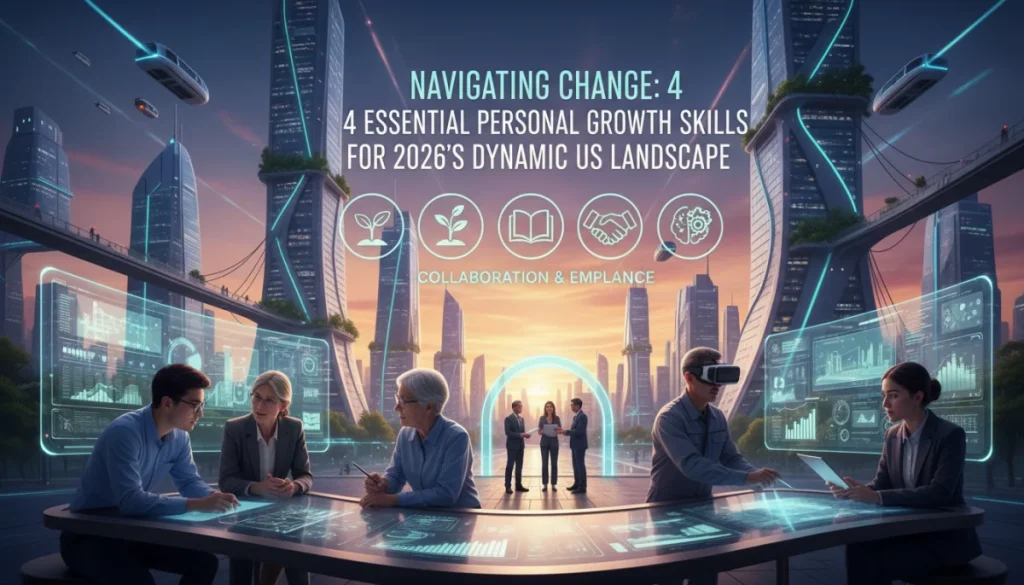
Individuals must proactively develop adaptability, critical thinking, emotional intelligence, and digital literacy to successfully navigate and thrive within the rapidly evolving US professional and social spheres of 2026.
As we rapidly approach 2026, the United States landscape continues its accelerated evolution, presenting both unprecedented challenges and remarkable opportunities. To truly thrive amidst this flux, mastering key personal growth skills 2026 will be paramount. This article delves into the four most essential capabilities individuals must cultivate to remain resilient, relevant, and successful in the coming years.
Anúncios
Understanding the 2026 US Landscape
The year 2026 promises a US landscape profoundly shaped by technological advancements, evolving economic models, and shifting societal priorities. The pace of change is not merely fast; it’s exponential, demanding a proactive approach to personal and professional development. Understanding these underlying currents is the first step toward effective preparation.
Automation and artificial intelligence are not just buzzwords; they are integrated forces reshaping industries from manufacturing to healthcare. This integration necessitates a workforce capable of working alongside intelligent systems, requiring skills that transcend rote tasks. Furthermore, global interconnectedness means local changes can have widespread implications, and vice-versa, calling for a broader perspective.
Anúncios
Technological Integration and its Impact
The pervasive nature of technology in 2026 means that nearly every sector will be influenced by digital tools and platforms. From advanced analytics in business to telehealth in medicine, understanding and leveraging these technologies will be crucial. This isn’t just about using software; it’s about comprehending the strategic implications of digital transformation.
- Increased demand for tech-savvy professionals across all fields.
- Shift towards hybrid work models becoming the norm.
- Greater emphasis on data privacy and cybersecurity awareness.
In conclusion, the 2026 US landscape is characterized by constant motion and technological immersion. Preparing for this reality requires more than just acquiring new technical skills; it demands a fundamental shift in how we approach personal growth and continuous learning.
Adaptability and Resilience: The Core of Future Success
Adaptability and resilience are no longer merely desirable traits; they are fundamental necessities for anyone aiming to succeed in the dynamic US environment of 2026. The ability to pivot quickly, learn new systems, and recover from setbacks defines a future-proof individual. This goes beyond simply accepting change; it involves actively embracing and leveraging it.
The global pandemic served as a stark reminder of how quickly circumstances can change, forcing individuals and organizations to adapt at an unprecedented speed. This lesson, among others, has cemented adaptability as a core competency. Resilience, on the other hand, ensures that even when faced with significant challenges, one can maintain equilibrium and continue moving forward.
Cultivating a Growth Mindset
A significant component of adaptability is fostering a growth mindset. This involves believing that one’s abilities and intelligence can be developed through dedication and hard work. Instead of viewing challenges as insurmountable obstacles, individuals with a growth mindset see them as opportunities for learning and improvement.
- Embracing continuous learning and upskilling.
- Viewing failures as learning experiences, not endpoints.
- Seeking out new experiences and diverse perspectives.
Developing adaptability and resilience requires intentional practice. It means stepping out of comfort zones, accepting ambiguity, and understanding that progress often involves navigating uncertainty. These skills ensure not just survival, but flourishing, in an unpredictable future.
Critical Thinking and Problem-Solving Prowess
In an era of information overload and complex global issues, critical thinking and robust problem-solving skills are indispensable among the personal growth skills 2026 demands. The capacity to analyze information objectively, identify biases, and formulate effective solutions distinguishes those who merely react from those who proactively shape their environment.
The sheer volume of data available today makes it easy to be misled or overwhelmed. Critical thinking provides the framework to discern credible information from misinformation, evaluate arguments logically, and make sound decisions. This skill is vital in both professional settings, where strategic decisions are made, and in personal life, where informed choices impact well-being.
Analytical Reasoning in a Data-Driven World
Analytical reasoning involves breaking down complex problems into smaller, manageable components. It requires the ability to identify patterns, draw connections, and understand cause-and-effect relationships. This is particularly important in a data-driven world where insights are derived from vast datasets.
- Questioning assumptions and seeking evidence.
- Evaluating multiple perspectives before forming conclusions.
- Developing logical arguments and identifying fallacies.
The ability to solve problems effectively often involves creativity and innovation. It’s not just about finding the ‘right’ answer but often about discovering novel approaches to persistent challenges. Cultivating these skills ensures individuals can navigate ambiguities and contribute meaningfully to complex situations.
Emotional Intelligence and Interpersonal Skills
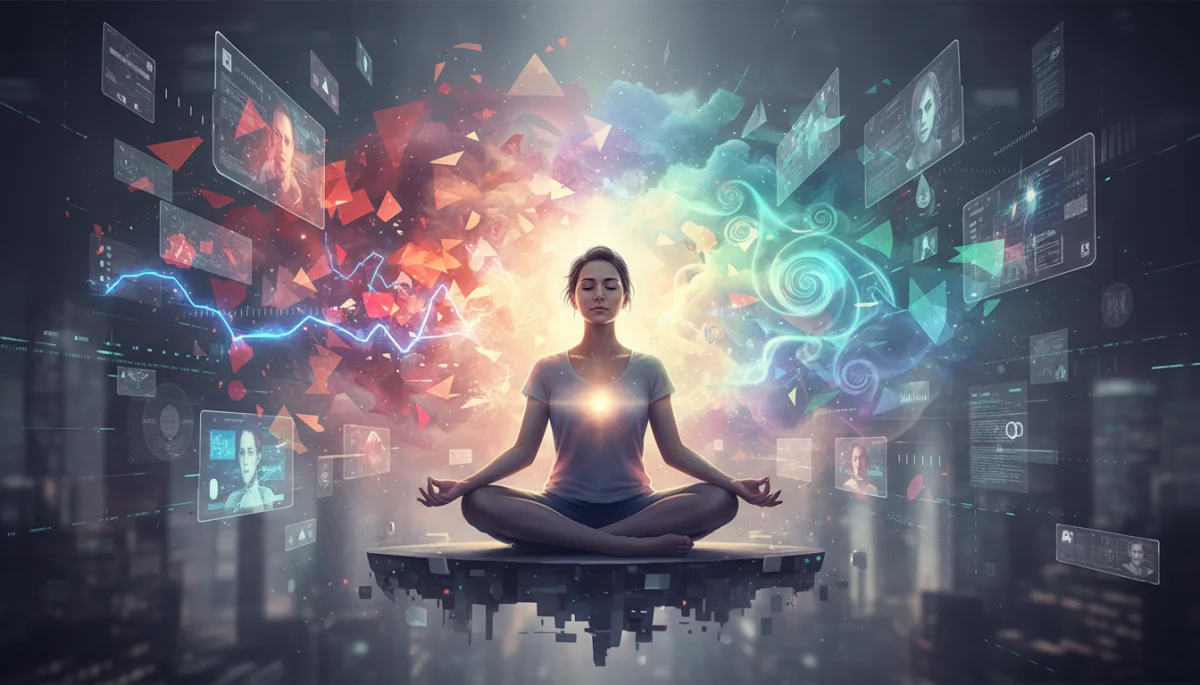
As technology becomes more pervasive, the value of uniquely human capabilities like emotional intelligence and interpersonal skills only grows. These are crucial personal growth skills 2026 will value most, as they enable effective collaboration, strong leadership, and healthy relationships in both professional and personal spheres. Understanding and managing one’s own emotions, as well as recognizing and influencing the emotions of others, is key to navigating complex social dynamics.
In hybrid work environments and increasingly diverse teams, the ability to communicate with empathy, resolve conflicts constructively, and build rapport becomes essential. Emotional intelligence fuels effective teamwork, fosters a positive work culture, and enhances customer and client interactions. These are areas where AI, despite its advancements, cannot replicate human nuance.
Empathy and Effective Communication
Empathy, the ability to understand and share the feelings of another, is a cornerstone of emotional intelligence. Coupled with effective communication, it allows for deeper connections and more productive interactions. This involves not just speaking clearly, but also active listening and non-verbal cues.
- Practicing active listening to genuinely understand others’ perspectives.
- Communicating needs and feelings clearly and respectfully.
- Navigating difficult conversations with tact and understanding.
Developing emotional intelligence is an ongoing process that involves self-awareness, self-regulation, motivation, empathy, and social skills. These qualities are vital for creating inclusive environments and fostering strong, resilient communities in the face of ongoing change.
Digital Literacy and Continuous Learning
In an increasingly digitized world, digital literacy is no longer an optional extra but a foundational skill. For the 2026 US landscape, this extends beyond basic computer proficiency to encompass a deep understanding of digital tools, data ethics, and the ability to continuously learn new technologies. It’s about being a savvy digital citizen and a proactive digital professional.
The rapid evolution of technology means that what is cutting-edge today might be obsolete tomorrow. Therefore, the most critical aspect of digital literacy is the commitment to continuous learning. This ensures individuals can adapt to new platforms, understand emerging trends, and leverage technology effectively to enhance productivity and innovation.
Navigating the Digital Landscape Responsibly
Digital literacy also involves understanding the implications of our online actions, including cybersecurity risks, data privacy concerns, and the ethical use of AI. Being digitally literate means being able to critically evaluate online information and protect oneself and one’s data in the digital realm.
- Understanding data privacy and online security best practices.
- Evaluating the credibility of online sources and information.
- Leveraging digital tools for efficiency and collaboration.
Embracing a mindset of continuous learning is perhaps the most important meta-skill for 2026. It means being perpetually curious, open to new knowledge, and willing to invest time and effort in acquiring new competencies. This proactive approach ensures relevance and growth in a world that never stands still.
Integrating Skills for Holistic Development
The true power of these personal growth skills 2026 emphasizes lies not in mastering them in isolation, but in their synergistic application. Adaptability, critical thinking, emotional intelligence, and digital literacy are interconnected; strengthening one often enhances the others. Holistic development means understanding how these skills weave together to create a more capable and resilient individual.
For example, digital literacy can enhance critical thinking by providing access to diverse information sources, while emotional intelligence can improve adaptability by helping individuals manage the stress of change. The goal is to cultivate a balanced skill set that prepares one for a wide array of future scenarios, rather than specializing too narrowly.
Practical Application in Daily Life
Integrating these skills means consciously applying them in everyday situations. This could involve using critical thinking to evaluate news headlines, employing emotional intelligence to resolve a team conflict, or utilizing digital tools to streamline personal tasks. Consistent practice builds proficiency and confidence.
- Seeking out interdisciplinary learning opportunities.
- Reflecting on how different skills contribute to problem-solving.
- Actively looking for ways to combine skills in new contexts.
Ultimately, holistic development is about building a robust personal framework that can withstand future shocks and seize emerging opportunities. By consciously integrating these essential skills, individuals can not only navigate change but also become architects of their own successful futures.
Strategies for Ongoing Personal Growth
Cultivating these essential personal growth skills 2026 demands a strategic and continuous effort. It’s not a one-time endeavor but a lifelong journey of learning and self-improvement. Developing effective strategies for ongoing personal growth ensures that one remains relevant and capable in an ever-evolving world.
One key strategy involves setting clear, achievable learning goals. This could mean dedicating specific time each week to learning a new software, reading articles on emerging trends, or practicing mindfulness to enhance emotional regulation. Consistency is more important than intensity when it comes to sustained growth.
Leveraging Resources and Networks
The digital age offers an abundance of resources for personal development. Online courses, webinars, podcasts, and digital communities provide accessible pathways to acquire new knowledge and skills. Furthermore, building a strong professional and personal network can offer mentorship, peer support, and diverse perspectives.
- Utilizing online learning platforms for skill acquisition.
- Engaging in professional development workshops and seminars.
- Networking with peers and mentors for shared learning experiences.
Another crucial strategy is regular self-assessment and reflection. Taking stock of one’s strengths, weaknesses, and areas for improvement allows for targeted development efforts. This introspective practice, combined with external feedback, creates a powerful cycle of continuous growth. Embracing these strategies will empower individuals to not just keep pace, but to lead the way into 2026 and beyond.
| Key Skill | Brief Description |
|---|---|
| Adaptability & Resilience | Ability to adjust to new conditions and recover quickly from difficulties, essential for dynamic environments. |
| Critical Thinking & Problem-Solving | Analyzing information objectively, identifying biases, and formulating effective solutions to complex issues. |
| Emotional Intelligence | Understanding and managing one’s own emotions, and recognizing and influencing the emotions of others for effective interaction. |
| Digital Literacy & Learning | Proficiency with digital tools, understanding data ethics, and a commitment to continuous technological learning. |
Frequently Asked Questions About 2026 Personal Growth Skills
The US landscape in 2026 is characterized by rapid technological advancement, economic shifts, and societal changes. Personal growth skills ensure individuals can adapt, innovate, and maintain relevance in dynamic professional and social environments, fostering resilience and continuous success.
Adaptability is the ability to adjust to new conditions and embrace change effectively. Resilience, on the other hand, is the capacity to recover quickly from difficulties and setbacks. Both are crucial for navigating unpredictable circumstances and sustaining progress.
Emotional intelligence is not solely innate; it can be significantly developed through conscious effort and practice. Self-awareness, empathy training, and active listening are all strategies that can enhance one’s emotional intelligence over time, leading to improved interpersonal interactions.
Beyond basic computer skills, digital literacy for 2026 includes understanding data ethics, cybersecurity, evaluating online information critically, and a commitment to continuously learning new technologies and platforms. It emphasizes responsible and effective engagement with the digital world.
Start by identifying areas for improvement and setting small, achievable goals. Utilize online learning platforms, engage in workshops, seek mentorship, and practice self-reflection. Consistent, intentional effort and a growth mindset are key to effective skill development.
Conclusion
The journey into 2026 and beyond for the US workforce and individuals is undoubtedly one of continuous evolution. The four essential personal growth skills – adaptability, critical thinking, emotional intelligence, and digital literacy – form a robust framework for navigating this dynamic landscape. By proactively cultivating these capabilities, individuals can not only withstand the inevitable shifts but also proactively shape their futures, contributing meaningfully to a rapidly changing world. Your digital journey starts here, with us. Welcome to your new experience. Discover endless possibilities today, by embracing these vital skills for personal growth.
