Generative AI: 5 Content Creation Applications in US
Anúncios
Generative AI is poised to revolutionize US content creation, offering transformative solutions for efficiency and innovation across various industries in the coming six months.
Anúncios
The landscape of digital content is undergoing a seismic shift, and at its epicenter is the unstoppable rise of generative AI. For content creators in the US, understanding and leveraging generative AI content US applications isn’t just an advantage; it’s becoming a necessity. This technology promises to redefine how stories are told, products are marketed, and information is disseminated, all within the next six months.
Understanding the Generative AI Revolution
Generative AI, a subset of artificial intelligence, focuses on creating new and original content, rather than simply analyzing existing data. This technology is rapidly evolving, moving beyond basic text generation to encompass images, video, audio, and even complex code. Its impact on the US content creation industry is profound and immediate.
Anúncios
The core capability of generative AI lies in its ability to learn patterns and structures from vast datasets, then apply that knowledge to produce novel outputs. This isn’t mere automation; it’s the creation of genuinely new material that often mirrors human creativity. Businesses and individual creators across the United States are beginning to harness this power for various applications.
From Concept to Creation: A New Paradigm
The traditional content creation pipeline often involves extensive brainstorming, manual drafting, and iterative revisions. Generative AI introduces a new paradigm where initial concepts can be rapidly prototyped and refined. This acceleration significantly reduces time-to-market for campaigns and allows for more experimental content strategies.
- Idea Generation: AI can suggest novel concepts and angles for content.
- Drafting Assistance: Automated generation of first drafts for articles, scripts, or marketing copy.
- Style Adaptation: AI can adjust content tone and style to suit different audiences or platforms.
The ability to iterate quickly and explore diverse creative avenues without significant human resource investment is a game-changer. This agility is particularly valuable in the fast-paced US digital market, where trends emerge and fade with remarkable speed. Embracing generative AI means staying ahead of the curve.
In conclusion, generative AI is not just a tool for automation; it’s a partner in the creative process, offering unprecedented capabilities for innovation and efficiency in content development. Its foundational impact is setting the stage for a new era of digital expression.
Application 1: Personalized Marketing Copy and Ad Creatives
One of the most immediate and impactful applications of generative AI for US content creation is in crafting highly personalized marketing copy and dynamic ad creatives. Traditional marketing often relies on broad demographic targeting, but AI enables hyper-segmentation and tailored messaging at scale.
Imagine generating thousands of unique ad variations, each optimized for a specific micro-segment of your audience. This level of personalization was previously unattainable due to the sheer volume of manual work required. Generative AI can analyze consumer data, identify preferences, and then produce copy and visuals that resonate directly with individual users, significantly boosting engagement and conversion rates.
Tailoring Messages for Maximum Impact
AI-powered tools can learn from successful past campaigns and user interactions to predict what kind of messaging will be most effective. This predictive capability allows marketers to move beyond guesswork and into data-driven creative decisions. The result is content that feels more relevant and less generic to the end-user.
- Audience Segmentation: Create distinct messages for various customer groups.
- A/B Testing at Scale: Generate numerous variations for rapid testing and optimization.
- Dynamic Content Generation: Produce real-time personalized content for websites and emails.
This capability is particularly vital in the competitive US market, where consumers are inundated with marketing messages daily. Standing out requires a level of relevance that only advanced AI can provide. Companies can now speak directly to the individual needs and desires of their audience, fostering stronger connections and brand loyalty.
In essence, generative AI transforms marketing from a broad-brush approach to a precision-guided strategy, delivering customized content that speaks volumes to each potential customer.
Application 2: Automated Blog Posts and SEO Content
The demand for fresh, high-quality content for blogs and search engine optimization (SEO) is ceaseless. Generative AI offers a powerful solution to this challenge, enabling US businesses and publishers to produce vast quantities of informative and engaging articles at an unprecedented pace. This application is particularly beneficial for maintaining a strong online presence and capturing organic search traffic.
AI can assist in researching topics, outlining articles, and even drafting full blog posts, freeing human writers to focus on more strategic tasks like editing, fact-checking, and injecting unique perspectives. This collaborative approach allows for a significant increase in content output without compromising quality, provided there’s human oversight.
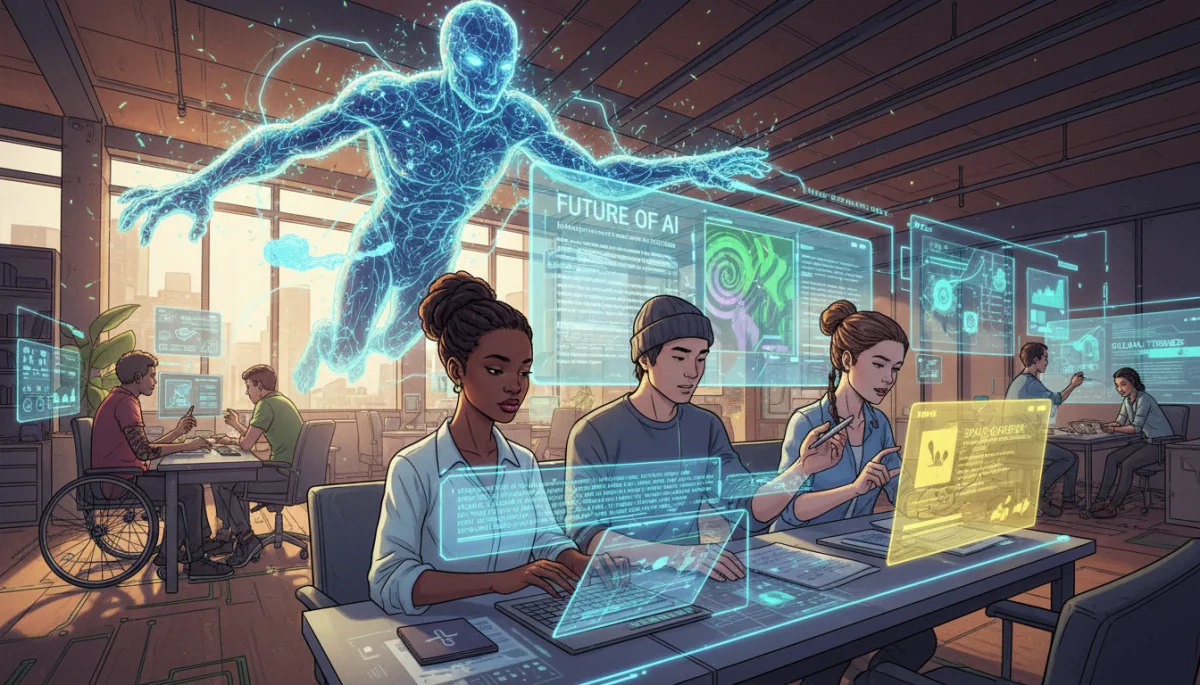
The technology is adept at understanding SEO best practices, including keyword integration, optimal structure, and readability. It can generate content that is not only informative but also highly discoverable by search engines, a critical factor for any US business aiming to expand its digital footprint.
Scaling Content Production with AI
For organizations needing to scale their content efforts, generative AI provides an invaluable advantage. It can quickly produce foundational content, allowing human experts to refine and elevate it. This hybrid model combines the efficiency of AI with the nuanced understanding and creativity of human writers.
- Keyword Research & Integration: AI identifies relevant keywords and seamlessly incorporates them.
- Content Outlining: Generate structured outlines for various article types.
- Drafting & Expansion: Produce initial drafts or expand on existing content ideas.
This capability is especially impactful for industries with a high volume of technical or informational content requirements, such as finance, healthcare, or technology. AI can distill complex information into accessible articles, ensuring that businesses can communicate effectively with their target audiences.
Ultimately, generative AI empowers US content teams to meet the ever-growing demand for fresh content, ensuring their blogs remain vibrant resources that attract and retain readers through effective SEO strategies.
Application 3: Video Scripting and Storyboarding
Video content continues to dominate online consumption, and generative AI is rapidly becoming an indispensable tool for US creators in this space. From conceptualizing narratives to drafting detailed scripts and even generating basic storyboards, AI can streamline the entire video production pre-process, making high-quality video more accessible and efficient to produce.
AI models can analyze popular video trends, audience engagement data, and specific project requirements to suggest compelling storylines, character dialogues, and scene descriptions. This accelerates the creative bottleneck often associated with video production, allowing teams to move from idea to execution much faster.
Enhancing Visual Storytelling
Beyond just text, some advanced generative AI tools can even produce rudimentary visual storyboards or suggest visual cues for scenes. This integration of text and visual concept generation helps creators visualize their projects more clearly before significant resources are committed to filming or animation. It ensures a cohesive vision from the outset.
- Concept Development: Generate unique video ideas and themes.
- Scriptwriting: Draft dialogues, voice-overs, and scene descriptions.
- Storyboard Suggestions: Provide visual prompts for key moments in a video.
For US content creators targeting platforms like YouTube, TikTok, or streaming services, the ability to rapidly prototype video concepts is a significant competitive advantage. It allows for more frequent content releases and the flexibility to experiment with different formats and styles based on audience feedback.
In summary, generative AI is transforming video content creation by accelerating the initial stages of scripting and storyboarding, thereby democratizing access to high-quality visual storytelling for a broader range of creators.
Application 4: Social Media Content and Engagement
Social media platforms are dynamic and demand constant, fresh content to maintain audience engagement. Generative AI offers US marketers and social media managers powerful tools to create compelling posts, captions, and even interactive content that resonates with their target demographics. This application is crucial for building brand presence and fostering community online.
AI can analyze trending topics, user sentiment, and platform-specific best practices to suggest optimal content strategies. It can then generate a variety of post types, from witty captions and engaging questions to short-form video scripts and image prompts, all tailored to maximize reach and interaction.
Optimizing Social Presence with AI
The sheer volume of content required to maintain an active and effective social media presence can be daunting. Generative AI automates much of this process, allowing human strategists to focus on community management, trend analysis, and overarching campaign goals. This partnership ensures both efficiency and creativity.
- Caption Generation: Create diverse and engaging captions for various platforms.
- Hashtag Optimization: Suggest relevant and trending hashtags.
- Interactive Content Ideas: Brainstorm polls, quizzes, and challenge concepts.
For businesses operating in the diverse US market, AI can help tailor social media content to specific regional or cultural nuances, ensuring messages are received positively and effectively. This level of granular targeting and content customization is vital for achieving impactful social media campaigns.
Ultimately, generative AI enhances social media content creation by providing tools for rapid content generation, strategic optimization, and personalized engagement, making it an essential asset for any modern digital marketing strategy.
Application 5: Interactive Experiences and Virtual Content
Beyond traditional static content, generative AI is opening new frontiers in interactive experiences and virtual content for US audiences. This includes everything from personalized chatbots and virtual assistants to dynamic virtual environments and augmented reality (AR) filters. These applications aim to create more immersive and engaging user experiences.
AI can generate dialogue for conversational interfaces, design elements for virtual worlds, and even craft procedural narratives for interactive stories. This capability allows brands and creators to build richer, more personalized digital interactions that adapt to individual user behavior and preferences.
Building Immersive Digital Worlds
The development of metaverses and advanced virtual platforms is heavily reliant on the ability to generate vast amounts of unique digital assets and experiences. Generative AI is perfectly suited for this task, enabling the rapid creation of environments, characters, and interactive elements that would be prohibitively time-consuming to create manually.
- Chatbot Dialogues: Generate natural and engaging conversations for customer support or entertainment.
- Virtual Environment Design: Create unique textures, objects, and landscapes for digital spaces.
- Personalized AR Filters: Develop custom augmented reality experiences for social media or marketing.
For US companies looking to innovate in customer engagement or explore new digital revenue streams, generative AI provides the tools to build cutting-edge interactive content. This fosters deeper user connections and offers novel ways for consumers to interact with brands and products.
In conclusion, generative AI is pushing the boundaries of content creation into the realm of interactive and virtual experiences, allowing for the development of dynamic and personalized digital worlds that captivate and engage users on a deeper level.
| Key Application | Brief Description |
|---|---|
| Personalized Marketing | AI crafts hyper-targeted ad copy and visuals, boosting engagement and conversions. |
| Automated Blog Content | Generates SEO-optimized articles, outlines, and drafts, scaling content production. |
| Video Scripting | Assists in creating compelling video narratives, scripts, and storyboard concepts. |
| Social Media Engagement | Develops diverse social posts, captions, and interactive ideas for platforms. |
Frequently Asked Questions About Generative AI in Content Creation
Adoption speed varies, but many user-friendly generative AI tools are already available, allowing creators to integrate them within weeks. The learning curve for basic applications is often minimal, making rapid integration feasible for US teams. Advanced applications may require more specialized training and development.
Generative AI is more likely to augment human capabilities rather than replace them entirely. It handles repetitive tasks, allowing human creators to focus on strategic thinking, creativity, and adding unique human insights. Collaboration between AI and humans will be the dominant model in the US content industry.
Key ethical concerns include data privacy, potential for misinformation, copyright issues, and bias in AI-generated content. US creators must ensure transparency about AI usage, rigorously fact-check outputs, and address biases to maintain trustworthiness and ethical standards in their content.
Small US businesses can leverage generative AI for cost-effective content creation, such as generating marketing copy, social media posts, and blog drafts. This allows them to compete with larger entities by increasing their content output and improving their digital presence without significant overhead costs.
Essential skills will include prompt engineering, critical evaluation of AI outputs, strategic thinking, ethical considerations, and a deep understanding of audience needs. Human creativity, emotional intelligence, and storytelling prowess will remain irreplaceable, focusing on guiding and refining AI tools.
Conclusion
The integration of generative AI into US content creation is not a distant future; it is a present reality rapidly gaining momentum. The five applications discussed—personalized marketing, automated blog content, video scripting, social media engagement, and interactive experiences—represent just the tip of the iceberg. Within the next six months, we anticipate these tools becoming even more sophisticated and ubiquitous, fundamentally altering workflows and creative possibilities. For content creators and businesses across the United States, embracing generative AI is no longer optional but a strategic imperative to remain competitive, innovative, and relevant in a rapidly evolving digital landscape. The journey starts now, shaping a future where human creativity and artificial intelligence collaborate to unlock unprecedented levels of content excellence.
