Robotics in Logistics: Cutting US Warehouse Costs 30% by 2028
Anúncios
The integration of robotics in logistics is set to redefine US warehouse operations, with forecasts indicating a significant 30% reduction in operational costs by 2028 due to enhanced automation and unprecedented efficiency.
The landscape of supply chain management is undergoing a profound transformation, with automation at its core. Specifically, the integration of robotics in logistics is not just an incremental improvement but a revolutionary shift, promising to cut US warehouse costs by an astonishing 30% by 2028. This isn’t merely about faster operations; it’s about re-imagining efficiency, precision, and economic viability in an increasingly demanding market.
Anúncios
the rise of robotics in US warehousing
The US logistics sector faces persistent challenges, from labor shortages to escalating operational expenses. Robotics offers a compelling solution, moving beyond simple automation to sophisticated, adaptive systems that learn and optimize. This evolution is fundamentally changing how goods are stored, picked, and packed across the nation.
Early robotic applications were often limited to repetitive tasks in highly structured environments. Today, however, advancements in artificial intelligence and machine learning have enabled robots to perform more complex, varied tasks, adapting to dynamic warehouse conditions. This adaptability is key to their widespread adoption and the significant cost savings anticipated.
Anúncios
addressing labor challenges with automation
One of the most pressing issues in US warehousing is the chronic shortage of labor, particularly for physically demanding or repetitive roles. Robots can fill these gaps, ensuring operations continue smoothly even when human workers are scarce. This not only maintains productivity but also allows human employees to focus on higher-value tasks.
- Reduced reliance on manual labor: Robots handle repetitive and strenuous tasks.
- Improved worker safety: Hazardous tasks are assigned to machines, minimizing human risk.
- Enhanced job satisfaction: Employees can transition to supervisory or technical roles.
The integration of robotics doesn’t necessarily mean job displacement but rather job evolution. New roles are created in robot maintenance, programming, and data analysis, requiring a different skill set from the traditional warehouse workforce. This shift necessitates investment in training and upskilling programs.
unpacking the 30% cost reduction projection
The audacious projection of a 30% cost reduction by 2028 is not arbitrary; it’s based on a confluence of factors driven by robotic integration. These savings stem from multiple operational areas, creating a cumulative effect that significantly impacts the bottom line of logistics companies. Understanding these drivers is crucial for businesses looking to invest in automation.
Efficiency gains are at the forefront of these savings. Robots operate continuously without breaks, perform tasks with unparalleled precision, and can navigate complex environments faster than humans. This translates directly into higher throughput and fewer errors, both of which contribute to reduced operational expenditures.
key drivers of cost savings
Several distinct areas contribute to the projected cost reductions. Each aspect, when optimized through robotics, delivers tangible financial benefits. From energy consumption to inventory management, the impact is comprehensive.
- Labor cost reduction: Decreased need for manual labor for repetitive tasks.
- Increased throughput: Faster processing of goods leads to higher productivity per square foot.
- Optimized space utilization: Robots can navigate narrower aisles and stack higher, maximizing warehouse capacity.
- Reduced error rates: Automated systems minimize picking and packing errors, cutting down on returns and rework.
- Lower energy consumption: Modern robots are designed to be energy-efficient, especially compared to maintaining human comfort in large facilities.
Beyond the direct financial benefits, the long-term strategic advantages of robotics include improved scalability and resilience. Warehouses can quickly adapt to fluctuating demand without the overhead of hiring and training seasonal staff, making them more agile in dynamic market conditions.
types of robotics transforming US warehouses
The term ‘robotics’ encompasses a wide array of technologies, each designed to address specific challenges within the logistics ecosystem. From mobile robots traversing warehouse floors to sophisticated robotic arms handling delicate items, the diversity of solutions is expanding rapidly. This variety allows for tailored automation strategies that maximize impact.
Autonomous Mobile Robots (AMRs) and Automated Guided Vehicles (AGVs) are perhaps the most visible examples, ferrying goods across vast warehouse spaces. However, the innovation doesn’t stop there. Collaborative robots, or cobots, work alongside human employees, enhancing productivity without replacing the human touch entirely.
autonomous mobile robots (AMRs) and automated guided vehicles (AGVs)
AMRs and AGVs are instrumental in automating material handling, reducing the need for forklifts and manual carts. While AGVs follow predefined paths, AMRs use advanced sensors and AI to navigate dynamically, making them more flexible and adaptable to changing layouts.
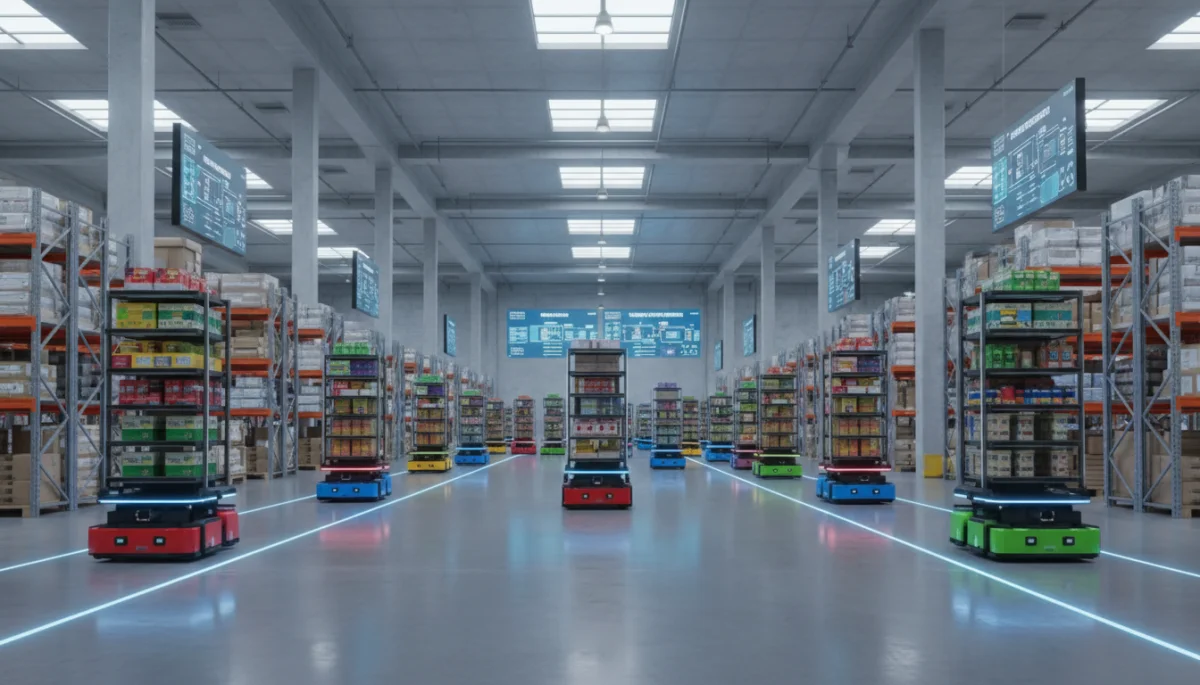
Their ability to transport goods efficiently and safely, often 24/7, significantly boosts throughput and lowers the risk of accidents. This leads to both direct cost savings and improved operational reliability, critical for time-sensitive logistics.
robotic arms and picking systems
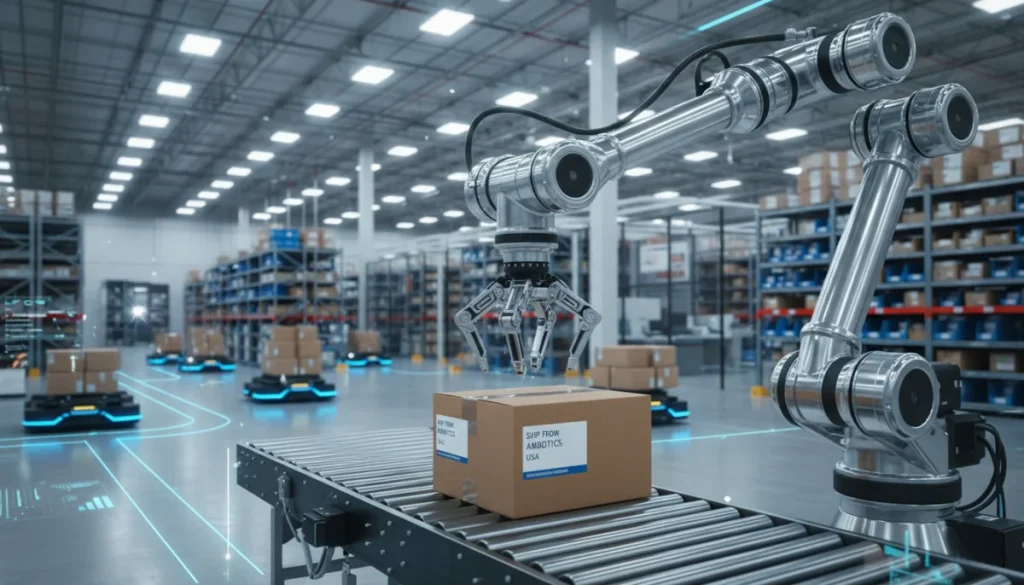
Robotic arms, equipped with advanced vision systems and grippers, are revolutionizing picking and packing. They can handle a vast range of products, from small, delicate items to heavy, bulky packages, with precision that surpasses human capabilities.
- Precision picking: Minimizes damage to goods and ensures correct order fulfillment.
- High-speed packing: Accelerates the packing process, increasing overall efficiency.
- Versatile handling: Adaptable to various product shapes, sizes, and weights.
These systems are particularly valuable in e-commerce fulfillment, where diverse product catalogs and high order volumes demand speed and accuracy. The continuous operation of robotic arms contributes significantly to meeting tight delivery schedules.
challenges and considerations for adoption
While the benefits of robotics in logistics are clear, the path to widespread adoption is not without its hurdles. Implementing robotic solutions requires significant upfront investment, careful planning, and a robust understanding of existing operational workflows. Addressing these challenges proactively is essential for successful integration.
The initial capital outlay for purchasing and installing robotic systems can be substantial, posing a barrier for smaller businesses. However, the long-term return on investment (ROI) often justifies these costs, especially as robotic technologies become more affordable and accessible.
integration complexity and infrastructure requirements
Integrating new robotic systems into existing warehouse infrastructure can be complex. It often requires modifications to layouts, IT systems, and even building structures. Compatibility with existing Warehouse Management Systems (WMS) is also a critical factor.
- System compatibility: Ensuring seamless communication between robots and existing software.
- Infrastructure upgrades: Potential need for stronger flooring, charging stations, and network enhancements.
- Data security: Protecting sensitive operational data shared across automated systems.
Furthermore, the skills gap in maintaining and programming these advanced systems is a growing concern. Companies must invest in training their workforce or hire specialized personnel to manage the robotic fleet effectively.
the future outlook: beyond 2028
The 30% cost reduction by 2028 is merely a milestone; the trajectory of robotics in logistics suggests even more profound transformations beyond this horizon. Continuous innovation in AI, machine learning, and sensor technology will unlock new levels of automation, pushing the boundaries of what warehouses can achieve.
We can anticipate a future where warehouses are not just automated but intelligent, self-optimizing ecosystems. These ‘smart warehouses’ will leverage real-time data to make autonomous decisions, predicting demand, managing inventory, and orchestrating robot fleets with minimal human intervention.
predictive analytics and AI integration
The synergy between robotics and advanced analytics will become increasingly sophisticated. AI-powered systems will analyze vast amounts of data to predict maintenance needs, optimize routing for AMRs, and even anticipate supply chain disruptions. This proactive approach will further enhance efficiency and resilience.
Predictive analytics will move beyond simple forecasting to prescriptive actions, guiding robots and human operators alike to make the most optimal decisions. This will minimize downtime, maximize throughput, and ensure an agile response to market changes.
human-robot collaboration and advanced safety
The future will also see an evolution in human-robot collaboration. Cobots will become more intuitive and adaptable, working seamlessly alongside human colleagues in shared workspaces. Advanced safety protocols and perception technologies will ensure a secure and productive environment for both.
This collaboration will allow for the best of both worlds: the precision and endurance of robots combined with the problem-solving and adaptability of human intelligence. The warehouse of the future will be a highly collaborative space, fostering innovation and efficiency.
strategic implementation for maximum impact
To fully realize the promised 30% cost reduction, companies must adopt a strategic approach to implementing robotics. It’s not just about buying robots; it’s about designing a comprehensive automation strategy that aligns with business objectives, optimizes workflows, and prepares the workforce for the future.
A phased implementation plan, starting with pilot projects in specific areas, can help organizations learn and adapt without disrupting entire operations. This allows for fine-tuning systems and processes before a broader rollout, minimizing risks and maximizing the chances of success.
assessing ROI and scalability
A thorough return on investment (ROI) analysis is crucial before any significant investment. This goes beyond immediate cost savings to include long-term benefits such as improved customer satisfaction, enhanced market competitiveness, and greater operational flexibility.
- Detailed cost-benefit analysis: Quantifying both direct and indirect benefits.
- Scalability planning: Ensuring robotic solutions can grow with the business.
- Flexibility in design: Choosing systems that can adapt to future changes in demand or product mix.
Choosing scalable and flexible robotic solutions is paramount. As market demands evolve, warehouses need to be able to reconfigure their operations quickly. Robotics, when implemented strategically, provides this agility, ensuring sustained cost efficiency and competitive advantage.
| Key Aspect | Impact on US Warehouses |
|---|---|
| Cost Reduction | Projected 30% cut in operational costs by 2028 due to efficiency and automation. |
| Labor Optimization | Robots address shortages and improve safety, allowing humans for higher-value tasks. |
| Operational Efficiency | Increased throughput, reduced errors, and optimized space utilization are key benefits. |
| Future Trends | AI integration, predictive analytics, and human-robot collaboration will define future warehouses. |
frequently asked questions about robotics in logistics
The main driver is the pressing need to reduce operational costs and mitigate labor shortages. Robotics offers solutions for increased efficiency, precision, and continuous operation, directly addressing these critical challenges in the US warehousing sector.
This reduction will be achieved through various factors including lower labor costs for repetitive tasks, increased throughput, optimized warehouse space utilization, fewer errors, and improved energy efficiency. These combined elements lead to significant cumulative savings.
Autonomous Mobile Robots (AMRs) and Automated Guided Vehicles (AGVs) are widely used for material transport. Robotic arms are also prevalent for picking, packing, and sorting tasks, enhancing precision and speed in fulfillment operations.
While some roles may be automated, robotics often leads to job evolution rather than outright elimination. New positions in robot maintenance, programming, and supervision emerge, requiring a shift in workforce skills and training initiatives.
Key challenges include high upfront investment costs, complex integration with existing infrastructure, ensuring compatibility with current IT systems, and addressing the need for a skilled workforce capable of managing and maintaining advanced robotic systems.
conclusion
The journey towards fully automated and highly efficient US warehouses is well underway, with robotics serving as the primary catalyst. The projected 30% reduction in operational costs by 2028 underscores the profound impact these technologies are having on the logistics sector. Beyond mere efficiency, robotics offers a pathway to greater resilience, scalability, and an improved working environment. For businesses aiming to remain competitive and future-proof their supply chains, embracing this robotic revolution is not just an option but a strategic imperative. The future of US logistics is undeniably automated, intelligent, and poised for unprecedented growth and cost-effectiveness.
