2026 Corporate Tax Changes: 15% Savings for US Businesses
Anúncios
The upcoming 2026 corporate tax code changes present a significant opportunity for US businesses to achieve up to a 15% tax savings through proactive understanding and strategic implementation of new regulations.
Anúncios
Are you prepared for the seismic shifts coming to the US corporate tax landscape?
Navigating the 2026 Corporate Tax Code Changes: A 15% Savings Opportunity for US Businesses
is not just a headline; it’s a critical call to action for every forward-thinking enterprise.
Understanding these impending reforms now can transform potential challenges into substantial financial advantages.
Understanding the Looming Tax Landscape of 2026
The year 2026 marks a pivotal moment for corporate taxation in the United States.
Significant provisions from the Tax Cuts and Jobs Act (TCJA) of 2017 are set to expire or change,
ushering in a new era of financial planning and compliance for businesses.
Ignoring these impending shifts could lead to unforeseen liabilities,
while proactive engagement offers a genuine pathway to substantial savings.
Anúncios
The implications extend far beyond simple rate adjustments, touching everything from
deductions and credits to international tax considerations.
Businesses must look beyond the immediate horizon and begin strategizing today
to harness the opportunities embedded within these changes.
Key TCJA Provisions Set to Expire
Several cornerstone elements of the TCJA are slated for modification or expiration,
directly impacting corporate bottom lines. These include certain depreciation schedules,
limitations on business interest deductions, and the treatment of research and development expenses.
- Bonus Depreciation Phase-Out: The full expensing of certain capital investments begins to phase down, requiring businesses to adjust their capital expenditure strategies.
- R&D Expense Amortization: The requirement to amortize research and development expenses over five years (or fifteen for foreign R&D) is a critical shift from immediate expensing.
- Business Interest Deduction Limits: Changes to the calculation of the interest deduction limitation under Section 163(j) will affect highly leveraged companies.
Understanding the granular details of these expirations is the first step toward
mitigating potential negative impacts and identifying areas for optimization.
Early analysis allows companies to model different scenarios and prepare their financial structures accordingly.
Decoding the Potential 15% Savings Opportunity
While tax code changes often bring apprehension, the 2026 reforms also present a unique
opportunity for savvy businesses to realize significant tax savings, potentially up to 15%.
This isn’t about finding loopholes, but rather about strategically aligning business operations
with the new regulations to maximize permissible deductions and credits.
The 15% savings figure is an aggregate potential, achievable through a combination of
meticulous planning, re-evaluation of current practices, and leveraging new or modified incentives.
It requires a deep dive into financial statements and operational models to identify specific areas for improvement.
Strategic Areas for Tax Optimization
Businesses should focus on several key strategic areas to uncover these savings.
This includes reassessing capital expenditure plans, optimizing international structures,
and meticulously tracking eligible expenses.
- Capital Expenditure Planning: With bonus depreciation changes, businesses need to re-evaluate the timing and structure of large investments to maximize remaining benefits.
- R&D Tax Credits: Despite the amortization change, robust R&D activities may still qualify for significant tax credits, which become even more valuable.
- State and Local Tax (SALT) Strategies: Exploring opportunities within state and local tax frameworks can complement federal savings, especially with potential federal adjustments.
The aggregate effect of these strategies, when implemented comprehensively,
can indeed lead to the substantial savings projected. It’s a testament to the idea
that informed action can turn regulatory shifts into competitive advantages.
Impact on Different Business Structures
The forthcoming tax changes will not affect all businesses equally.
Different legal structures—from C-corporations to S-corporations and partnerships—will experience
varied impacts, necessitating tailored approaches to tax planning.
Understanding these distinctions is crucial for effective preparation.
For instance, while C-corporations are directly subject to corporate income tax rates,
pass-through entities like S-corps and partnerships see profits and losses passed through
to owners’ individual tax returns. The interplay of corporate and individual tax changes
will be a critical factor in 2026 and beyond.
C-Corporations: Navigating Direct Rate Changes and Deductions
C-corporations will primarily focus on the federal corporate tax rate, which was significantly
reduced by the TCJA. Any alterations to this rate, or to key deductions like business interest
and R&D, will directly influence their taxable income.
Strategic timing of income and expenses could become even more vital.
Furthermore, considerations around international income and global intangible low-taxed income (GILTI)
provisions will remain complex, requiring expert navigation.
C-corps should review their capital structure and dividend policies in light of potential changes.
Pass-Through Entities: Adapting to Owner-Level Impacts
For S-corporations, partnerships, and sole proprietorships, the focus shifts to how
corporate changes trickle down to individual tax returns.
The qualified business income (QBI) deduction (Section 199A) is a prime example of a provision
that heavily impacts pass-through entities and is set to expire.
Its potential absence or modification will necessitate a re-evaluation of owner compensation
and distribution strategies.
Owners of pass-through entities must work closely with their tax advisors to understand
the personal tax implications of these corporate-level adjustments.
This holistic view ensures that tax efficiency is maintained across both the business and individual fronts.
Proactive Strategies for Maximizing Tax Savings
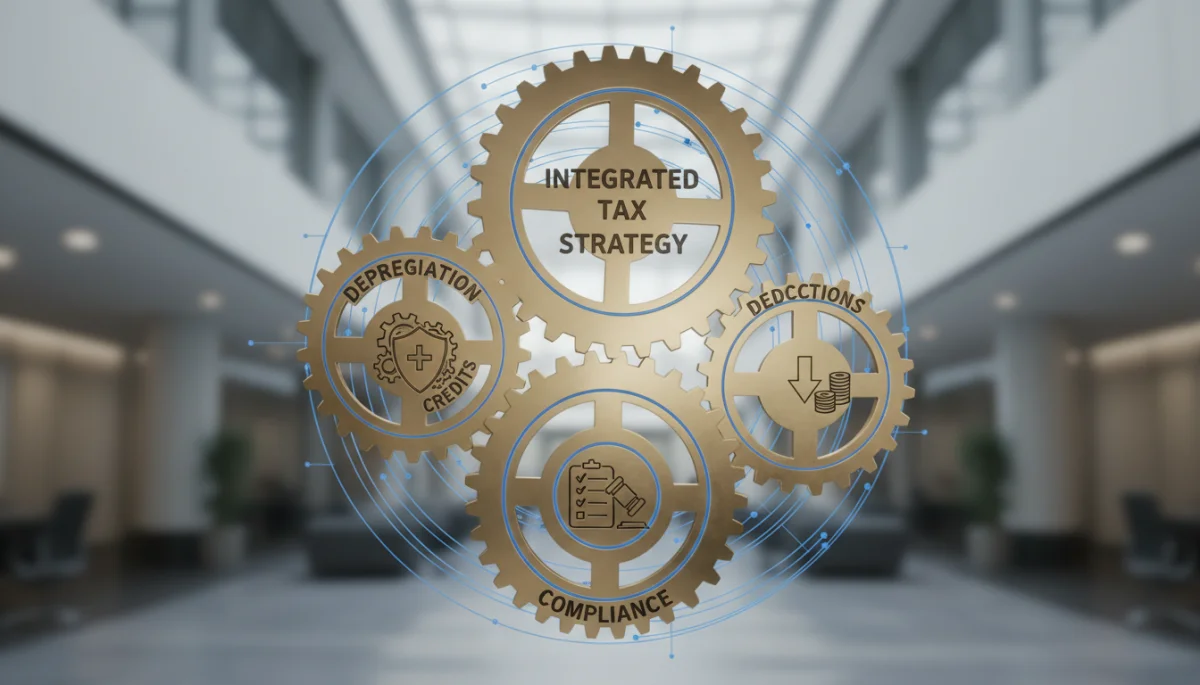
Achieving the potential 15% tax savings in 2026 requires more than just reacting to new laws;
it demands a proactive and integrated approach to tax planning.
Businesses that begin preparing now will be best positioned to capitalize on opportunities
and mitigate risks.
This proactive stance involves a thorough review of current financial practices,
forecasting potential impacts, and exploring various strategic adjustments.
It’s about making informed decisions today that will yield significant benefits tomorrow.
Revisiting Capital Expenditure Plans
With the anticipated phase-out of full bonus depreciation, businesses should critically
examine their capital expenditure timelines.
Accelerating planned investments into 2024 or 2025 might allow for greater write-offs
under existing rules, providing a substantial upfront tax advantage.
- Asset Classification: Ensure assets are correctly classified to maximize eligible depreciation deductions before changes take effect.
- Leasing vs. Buying: Re-evaluate the tax implications of leasing versus purchasing assets under the new depreciation landscape.
- Investment Timing: Strategically time large equipment purchases or facility upgrades to align with the most favorable depreciation rules.
Careful planning in this area can lead to significant deferrals or reductions in taxable income.
Optimizing R&D Tax Credits and Incentives
Despite the shift to amortize R&D expenses, the R&D tax credit remains a powerful incentive.
Businesses engaged in innovation should ensure they are meticulously documenting all eligible activities
and expenses to maximize this credit.
This includes identifying all qualifying research activities, tracking associated personnel costs,
and reviewing contract research arrangements.
Even with amortization, the credit itself can provide a direct dollar-for-dollar reduction in tax liability.
Leveraging Technology for Enhanced Tax Compliance and Planning
In an increasingly complex tax environment, technology is no longer just an aid;
it’s an essential tool for effective tax compliance and strategic planning.
Adopting advanced tax software and data analytics can significantly enhance a business’s
ability to navigate the 2026 changes, identify savings, and ensure accuracy.
Automated solutions can streamline data collection, reduce manual errors,
and provide real-time insights into a company’s tax position.
This allows finance teams to shift from reactive compliance to proactive strategic guidance.
AI and Predictive Analytics in Tax Forecasting
Artificial intelligence (AI) and predictive analytics are revolutionizing tax forecasting.
These technologies can analyze vast amounts of financial data, identify trends,
and model the impact of various tax scenarios, offering a clearer picture of future liabilities.
- Scenario Planning: AI-powered tools can simulate the effects of different tax law interpretations or business decisions on tax outcomes.
- Risk Assessment: Predictive models can flag potential compliance risks before they become problems, allowing for timely adjustments.
- Data Integration: Seamless integration with existing ERP and accounting systems ensures comprehensive and accurate data for tax calculations.
By leveraging these advanced tools, businesses can make more informed decisions,
optimize their tax strategies, and uncover hidden savings opportunities.
The Role of Expert Tax Advisory Services
While internal teams can handle much of the preliminary work, the intricate nature of
the 2026 corporate tax code changes often necessitates the expertise of specialized tax advisors.
These professionals offer invaluable insights, ensuring compliance and maximizing savings
in a rapidly evolving landscape.
An experienced tax advisor can provide a crucial external perspective,
identifying nuances in the law that an internal team might overlook and
offering bespoke strategies tailored to a company’s specific circumstances.
Selecting the Right Tax Partner
Choosing the right tax advisory firm is paramount.
Businesses should seek partners with a deep understanding of federal and state tax laws,
proven experience with similar corporate structures, and a forward-thinking approach to tax planning.
- Specialized Knowledge: Ensure the advisor has expertise in areas relevant to your business, such as international tax, R&D credits, or industry-specific regulations.
- Proactive Engagement: Look for a firm that offers proactive advice and stays ahead of legislative changes, rather than merely reacting to them.
- Technology Integration: A modern tax advisor will leverage technology to enhance efficiency, accuracy, and strategic insights.
The investment in expert tax advisory services can easily pay for itself through
identified savings and avoided penalties, securing a stronger financial future for the business.
Preparing Your Business for the Future Tax Environment
The 2026 corporate tax code changes are not distant threats but rather current considerations
that demand immediate attention.
Successful navigation hinges on comprehensive preparation, ongoing monitoring,
and a willingness to adapt strategies as new information emerges.
Businesses that adopt a continuous tax planning mindset, rather than a reactive one,
will be best equipped to thrive in the evolving tax environment.
This involves integrating tax considerations into all major business decisions.
Steps for Ongoing Tax Readiness
To ensure continuous tax readiness, businesses should implement a structured approach
that includes regular reviews, internal training, and flexible financial modeling.
- Regular Tax Impact Assessments: Conduct quarterly or semi-annual reviews to assess how changes in business operations or market conditions might affect tax liabilities.
- Internal Education: Keep key personnel, including finance, legal, and operational leadership, informed about impending tax changes and their implications.
- Flexible Financial Modeling: Develop financial models that can quickly adapt to different tax scenarios, allowing for agile decision-making.
By embedding tax planning into the core of their operations, US businesses can not only
survive the 2026 changes but also leverage them to gain a significant competitive edge
and achieve the projected 15% savings opportunity.
| Key Aspect | Brief Description |
|---|---|
| TCJA Expirations | Key provisions from the Tax Cuts and Jobs Act of 2017 are set to expire or change, impacting depreciation, R&D, and interest deductions. |
| 15% Savings Potential | Proactive planning and strategic alignment with new regulations can unlock up to 15% in corporate tax savings for US businesses. |
| Proactive Strategies | Revisiting capital expenditure, optimizing R&D credits, and leveraging technology are crucial for maximizing benefits. |
| Expert Advisory | Engaging specialized tax advisors is vital for navigating complexities, ensuring compliance, and identifying tailored savings opportunities. |
Frequently Asked Questions About 2026 Corporate Tax Changes
The main changes involve the expiration of several key provisions from the 2017 Tax Cuts and Jobs Act, including adjustments to bonus depreciation, the amortization of research and development expenses, and limitations on business interest deductions. These shifts will significantly alter how businesses calculate their taxable income and liabilities.
Achieving significant savings requires a proactive approach. This includes strategically timing capital expenditures, maximizing eligible R&D tax credits, reviewing state and local tax strategies, and leveraging advanced tax technology for forecasting and compliance. A comprehensive review of current financial practices is essential.
No, the impact will vary based on business structure. C-corporations will be affected by direct rate and deduction changes, while pass-through entities (S-corps, partnerships) will experience impacts primarily at the owner’s individual tax level, particularly concerning the qualified business income (QBI) deduction.
Technology, especially AI and predictive analytics, is crucial. It enables businesses to streamline data collection, perform complex scenario planning, assess risks, and integrate tax planning with existing financial systems. This helps in making informed decisions and identifying optimal tax strategies efficiently.
Businesses should begin preparing immediately. Proactive planning allows for strategic adjustments to capital expenditures, R&D activities, and overall financial structures before the changes take full effect. Engaging with tax advisors early ensures a comprehensive and tailored strategy for maximizing savings and ensuring compliance.
Conclusion
The approaching 2026 corporate tax code changes represent a critical juncture for US businesses.
Far from being a mere regulatory hurdle, these reforms offer a tangible opportunity for significant financial optimization.
By understanding the expiring provisions, proactively implementing strategic tax planning,
leveraging technological advancements, and seeking expert advisory, businesses can effectively
navigate this evolving landscape. The potential to realize up to a 15% tax savings is within reach for those
who embrace a forward-thinking and adaptive approach, transforming compliance into a competitive advantage.
