The Critical 4: New US AI Data Privacy Frameworks Explained (Updates)

Anúncios
The critical four new data privacy frameworks for AI in the US are rapidly evolving legislative and regulatory efforts designed to protect individual data while fostering responsible artificial intelligence innovation.
Anúncios
The rapid evolution of artificial intelligence has brought unprecedented innovation, but also significant challenges, particularly concerning data privacy. Navigating The Critical 4: Understanding New Data Privacy Frameworks for AI in the US (RECENT UPDATES) is no longer optional for businesses and individuals alike.
The Evolving Landscape of AI and Data Privacy in the US
The United States, unlike the European Union with its comprehensive GDPR, has historically approached data privacy through a patchwork of sectoral laws. However, the advent of sophisticated AI systems, which rely heavily on vast datasets, has necessitated a more unified and robust regulatory response. This evolving landscape reflects a growing recognition that existing laws are often insufficient to address the unique privacy implications of AI, such as algorithmic bias, data misuse, and opaque decision-making processes. Stakeholders from government, industry, and civil society are actively engaged in shaping these new frameworks, aiming to strike a balance between innovation and protection.
Anúncios
The push for new privacy frameworks is driven by several factors, including high-profile data breaches, increasing public awareness of data exploitation, and the sheer scale at which AI can process and infer personal information. Without clear guidelines, companies deploying AI risk legal penalties, reputational damage, and erosion of consumer trust. Conversely, overly restrictive regulations could stifle technological advancement. Therefore, the current efforts are focused on creating adaptable and forward-looking policies that can keep pace with AI’s rapid development.
Ultimately, understanding this dynamic environment is crucial for anyone involved in AI. The shift towards more comprehensive data privacy frameworks signals a new era of accountability and transparency, where the ethical implications of AI are given paramount importance. Businesses must proactively adapt their data governance strategies to comply with these emerging standards, ensuring their AI systems are not only effective but also privacy-preserving and trustworthy.
Key Federal Initiatives Shaping AI Data Privacy
At the federal level, several initiatives are underway to address AI and data privacy, signaling a concerted effort to establish a national standard. While comprehensive federal legislation akin to GDPR remains elusive, various agencies and legislative bodies are developing targeted approaches. These efforts aim to provide a baseline of protection for individuals while also fostering innovation within the AI sector.
The National Institute of Standards and Technology (NIST) AI Risk Management Framework
NIST has been instrumental in developing non-regulatory guidance to manage risks associated with AI, including privacy. Their AI Risk Management Framework (AI RMF) offers a voluntary, flexible tool to help organizations identify, assess, and manage risks related to AI systems. Privacy is a core component of this framework, emphasizing fair and transparent data practices.
- Govern: Establish a culture of risk management.
- Map: Identify AI risks and their potential impacts.
- Measure: Analyze and quantify identified risks.
- Manage: Prioritize and mitigate AI risks effectively.
The AI RMF is designed to be adaptable across various sectors and types of AI systems, providing a common language and approach to AI risk management. It encourages organizations to consider privacy implications from the initial design phase of AI systems, promoting a ‘privacy-by-design’ philosophy.
Executive Orders and Presidential Directives
Recent executive orders have also played a significant role in pushing federal agencies to develop policies and guidelines for responsible AI use, including mandates for data privacy. These directives often require agencies to assess their AI systems for privacy impacts and implement measures to protect sensitive data. While not legislative, executive orders set a strong precedent and guide federal operations.
These federal initiatives, though varied in their scope and enforceability, collectively contribute to a more structured approach to AI data privacy. They lay the groundwork for potential future legislation and provide valuable guidance for organizations developing and deploying AI technologies. Compliance with these evolving federal guidelines is becoming increasingly important for any entity operating within the US AI landscape.
State-Level Data Privacy Laws Impacting AI
While federal efforts are gaining momentum, individual states continue to lead the charge in establishing robust data privacy laws, many of which have significant implications for AI. These state-level regulations are often more prescriptive than federal guidance, creating a complex web of compliance requirements for businesses operating across different jurisdictions. Understanding these varied state laws is crucial for any organization leveraging AI, as they dictate how personal data can be collected, processed, and used by AI systems.
California Consumer Privacy Act (CCPA) and California Privacy Rights Act (CPRA)
California’s privacy laws, particularly the CCPA and its successor, the CPRA, are among the most comprehensive in the nation. They grant consumers extensive rights over their personal information, including the right to know, delete, and opt-out of the sale or sharing of their data. For AI, this means that companies must be transparent about how AI systems process personal data and provide mechanisms for consumers to exercise their rights.
- Data Minimization: AI systems should only collect data strictly necessary for their purpose.
- Opt-Out Rights: Consumers can opt out of AI-driven profiling or targeted advertising.
- Data Security: Strong security measures are required to protect data used by AI.
The CPRA, in particular, introduced the California Privacy Protection Agency (CPPA) to enforce these laws and further defined sensitive personal information, which often includes data critical for AI training. This has a direct impact on how AI models can be developed and deployed, especially those that make inferences about individuals.
Virginia Consumer Data Protection Act (VCDPA) and Colorado Privacy Act (CPA)
Following California’s lead, states like Virginia and Colorado have enacted their own comprehensive privacy laws. The VCDPA and CPA share many similarities with the CCPA/CPRA, including consumer rights regarding access, deletion, and opt-out. However, they also introduce unique provisions that AI developers and deployers must consider.
For instance, both the VCDPA and CPA require data protection assessments for activities that present a heightened risk of harm to consumers, such as targeted advertising, the sale of personal data, and certain types of profiling. AI systems often fall into these categories, necessitating careful evaluation of their privacy impacts. The differing thresholds and definitions across states mean that a ‘one-size-fits-all’ approach to AI privacy compliance is increasingly untenable. Businesses must develop flexible and adaptable privacy programs that can meet the diverse requirements of each state where they operate or where their AI systems interact with residents.
Emerging Regulatory Proposals and Discussions
Beyond existing laws, the US is rife with ongoing discussions and emerging regulatory proposals specifically targeting AI’s impact on privacy. These proposals reflect a growing understanding that AI introduces novel challenges that traditional privacy laws may not fully address. Policymakers are grappling with issues such as algorithmic bias, explainability, and the implications of generative AI, pushing for frameworks that promote both innovation and ethical use.
The Algorithmic Accountability Act
One significant proposal is the Algorithmic Accountability Act, which aims to require companies to conduct impact assessments for automated decision systems. These assessments would evaluate the impact of AI systems on privacy, accuracy, fairness, and discrimination. If enacted, this legislation would compel organizations to proactively identify and mitigate risks associated with their AI models, particularly those used in critical areas like employment, housing, and credit.
The focus on algorithmic accountability is a direct response to concerns about AI systems perpetuating or even amplifying existing societal biases. By mandating assessments, the act seeks to ensure that AI technologies are developed and deployed in a manner that is fair and transparent, safeguarding individual rights and promoting equitable outcomes. This proactive approach would significantly alter how AI systems are designed, tested, and monitored.
Discussions around Federal Privacy Legislation for AI
While a comprehensive federal privacy law for AI has not yet materialized, discussions are robust and ongoing. Various legislative proposals have been introduced, often drawing inspiration from existing state laws and international frameworks like the GDPR. Key themes in these discussions include:
- Universal Opt-Out Mechanisms: Empowering consumers with a single, easy way to opt out of data processing by AI.
- Data Portability: Allowing individuals to easily transfer their data between AI services.
- AI Explainability: Requiring AI systems to provide understandable explanations for their decisions.
- Data Minimization Principles: Encouraging AI developers to collect only the data essential for their systems.
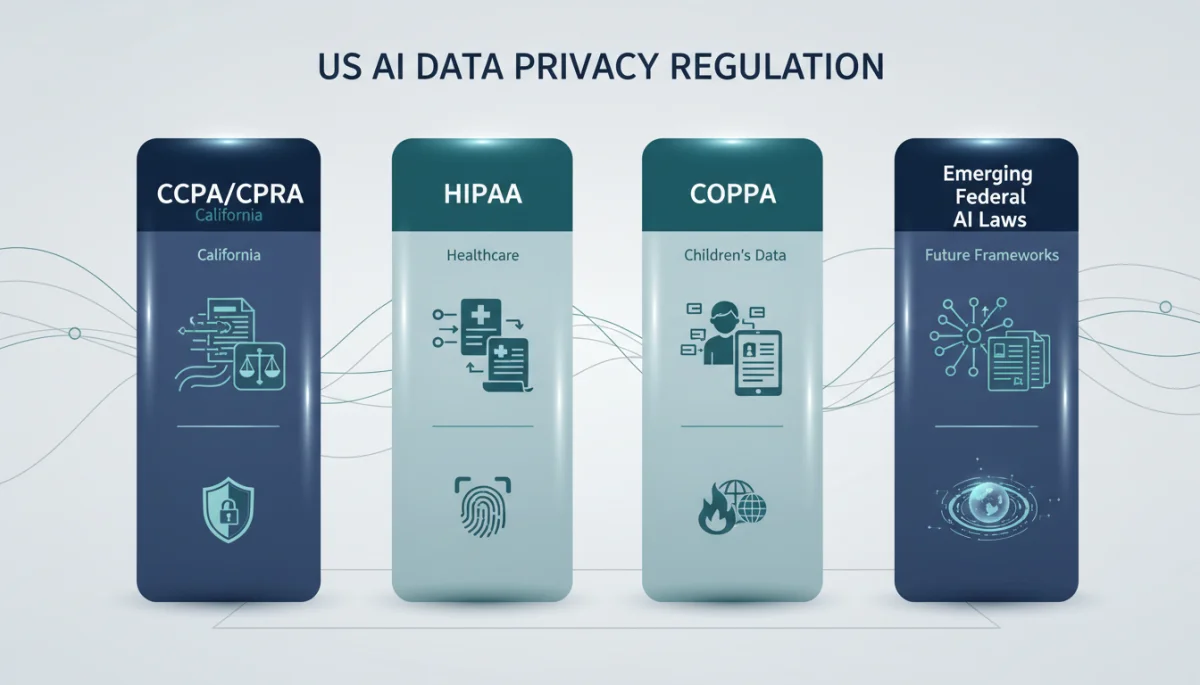
These discussions highlight a broad consensus on the need for clearer rules governing AI’s use of personal data. The challenge lies in crafting legislation that is both effective in protecting privacy and flexible enough to accommodate the rapid pace of AI innovation. The outcome of these ongoing debates will significantly shape the future of AI development and deployment across the United States, emphasizing a shift towards more responsible and transparent AI practices.
Challenges and Opportunities for Businesses
The evolving landscape of AI data privacy frameworks presents both significant challenges and unique opportunities for businesses operating in the US. Navigating the complex and often fragmented regulatory environment requires careful planning and strategic adaptation. However, companies that successfully integrate robust privacy practices into their AI strategies can gain a competitive advantage, building trust and fostering long-term customer loyalty.
Compliance Complexity and Fragmentation
One of the primary challenges is the sheer complexity of complying with a patchwork of federal, state, and potentially international regulations. Each jurisdiction may have different definitions of personal data, varying consent requirements, and distinct enforcement mechanisms. For businesses operating nationwide or globally, this necessitates a sophisticated understanding of multiple legal frameworks and the ability to implement adaptable compliance programs.
- Jurisdictional Differences: Adapting to varying state laws (e.g., California, Virginia, Colorado).
- Data Mapping: Accurately identifying and categorizing data used by AI systems.
- Consent Management: Implementing granular consent mechanisms for AI data processing.
- Regular Audits: Conducting continuous assessments of AI systems for privacy compliance.
The cost of non-compliance can be substantial, including hefty fines, legal battles, and severe reputational damage. Therefore, businesses must invest in legal expertise, privacy-enhancing technologies, and employee training to ensure their AI initiatives remain within legal bounds. This proactive investment not only mitigates risk but also demonstrates a commitment to ethical AI practices.
Building Trust and Competitive Advantage
Despite the challenges, the emphasis on AI data privacy offers significant opportunities. Companies that prioritize privacy can differentiate themselves in the market, appealing to consumers who are increasingly concerned about how their personal data is used. Transparency and strong privacy protections can become key selling points, fostering greater trust and loyalty.
By adopting privacy-by-design principles, businesses can integrate privacy considerations into the very core of their AI development process. This approach not only ensures compliance but also leads to the creation of more ethical, reliable, and user-centric AI products and services. Companies that embrace these principles early on will be better positioned to navigate future regulatory changes and to thrive in an increasingly privacy-conscious marketplace. Ultimately, viewing data privacy not merely as a compliance burden but as an integral component of responsible AI innovation can unlock new avenues for growth and sustained success.
Best Practices for AI Data Privacy Compliance
In light of the rapidly evolving data privacy frameworks, implementing robust best practices is essential for any organization deploying AI in the US. Proactive measures not only ensure compliance but also build consumer trust and foster a more ethical AI ecosystem. These practices should be integrated throughout the entire AI lifecycle, from data collection and model development to deployment and ongoing monitoring.
Implementing Privacy-by-Design and Privacy-by-Default
The core of effective AI data privacy compliance lies in adopting ‘privacy-by-design’ and ‘privacy-by-default’ principles. Privacy-by-design means embedding privacy considerations into the architecture and design of AI systems from the outset, rather than as an afterthought. This involves:
- Data Minimization: Collecting only the data strictly necessary for the AI’s intended purpose.
- Pseudonymization and Anonymization: De-identifying personal data whenever possible.
- End-to-End Security: Implementing strong encryption and access controls across the data pipeline.
- Transparency: Clearly communicating data practices to users.
Privacy-by-default ensures that the strictest privacy settings are automatically applied without requiring user intervention. This shifts the burden from the user to the organization to prioritize privacy, aligning with consumer expectations and regulatory requirements. By making privacy the default, companies can significantly reduce their risk exposure and enhance user confidence.
Regular Data Protection Impact Assessments (DPIAs)
Conducting regular Data Protection Impact Assessments (DPIAs) is another critical best practice. DPIAs help organizations identify, assess, and mitigate privacy risks associated with AI systems before they are deployed. This involves a systematic process of:
- Identifying Data Flows: Mapping how personal data is collected, processed, stored, and shared by the AI.
- Assessing Risks: Evaluating potential privacy harms, such as data breaches, discrimination, or surveillance.
- Proposing Mitigations: Developing strategies and controls to reduce identified risks to an acceptable level.
DPIAs are particularly vital for AI systems that process sensitive data, involve automated decision-making, or impact a large number of individuals. They provide a structured approach to ensuring that privacy considerations are thoroughly addressed and documented, demonstrating due diligence to regulators and stakeholders. Regular reviews of DPIAs are also necessary to account for changes in AI technology, data practices, or regulatory requirements, ensuring continuous compliance and risk management.
The Future Outlook for AI Data Privacy
The trajectory of AI data privacy in the US points towards a future of increased regulation, greater accountability, and a more harmonized approach. While the current landscape is fragmented, the growing consensus on the need for stronger protections suggests that comprehensive federal legislation may eventually emerge. This future will likely be characterized by a dynamic interplay between technological innovation and evolving legal frameworks, demanding continuous adaptation from all stakeholders.
Potential for Federal Harmonization
There is a strong push for federal harmonization to simplify the complex regulatory environment currently shaped by disparate state laws. A unified federal privacy law could provide clarity and consistency for businesses, reducing the compliance burden and fostering a more predictable operational landscape for AI development. Such legislation would likely incorporate key principles from existing state laws, such as consumer rights to access and delete data, along with specific provisions addressing AI’s unique challenges, like algorithmic transparency and bias mitigation.
However, achieving federal harmonization is a significant legislative undertaking, requiring consensus among diverse political and industry stakeholders. The debates will likely center on the scope of the law, the definition of personal data in an AI context, and the enforcement mechanisms. Despite these challenges, the long-term trend appears to be moving towards a more cohesive national strategy for AI data privacy, driven by both consumer demand and the imperative for responsible technological advancement.
Global Interoperability and Standards
As AI becomes increasingly global, the need for international interoperability in data privacy frameworks will also grow. The US will likely continue to engage with international partners to develop common standards and best practices for AI governance. This could involve aligning with aspects of the GDPR or collaborating on new international agreements that facilitate cross-border data flows while upholding strong privacy protections.
The development of global AI standards will be crucial for multinational corporations and for fostering a competitive global AI market. It will require balancing national interests with the benefits of international cooperation, particularly in areas like data sharing for AI research and development. The future of AI data privacy will thus be shaped not only by domestic policy decisions but also by broader international collaborations aimed at creating a responsible and ethical global AI ecosystem. This proactive engagement will be vital in ensuring that AI innovation serves humanity while respecting fundamental privacy rights across borders.
| Key Framework | Brief Description |
|---|---|
| NIST AI RMF | Voluntary framework for managing AI risks, including privacy. |
| State Privacy Laws | Comprehensive state-level regulations like CCPA/CPRA, VCDPA, CPA. |
| Algorithmic Accountability Act | Proposed federal law for AI impact assessments. |
| Federal Harmonization Efforts | Ongoing discussions for a unified national AI privacy law. |
Frequently Asked Questions About AI Data Privacy
The main challenges include a fragmented regulatory landscape with varying state laws, the complexity of managing large datasets for AI, and ensuring algorithmic transparency and fairness. Businesses must navigate these complexities to avoid legal and reputational risks while fostering innovation.
NIST’s AI RMF integrates privacy as a core component, providing voluntary guidance for organizations to identify, assess, and manage AI-related risks. It promotes a ‘privacy-by-design’ approach, encouraging privacy considerations from the initial stages of AI system development.
Key state laws include the California Consumer Privacy Act (CCPA) and California Privacy Rights Act (CPRA), the Virginia Consumer Data Protection Act (VCDPA), and the Colorado Privacy Act (CPA). These laws grant consumers significant rights and impose strict obligations on businesses using personal data with AI.
The Algorithmic Accountability Act is a proposed federal legislation that would require companies to conduct impact assessments for automated decision systems. Its goal is to evaluate AI systems for privacy, accuracy, fairness, and potential discrimination, promoting responsible AI deployment.
Federal harmonization would simplify the current complex regulatory environment, providing clear and consistent guidelines for businesses. This would reduce compliance burdens, foster innovation, and ensure a more predictable and unified approach to AI data privacy across the United States.
Conclusion
The landscape of AI data privacy in the US is undergoing a profound transformation, driven by both technological advancements and increasing public demand for accountability. The critical four frameworks—federal guidance like NIST’s AI RMF, influential state laws such as CCPA/CPRA, emerging legislative proposals like the Algorithmic Accountability Act, and ongoing discussions for federal harmonization—collectively underscore a significant shift towards more robust data protection. For businesses, this evolving environment presents a dual challenge of compliance and an opportunity to build trust through ethical AI practices. Proactive engagement with these frameworks, coupled with a commitment to privacy-by-design principles, will be paramount for navigating the future of AI responsibly and successfully.
