Boost Productivity by 10%: AR for Remote Work in 2026
Anúncios
Augmented Reality (AR) is poised to significantly enhance remote work productivity by 10% in 2026, offering practical solutions for immersive collaboration, dynamic training, and optimized virtual environments, thereby redefining the future of distributed teams.
As we advance towards 2026, the landscape of remote work continues to evolve, pushing the boundaries of what’s possible. The integration of AR remote productivity boost technologies is not just a futuristic concept but a tangible solution for enhancing efficiency and collaboration in distributed teams. This article explores practical strategies for leveraging augmented reality to achieve a significant uplift in remote work output.
Anúncios
The Augmented Reality Revolution in Remote Work
Augmented Reality (AR) is rapidly transforming various industries, and its impact on remote work environments is becoming increasingly profound. By overlaying digital information onto the real world, AR creates immersive experiences that can bridge geographical distances and enhance human interaction in virtual settings. This technology moves beyond simple video conferencing, offering a more engaging and effective way for teams to connect and collaborate.
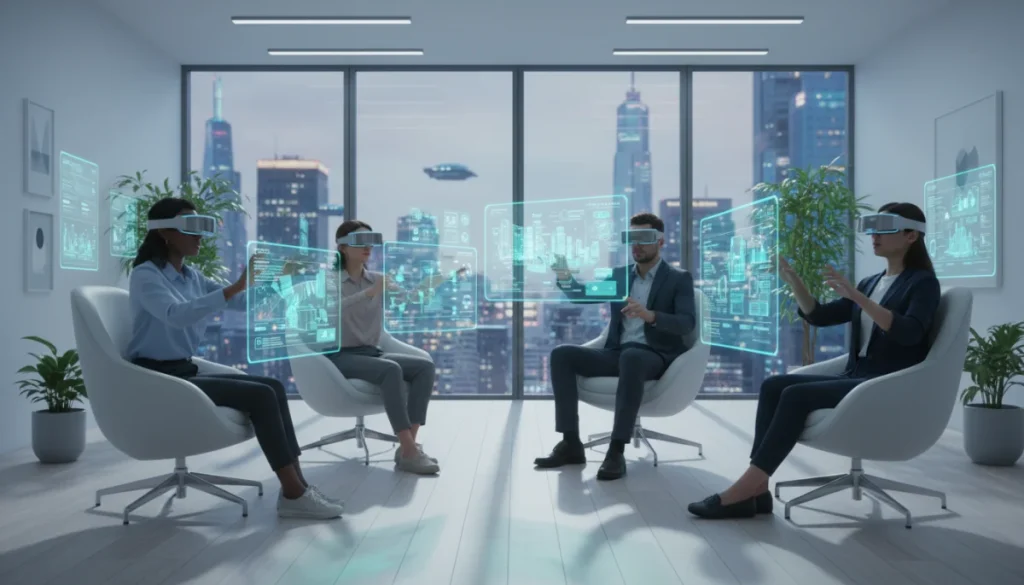
The core promise of AR in remote work lies in its ability to replicate and even improve upon in-person interactions. Imagine conducting a design review where team members, regardless of their physical location, can interact with a 3D holographic model of a product as if they were all in the same room. This level of immersion fosters a deeper understanding and more effective problem-solving, dramatically reducing miscommunication and increasing the speed of decision-making.
Anúncios
Enhanced Virtual Presence and Collaboration
One of the most significant advantages of AR is its capacity to create a more robust sense of presence. Traditional video calls often lack the non-verbal cues and spatial awareness critical for effective communication. AR addresses this by allowing participants to share a virtual space, where digital avatars or holographic representations can interact with shared digital objects and environments.
- Shared Virtual Workspaces: Teams can co-create and analyze data in a shared 3D environment.
- Realistic Avatars: More expressive and customizable avatars enhance personal connection.
- Spatial Audio: Improved sound cues make conversations feel more natural and less disjointed.
The shift towards AR-powered collaboration tools is not just about novelty; it’s about fundamentally improving how remote teams operate. By providing richer context and more natural interaction paradigms, AR facilitates better communication, stronger team cohesion, and ultimately, a more productive workflow. Organizations adopting these technologies early will gain a competitive edge in attracting and retaining top talent in a globalized workforce.
Practical AR Solutions for Remote Team Collaboration
Implementing Augmented Reality for remote work collaboration involves adopting specific tools and strategies that go beyond basic video conferencing. These solutions aim to create shared virtual spaces where teams can interact with digital content and each other in highly intuitive ways, mirroring the effectiveness of in-person meetings.
One key practical solution is the use of AR-enabled whiteboards and design platforms. These tools allow multiple users to annotate, draw, and manipulate 3D models or documents simultaneously, regardless of their physical location. This real-time, shared interaction capability is invaluable for brainstorming sessions, design reviews, and complex problem-solving, eliminating the limitations of screen-sharing in 2D.
Immersive Meeting Environments
AR glasses and headsets can transport remote teams into immersive meeting environments. Instead of a grid of faces, participants can appear as avatars in a virtual conference room, interacting with holographic presentations and shared virtual objects. This setup enhances engagement and reduces the fatigue often associated with prolonged video calls.
- 3D Data Visualization: Complex data can be presented as interactive 3D models.
- Virtual Whiteboarding: Collaborative brainstorming on persistent virtual canvases.
- Remote Expert Assistance: Field technicians can receive real-time holographic guidance from off-site experts.
Another powerful application is in virtual prototyping and product development. Engineers and designers can collaborate on 3D models of products, making real-time adjustments and conducting virtual walkthroughs. This accelerates the design cycle, reduces the need for physical prototypes, and allows for more frequent and effective feedback loops. The ability to visualize and manipulate designs in a shared AR space significantly streamlines the entire development process, leading to faster innovation and higher quality outputs.
Enhancing Remote Training and Onboarding with AR
Remote training and onboarding present unique challenges, often lacking the hands-on experience and direct mentorship of in-person programs. Augmented Reality offers innovative solutions to overcome these hurdles, providing immersive and interactive learning experiences that significantly boost effectiveness and retention for remote employees.
AR can simulate real-world scenarios, allowing new hires to practice tasks in a safe, controlled virtual environment. For instance, a remote technician can use an AR headset to overlay instructions and diagnostic information onto a piece of equipment, learning troubleshooting procedures without needing to be physically present with the device. This practical, experiential learning is far more effective than traditional video tutorials or manuals.
Interactive Learning Modules
Gone are the days of passive online courses. AR enables the creation of highly interactive learning modules where employees can engage directly with the content. This could involve virtual tours of facilities, interactive simulations of operational processes, or even gamified training scenarios that make learning engaging and memorable.
- Overlayed Instructions: Step-by-step guidance directly on real-world objects.
- 3D Model Interactions: Trainees can manipulate virtual objects to understand their function.
- Performance Analytics: AR platforms can track user interaction and provide feedback for improvement.
Furthermore, AR facilitates remote mentorship and expert guidance. A seasoned employee can virtually ‘look over the shoulder’ of a new hire, providing real-time visual cues and instructions directly within their field of view. This minimizes the learning curve, reduces errors, and builds confidence in new team members more quickly. By making training more engaging and accessible, AR ensures that remote employees are quickly up-skilled and integrated into the team, contributing to an overall boost in productivity.
Optimizing Virtual Workspaces and Digital Twins with AR
The concept of a virtual workspace is evolving beyond flat screens. Augmented Reality is enabling the creation of truly optimized virtual environments and digital twins that offer unparalleled efficiency and immersion for remote workers. These advanced setups allow users to interact with complex data and physical assets in a digital realm, revolutionizing how work gets done.
Imagine a remote architect reviewing a building design. Instead of looking at 2D blueprints, they can walk through a full-scale holographic projection of the building in their living room, identifying potential issues and collaborating with colleagues who are also present as avatars in the same virtual space. This capability significantly reduces errors, speeds up design iterations, and enhances the quality of the final output.
Digital Twins for Remote Operations
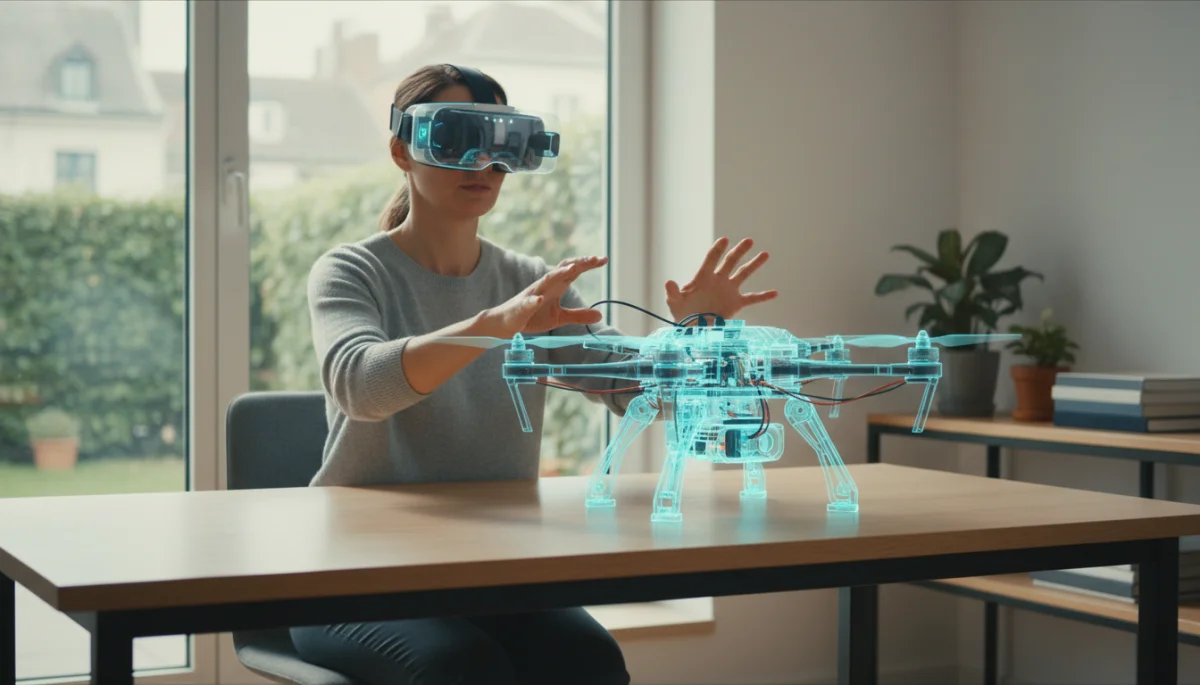
Digital twins, virtual replicas of physical assets or systems, are incredibly powerful when combined with AR. Remote operators can monitor and interact with a digital twin of a factory floor, a piece of machinery, or even an entire city infrastructure. AR overlays real-time data from sensors onto these digital twins, providing a comprehensive and intuitive overview of operations.
- Predictive Maintenance: Visualize potential failures on a digital twin before they occur.
- Remote Monitoring: Oversee complex operations from any location with real-time AR data.
- Scenario Planning: Test different operational strategies on the digital twin in AR.
The ability to interact with digital twins through AR allows for proactive decision-making and efficient problem-solving. For instance, a remote engineer can diagnose an issue with a machine by observing its digital twin, then guide a local technician through the repair process using AR overlays. This minimizes downtime, reduces travel costs, and ensures that expert knowledge is accessible globally. Optimizing virtual workspaces with AR and digital twins is not just about convenience; it’s about creating a more resilient, responsive, and productive remote operational model.
Challenges and Considerations for AR Implementation
While the benefits of Augmented Reality in remote work are clear, implementing these technologies comes with its own set of challenges and considerations. Addressing these proactively is crucial for successful adoption and to truly achieve a AR remote productivity boost.
One primary challenge is the initial cost of AR hardware and software. High-quality AR headsets can be expensive, and developing custom AR applications requires specialized expertise. Organizations need to conduct a thorough cost-benefit analysis to ensure that the investment aligns with their strategic objectives and expected returns on productivity. Furthermore, ensuring seamless integration with existing IT infrastructure can be complex, requiring careful planning and execution.
User Adoption and Training
Technology is only as effective as its users’ willingness to adopt it. AR headsets and applications can have a learning curve, and some employees may be resistant to new ways of working. Comprehensive training programs are essential to familiarize employees with the new tools and demonstrate their value in enhancing daily tasks.
- Ergonomics and Comfort: Ensuring AR devices are comfortable for prolonged use.
- Intuitive User Interfaces: Designing applications that are easy to navigate and understand.
- Technical Support: Providing robust support to resolve any technical issues promptly.
Data privacy and security are also critical concerns. As AR systems collect and process spatial data and potentially sensitive information, organizations must implement strong security protocols and comply with relevant data protection regulations. Establishing clear policies for data usage and ensuring employee privacy will build trust and encourage wider adoption. Overcoming these challenges requires a strategic approach that considers technology, people, and processes in equal measure, paving the way for a truly transformative remote work experience.
Measuring the 10% Productivity Boost with AR
To truly understand the impact of Augmented Reality on remote work, it’s essential to establish clear metrics and methodologies for measuring the targeted 10% productivity boost. Without proper evaluation, the investment in AR technology may not yield the desired strategic benefits.
One direct way to measure productivity is by tracking task completion times and error rates. For tasks involving design, assembly, or data analysis, AR can significantly reduce the time required and minimize mistakes. Comparing these metrics before and after AR implementation provides a quantitative measure of efficiency gains. For instance, if a design review process previously took five days and now takes four with AR, that’s a direct 20% improvement in that specific workflow.
Key Performance Indicators (KPIs) for AR Impact
Beyond direct task metrics, several KPIs can indicate an overall productivity boost. These include factors related to collaboration, employee satisfaction, and operational efficiency, all of which contribute to the bottom line.
- Reduced Travel Costs: Less need for in-person meetings and site visits.
- Faster Decision-Making: Quicker resolution of complex problems through immersive collaboration.
- Improved Training Effectiveness: Higher knowledge retention and faster skill acquisition.
- Employee Engagement: Increased satisfaction and reduced turnover due to advanced tools.
Another crucial aspect is qualitative feedback from employees. Surveys and interviews can reveal improvements in communication, job satisfaction, and perceived efficiency. Understanding how employees feel about using AR tools can highlight areas for further optimization and help quantify the ‘soft’ benefits that might not appear in direct numerical metrics. Combining quantitative data with qualitative insights provides a holistic view of AR’s impact, ensuring that the 10% productivity boost is not just a target, but a measurable reality that justifies the technological investment and strategic shift.
The Future Outlook: AR Integration and Evolution in Remote Work
Looking beyond 2026, the integration and evolution of Augmented Reality in remote work environments are set to accelerate, fundamentally reshaping how we perceive and execute professional tasks. The initial strides made in boosting productivity will lay the groundwork for even more sophisticated applications and widespread adoption, making AR an indispensable component of the modern distributed workforce.
Future AR systems will likely become more lightweight, comfortable, and seamlessly integrated into our daily lives, moving from specialized headsets to more discreet eyewear or even contact lenses. This reduction in form factor will remove barriers to adoption, making AR a more natural extension of our digital interactions. The processing power and display fidelity will also continue to improve, offering hyper-realistic holographic experiences that are indistinguishable from physical objects.
Advancements in AI and Haptics
The synergy between AR and Artificial Intelligence (AI) will unlock new levels of productivity. AI will personalize AR experiences, anticipate user needs, and provide intelligent assistance, making remote work more intuitive and efficient. Haptic feedback technologies will also advance, allowing users to ‘feel’ virtual objects, further enhancing immersion and interaction in remote collaboration and training scenarios.
- AI-Powered Virtual Assistants: Proactive support and information delivery in AR.
- Realistic Haptic Feedback: Tangible interaction with virtual objects.
- Cross-Platform Interoperability: Seamless AR experiences across different devices and ecosystems.
Furthermore, the development of open standards and interoperable platforms will ensure that AR solutions can be easily integrated across various organizational tools and systems. This will foster a more connected and flexible remote work ecosystem, where teams can fluidly move between different AR applications and devices without compatibility issues. The evolution of AR will not only maintain the AR remote productivity boost but continually elevate it, transforming remote work from a necessity into a preferred, highly efficient, and engaging mode of operation for businesses worldwide.
| Key Aspect | Impact on Productivity |
|---|---|
| Immersive Collaboration | Enhances team cohesion and decision-making through shared virtual spaces. |
| Remote Training | Provides hands-on, interactive learning, reducing onboarding time and errors. |
| Virtual Workspaces | Optimizes complex tasks with 3D data visualization and digital twins. |
| Performance Measurement | Quantifies AR’s impact through KPIs, task times, and error rates. |
Frequently Asked Questions About AR in Remote Work
AR in remote work overlays digital information onto a user’s real-world view, enhancing collaboration, training, and virtual interactions. It allows remote teams to share and manipulate 3D models and data as if they were physically together, fostering deeper engagement and communication.
AR boosts productivity by improving communication clarity, accelerating design cycles with virtual prototyping, enhancing training effectiveness, and enabling real-time remote expert assistance. These efficiencies reduce errors and accelerate decision-making, contributing to significant gains.
Key challenges include the initial cost of hardware and software, ensuring seamless integration with existing systems, overcoming user adoption resistance, and addressing data privacy and security concerns. Strategic planning is essential to mitigate these obstacles effectively.
AR offers a more immersive alternative to traditional video conferencing, particularly for tasks requiring spatial awareness or 3D interaction. While it may not fully replace all video calls, AR significantly enhances specific collaborative scenarios, making meetings more engaging and productive.
Primarily, AR remote work requires specialized AR headsets or smart glasses. Examples include devices from manufacturers like Microsoft HoloLens or Magic Leap. These devices project digital content into the user’s field of view, enabling interactive experiences.
Conclusion
The journey towards a 10% AR remote productivity boost by 2026 is not merely aspirational; it’s a strategic imperative for organizations aiming to thrive in the evolving landscape of work. Augmented Reality offers transformative solutions that address many inherent limitations of traditional remote work, fostering deeper collaboration, more effective training, and highly optimized virtual environments. While challenges such as cost, integration, and user adoption exist, the demonstrable benefits in efficiency, innovation, and employee engagement make the investment in AR not just justifiable, but essential. As the technology continues to mature, its role in defining the future of productive and flexible remote work will only grow, cementing its status as a cornerstone of modern enterprise.
