Maximizing ROI: Blockchain in Supply Chains by 2026

Anúncios
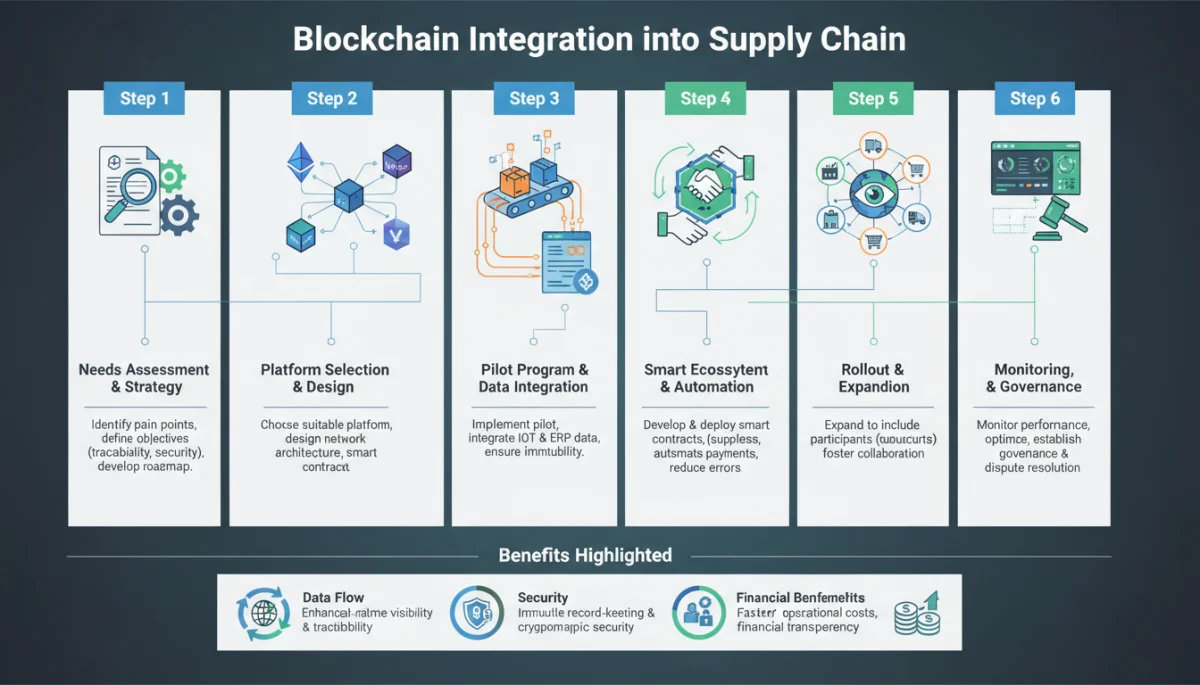
Implementing a strategic 6-step framework for blockchain integration into supply chains by 2026 is crucial for businesses aiming to significantly enhance financial returns and operational efficiency.
In an increasingly interconnected global economy, businesses are constantly seeking innovative ways to optimize operations and drive profitability. The integration of blockchain supply chain ROI is emerging as a transformative strategy, promising unprecedented transparency, security, and efficiency. This framework aims to guide organizations through a structured approach, ensuring that the adoption of this cutting-edge technology translates into tangible financial benefits by 2026.
Anúncios
understanding blockchain’s financial promise in supply chains
Blockchain technology, often associated with cryptocurrencies, offers far more than just digital currency. Its distributed, immutable ledger system presents a compelling solution for the inherent complexities and vulnerabilities within traditional supply chains. The financial promise lies in its ability to reduce costs, mitigate risks, and unlock new revenue streams, making it a critical consideration for forward-thinking enterprises.
The current landscape of global supply chains is riddled with inefficiencies, from opaque tracking systems and fraudulent activities to costly delays and disputes. These issues directly impact a company’s bottom line. Blockchain’s core attributes—decentralization, transparency, and immutability—directly address these challenges, paving the way for significant financial improvements.
Anúncios
reducing operational costs
One of the most immediate financial benefits of blockchain in supply chains is the reduction of operational costs. By automating processes and eliminating intermediaries, companies can streamline their logistics and administrative tasks.
- Automated processes: Smart contracts can automatically execute agreements, reducing manual paperwork and potential human error.
- Reduced arbitration: Enhanced transparency minimizes disputes and the need for costly legal interventions.
- Lower administrative overhead: Centralized data management systems become less critical, cutting down on maintenance and staffing expenses.
enhancing transparency and trust
Transparency is not merely a buzzword; it’s a foundation for trust, which in turn fosters stronger business relationships and consumer confidence. Blockchain provides an unalterable record of every transaction and movement, from raw material sourcing to final product delivery.
This level of visibility allows stakeholders to verify the authenticity and origin of products, combating counterfeiting and ensuring ethical sourcing. For consumers, this translates to greater trust in brands, potentially leading to increased sales and brand loyalty. For businesses, it means fewer instances of product recalls due to traceability issues and a stronger reputation in the market.
The financial implications of improved transparency are vast. Companies can better manage their inventory, reduce waste, and respond more quickly to supply chain disruptions. This proactive approach minimizes financial losses associated with unexpected events and enhances overall resilience. Ultimately, understanding blockchain’s financial promise is the first step towards realizing its full potential within a modern supply chain.
step 1: assessing current supply chain inefficiencies and pain points
Before embarking on any technological integration, a thorough assessment of existing supply chain inefficiencies is paramount. This initial step involves a deep dive into current processes, identifying bottlenecks, areas of high cost, and potential points of failure. Without a clear understanding of these pain points, the implementation of blockchain might address symptoms rather than root causes, leading to suboptimal ROI.
This assessment should cover every stage of the supply chain, from procurement and manufacturing to logistics and last-mile delivery. It’s crucial to involve all relevant stakeholders, including suppliers, logistics partners, and internal departments, to gain a comprehensive perspective.
identifying data silos and lack of visibility
Many traditional supply chains suffer from fragmented data systems, where information is stored in isolated silos. This lack of interconnectedness creates significant visibility gaps, making it difficult to track goods in real-time or verify their provenance.
- Manual data entry: Prone to errors and delays, increasing operational costs.
- Delayed information flow: Hinders quick decision-making and responsiveness to market changes.
- Inconsistent data: Leads to discrepancies and disputes among supply chain partners.
evaluating financial leakages and fraud risks
Financial leakages, such as demurrage fees, penalties for late deliveries, or losses due to product damage, can significantly erode profits. Furthermore, the risk of fraud, counterfeiting, and intellectual property theft remains a constant threat in opaque supply chains.
A detailed financial audit of the supply chain can reveal where money is being lost and identify areas where blockchain’s immutable ledger can provide a robust solution. This includes analyzing the costs associated with dispute resolution, insurance premiums, and security measures currently in place.
By meticulously identifying these inefficiencies and pain points, organizations can build a strong business case for blockchain adoption. This groundwork ensures that the subsequent steps are strategically aligned with the goal of maximizing ROI, focusing on solutions that directly address the most pressing challenges and offer the greatest potential for financial return.
step 2: defining clear ROI objectives and key performance indicators
With a comprehensive understanding of existing inefficiencies, the next crucial step is to define clear, measurable ROI objectives. Simply stating a desire for ‘better’ or ‘more efficient’ isn’t enough. Specific, quantifiable goals are essential to track progress, justify investment, and ultimately demonstrate the financial value of blockchain integration. These objectives should be aligned with the identified pain points from Step 1.
Key Performance Indicators (KPIs) must be established to monitor the impact of blockchain on these objectives. These KPIs will serve as the benchmarks against which the success of the implementation will be measured, providing tangible evidence of financial improvement.
quantifiable financial targets
ROI objectives should be expressed in financial terms whenever possible. This could include specific percentages of cost reduction, revenue increase, or risk mitigation.
- Cost savings: Aim for a reduction in operational costs, such as administrative expenses, logistics fees, or inventory holding costs, by a specific percentage.
- Revenue growth: Project an increase in sales due to enhanced brand trust, reduced counterfeiting, or faster time-to-market.
- Risk reduction: Quantify the financial impact of mitigating risks like fraud, product recalls, or supply chain disruptions.
operational efficiency metrics
Beyond direct financial figures, operational efficiency metrics provide insights into how blockchain is improving the underlying processes that contribute to ROI. These metrics often have a direct correlation with financial outcomes.
For instance, reducing lead times can lead to faster inventory turnover and improved cash flow. Similarly, improved data accuracy can minimize errors that lead to costly rework or customer dissatisfaction.
Defining clear ROI objectives and KPIs ensures that the blockchain initiative is not just a technological experiment but a strategic investment designed to yield significant financial returns. This clarity provides a roadmap for implementation and a framework for evaluating success, keeping the focus squarely on maximizing the financial impact by 2026.
step 3: selecting the right blockchain platform and partners
The success of blockchain integration hinges significantly on selecting the appropriate platform and forging strategic partnerships. The blockchain landscape is diverse, with various protocols, consensus mechanisms, and functionalities. A one-size-fits-all approach is rarely effective; instead, the choice must align with the specific needs and ROI objectives defined in the previous steps. This involves careful evaluation of technical capabilities, scalability, security features, and cost-effectiveness.
Equally important is the selection of technology partners, including blockchain solution providers, system integrators, and potentially other supply chain participants willing to collaborate on a shared ledger. These partnerships are critical for successful implementation and adoption.
evaluating blockchain platforms
When evaluating platforms, consider factors such as whether a public, private, or consortium blockchain is most suitable. Each has distinct characteristics regarding decentralization, access control, and transaction throughput.
- Public blockchains: Offer high transparency and decentralization but may lack the privacy required for sensitive supply chain data.
- Private blockchains: Provide greater control and speed but sacrifice some decentralization.
- Consortium blockchains: A hybrid approach, governed by a pre-selected group, offering a balance of control and decentralization, often ideal for multi-party supply chains.
Consider also the platform’s ability to integrate with existing enterprise resource planning (ERP) systems and other legacy infrastructure. Interoperability is key to avoiding further data silos.
identifying strategic partners
Collaboration is inherent to blockchain’s success in a supply chain context. Identifying and engaging with strategic partners early in the process is crucial. These partners might include key suppliers, distributors, logistics providers, and even regulatory bodies.
A successful blockchain ecosystem requires all participants to be on board and willing to share data. This necessitates clear communication, trust-building, and a shared understanding of the benefits for all parties involved. A strong partnership ecosystem not only facilitates technical implementation but also ensures broader adoption and network effects, which amplify the ROI.
Ultimately, a well-chosen blockchain platform and a robust network of partners lay the groundwork for a scalable and sustainable integration. This strategic selection process is vital for maximizing the financial impact and ensuring the long-term viability of the blockchain solution within the supply chain by 2026.
step 4: phased implementation and pilot programs
Implementing blockchain across an entire supply chain at once can be overwhelming and risky. A phased approach, beginning with pilot programs, allows organizations to test the technology, gather feedback, and iterate before a full-scale rollout. This strategy minimizes disruption, manages costs effectively, and provides valuable learning opportunities, ultimately safeguarding the investment and maximizing ROI.
Pilot programs should focus on specific, high-impact areas identified in Step 1, where blockchain can demonstrate immediate and measurable benefits. This could be a particular product line, a specific geographic region, or a critical segment of the supply chain.
starting small with high-impact areas
Choosing the right pilot project is crucial. It should be an area where the identified pain points are significant and the potential for quantifiable ROI is high. This ensures that early successes can build momentum and justify further investment.
- Traceability for high-value goods: Track luxury items or pharmaceuticals where counterfeiting is a major concern.
- Dispute resolution for specific contracts: Implement smart contracts for a subset of supplier agreements to reduce manual intervention and delays.
- Inventory management for a single warehouse: Optimize stock levels and reduce waste in a controlled environment.
iterative development and feedback loops
The pilot phase is not just about testing the technology; it’s also about validating the business case and refining the solution. Establishing clear feedback loops with all participants in the pilot is essential.
Gathering data on performance against established KPIs, identifying user experience challenges, and understanding integration issues are all part of this iterative process. This allows for necessary adjustments and optimizations before scaling, ensuring that the final solution is robust, user-friendly, and delivers the desired financial outcomes.
By adopting a phased implementation strategy with well-defined pilot programs, companies can de-risk their blockchain investment. This controlled approach allows for continuous improvement, ensuring that the technology is fine-tuned to deliver maximum financial impact and contribute significantly to the overall ROI by 2026.
step 5: scaling and integrating blockchain across the supply chain
Once pilot programs have proven successful and the blockchain solution has been refined, the next critical step is to scale its implementation across the broader supply chain. This involves extending the technology to more products, partners, and geographical regions, while ensuring seamless integration with existing enterprise systems. Scaling is where the true financial benefits of blockchain begin to materialize, transforming localized improvements into systemic efficiencies and widespread ROI.
Strategic planning for scalability is essential, taking into account data volume, transaction speed, and the onboarding of new participants. The goal is to create a fully interconnected and transparent supply chain ecosystem.
seamless system integration
Integrating blockchain with existing ERP, CRM, and logistics management systems is paramount. A fragmented technological landscape will negate many of the benefits of blockchain. APIs and middleware solutions play a crucial role in enabling this interoperability.
- Data synchronization: Ensure consistent data flow between blockchain and legacy systems to maintain a single source of truth.
- Automated workflows: Leverage smart contracts to automate tasks across different platforms, reducing manual effort and errors.
- Scalable infrastructure: Design the blockchain infrastructure to handle increasing transaction volumes and data storage requirements as the network grows.
onboarding and training partners
Scaling blockchain requires bringing more supply chain partners onto the network. This often involves significant change management, including comprehensive training and support to ensure smooth adoption. The financial impact of blockchain is amplified as more participants join, creating a network effect where transparency and efficiency increase exponentially.
Providing clear incentives for partners to join, such as faster payments, reduced administrative burden, or improved traceability for their own operations, can accelerate adoption. Effective communication about the benefits and a user-friendly interface are also key to successful onboarding.
Scaling blockchain integration is a complex but rewarding process. By focusing on seamless system integration and robust partner onboarding, organizations can unlock the full potential of the technology, driving substantial financial returns and solidifying their competitive advantage in the global market by 2026. This comprehensive approach ensures that the initial investment yields maximum ROI across the entire supply chain.
step 6: continuous monitoring, optimization, and future-proofing
The journey of blockchain integration does not end with full-scale implementation. Continuous monitoring, optimization, and future-proofing are essential to sustain and enhance the financial benefits over time. The technological landscape evolves rapidly, and supply chain dynamics are constantly shifting. Therefore, a proactive approach to maintaining and upgrading the blockchain solution is critical for long-term ROI.
This final step involves regularly reviewing performance against established KPIs, identifying new opportunities for improvement, and adapting the blockchain strategy to emerging technologies and market trends.
regular performance reviews and adjustments
Scheduled reviews of the blockchain’s performance are vital to ensure it continues to meet ROI objectives. This includes analyzing data on cost savings, efficiency gains, and risk reduction. Any deviations from expected outcomes should trigger an investigation and corrective action.
- Data analytics: Utilize advanced analytics to extract insights from blockchain data, identifying patterns and areas for further optimization.
- User feedback: Continuously collect feedback from all users within the supply chain to identify pain points and opportunities for interface or functionality improvements.
- Security audits: Regularly conduct security audits to protect against vulnerabilities and ensure data integrity.
adapting to emerging technologies and market trends
The blockchain space is dynamic, with new innovations constantly emerging. Future-proofing the supply chain solution means staying abreast of these developments and evaluating their potential to further enhance ROI. This could involve integrating with other technologies like AI, IoT, or advanced data analytics.
Market trends, such as increasing consumer demand for sustainable and ethically sourced products, can also present new opportunities for blockchain to add value. By adapting the solution to meet these evolving demands, businesses can unlock new revenue streams and strengthen their market position.
Continuous monitoring, optimization, and future-proofing ensure that the blockchain investment remains relevant and continues to deliver maximum financial impact. This ongoing commitment to improvement guarantees that the supply chain operates at peak efficiency, maintaining a competitive edge and generating substantial ROI well beyond 2026.
| Key Point | Brief Description |
|---|---|
| Assess Inefficiencies | Identify current supply chain pain points and cost centers to target blockchain solutions effectively. |
| Define ROI Objectives | Set clear, measurable financial and operational goals to track blockchain’s impact and justify investment. |
| Phased Implementation | Start with pilot programs in high-impact areas, test, and iterate before scaling to minimize risk. |
| Continuous Optimization | Regularly monitor performance, adapt to new technologies, and optimize for sustained financial gains. |
frequently asked questions about blockchain in supply chains
The primary financial benefit is significant cost reduction through enhanced transparency, automation via smart contracts, and reduced fraud. This leads to improved operational efficiency and a stronger bottom line for businesses.
Blockchain creates an immutable and distributed ledger, recording every transaction and movement of goods. This provides all authorized participants with real-time, verifiable data, eliminating information silos and fostering trust across the network.
Smart contracts automate agreements and transactions based on predefined conditions. This reduces manual intervention, minimizes disputes, accelerates payment processes, and ensures compliance, all contributing to greater efficiency and cost savings.
While highly beneficial, blockchain’s suitability depends on specific supply chain complexities and needs. It’s particularly impactful for chains with high-value goods, multiple intermediaries, or stringent regulatory requirements, where transparency and traceability are critical.
ROI is measured by tracking quantifiable KPIs such as reduced operational costs, increased revenue from enhanced brand trust, faster dispute resolution, and improved inventory turnover. Clear objectives set at the outset are crucial for accurate measurement.
conclusion
The integration of blockchain into supply chains by 2026 is not merely a technological upgrade but a strategic imperative for businesses aiming to secure a competitive edge and maximize their financial returns. By diligently following this 6-step framework—from assessing current inefficiencies and defining clear ROI objectives to selecting the right platforms, implementing in phases, scaling judiciously, and committing to continuous optimization—organizations can unlock unprecedented levels of transparency, efficiency, and trust. The financial impact of such a transformation is profound, promising significant cost reductions, enhanced revenue streams, and a robust defense against risks. Embracing this framework positions businesses to thrive in a rapidly evolving global marketplace, ensuring that their digital journey leads to sustainable growth and unparalleled success.
