Digital Transformation Roadmaps: 2x ROI in 3 Years

Anúncios
Achieving a 2x ROI on technology investments within three years through strategic digital transformation roadmaps requires meticulous planning, agile execution, and continuous optimization of processes and adoption.
Anúncios
In today’s rapidly evolving business landscape, the imperative to innovate is undeniable. For organizations aiming to thrive, developing robust digital transformation roadmaps is not merely an option but a strategic necessity. This journey, when executed thoughtfully, promises not only operational efficiencies but also a significant return on investment, potentially doubling your technology investment within three years. But how can businesses effectively navigate this complex terrain?
Understanding the Core of Digital Transformation
Digital transformation is more than just adopting new technologies; it’s a fundamental shift in how an organization operates and delivers value to its customers. It involves integrating digital technology into all areas of a business, fundamentally changing how you operate and deliver value to customers. This cultural change requires organizations to continually challenge the status quo, experiment, and get comfortable with failure.
Anúncios
Many companies embark on digital transformation without a clear vision or a well-defined roadmap, leading to wasted resources and missed opportunities. The key lies in understanding that this is a holistic process, impacting people, processes, and technology equally. It’s about leveraging digital tools to create new or modify existing business processes, culture, and customer experiences to meet changing business and market requirements.
Defining Your Digital Vision
Before any technology is chosen or implemented, an organization must clearly define its digital vision. This involves looking beyond immediate problems to envision what the business will look like in three to five years. What customer experiences do you want to create? What operational efficiencies are critical? What new business models can emerge?
- Identify key business drivers and strategic objectives.
- Assess current digital maturity and capabilities.
- Engage leadership and key stakeholders in vision alignment.
- Articulate a clear, compelling future state for the organization.
Without a strong, shared vision, digital transformation efforts can become fragmented and lose momentum. This initial phase sets the foundation for all subsequent planning and execution, ensuring that every step taken aligns with the overarching strategic goals.
In essence, digital transformation is a journey of continuous improvement and adaptation. It demands a forward-looking perspective and a commitment to integrating technology not just as a tool, but as a core enabler of business strategy. This foundational understanding is crucial for building effective roadmaps that deliver tangible and significant ROI.
Crafting an Effective Digital Transformation Roadmap
A well-crafted digital transformation roadmap serves as your strategic blueprint, guiding your organization through the complexities of technological change. It outlines the specific steps, timelines, resources, and metrics needed to achieve your digital vision. This roadmap isn’t a static document; it’s a living plan that evolves with your business and the market.
The process of creating this roadmap involves several critical stages, from initial assessment to detailed planning and resource allocation. Each stage requires careful consideration and collaboration across different departments to ensure alignment and buy-in.
Assessing Current State and Identifying Gaps
Before charting a course for the future, it’s essential to understand your current position. This involves a comprehensive audit of existing systems, processes, and capabilities. Identify pain points, inefficiencies, and areas where digital solutions can deliver the most impact.
- Conduct a thorough technology infrastructure audit.
- Analyze current business processes for bottlenecks.
- Evaluate employee digital skills and training needs.
- Gather customer feedback on existing digital experiences.
This assessment helps in identifying the specific gaps that digital transformation needs to address, ensuring that efforts are focused on areas that will yield the greatest returns.
Prioritizing Initiatives and Setting Milestones
With a clear understanding of your current state and desired future, the next step is to prioritize digital initiatives. Not all projects can be undertaken simultaneously. Focus on those that offer the highest potential for impact and ROI, aligning them with your strategic objectives. Establish clear, measurable milestones to track progress.
A phased approach often works best, allowing for incremental successes and adjustments along the way. Each phase should have defined deliverables and success metrics, ensuring accountability and continuous evaluation.
Ultimately, a robust digital transformation roadmap provides clarity and direction, minimizing risks and maximizing the potential for a 2x ROI. It ensures that every investment in technology is purposeful and contributes directly to the organization’s strategic goals.
Key Pillars for Achieving 2x ROI
Achieving a 2x ROI on technology investments in three years through digital transformation is an ambitious but attainable goal. It hinges on focusing on several key pillars that drive value and ensure sustainable growth. These pillars encompass not only technological considerations but also organizational and cultural aspects.
Without a balanced approach to these pillars, even the most innovative technologies can fall short of their potential. It’s about creating an ecosystem where technology, people, and processes work in harmony to unlock new levels of efficiency and customer satisfaction.
Customer-Centricity and Experience Enhancement
At the heart of successful digital transformation is the customer. Investments that enhance customer experience (CX) often yield the most significant returns. This includes personalizing interactions, streamlining digital touchpoints, and leveraging data to anticipate customer needs.
By putting the customer first, businesses can foster loyalty, increase engagement, and ultimately drive revenue growth. Digital tools enable a deeper understanding of customer behavior, allowing for more targeted and effective strategies.
Operational Efficiency and Automation
Automating repetitive tasks and optimizing operational processes can lead to substantial cost savings and increased productivity. Digital transformation allows for the integration of systems, reducing manual errors and freeing up employees to focus on higher-value activities.
- Implement robotic process automation (RPA) for routine tasks.
- Streamline supply chain management with digital platforms.
- Utilize AI for data analysis and predictive insights.
- Integrate CRM and ERP systems for a unified data view.
These efficiencies directly contribute to improved profitability, which is a key component of achieving a high ROI.
Data-Driven Decision Making
Leveraging data analytics is crucial for informed decision-making. Digital transformation generates vast amounts of data, which, when properly analyzed, can provide invaluable insights into market trends, customer preferences, and operational performance.
This data-driven approach allows organizations to make strategic adjustments quickly, optimize resource allocation, and identify new opportunities for growth. It moves decision-making from intuition to evidence, leading to more predictable and favorable outcomes.
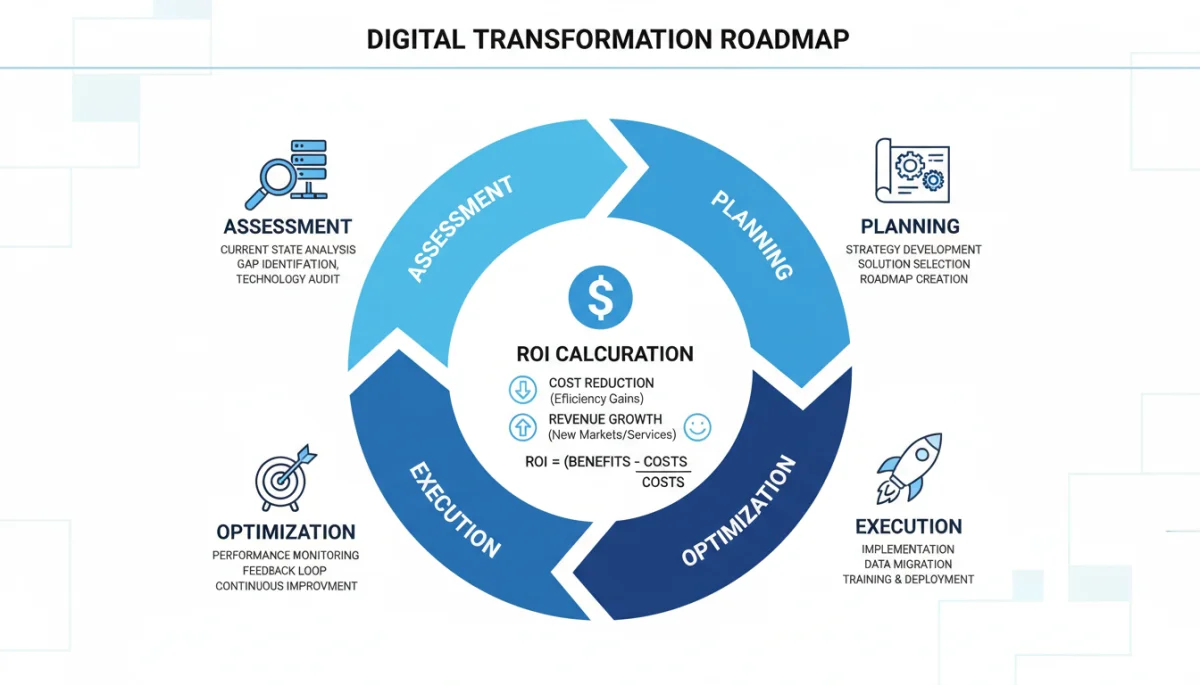
By focusing on these pillars, organizations can systematically build a foundation for digital transformation that not only achieves a 2x ROI but also positions them for long-term success and competitiveness.
Measuring and Maximizing Your ROI
Measuring the return on investment (ROI) of digital transformation initiatives is crucial for demonstrating value and securing continued support. It goes beyond simple financial metrics, encompassing improvements in efficiency, customer satisfaction, and market positioning. A robust measurement framework ensures that your efforts are truly paying off.
Many organizations struggle with accurately quantifying the benefits of digital projects, often due to a lack of clear objectives or inadequate tracking mechanisms. To achieve a 2x ROI, it’s essential to establish clear KPIs from the outset and continuously monitor progress against them.
Defining Key Performance Indicators (KPIs)
Before launching any initiative, define specific and measurable KPIs that directly link to your strategic goals. These might include:
- Revenue growth from new digital channels.
- Cost savings from automated processes.
- Customer satisfaction scores (CSAT, NPS).
- Employee productivity improvements.
- Market share gains in digital segments.
By focusing on a balanced scorecard of financial and non-financial metrics, you can get a holistic view of your transformation’s impact.
Establishing Baselines and Tracking Progress
To accurately measure improvement, you must first establish a baseline. Document your current performance metrics before implementing any digital changes. This baseline provides a reference point against which all future progress can be measured.
Regularly track and report on your KPIs, comparing current performance to your established baselines and targets. Use dashboards and analytics tools to visualize data, making it easy to identify trends and areas needing adjustment. This continuous monitoring allows for agile responses and course corrections, maximizing the likelihood of achieving your ROI goals.
Maximizing ROI also involves iterating and optimizing. Digital transformation is not a one-time project but an ongoing process. Be prepared to refine strategies, adopt new technologies, and adapt to feedback to ensure sustained value creation. This iterative approach is fundamental to not just achieving, but exceeding, your investment returns.
Overcoming Common Challenges in Digital Transformation
While the promise of a 2x ROI is enticing, the path to successful digital transformation is often fraught with challenges. Organizations frequently encounter roadblocks related to culture, technology integration, and resource allocation. Proactive identification and mitigation of these challenges are essential for keeping your roadmap on track.
Many digital transformation efforts falter not because of a lack of technology, but due to human and organizational factors. Addressing these issues head-on can significantly increase the likelihood of success and ensure that investments yield their intended returns.
Addressing Cultural Resistance
Change is often met with resistance, and digital transformation is no exception. Employees may be hesitant to adopt new tools or processes, fearing job displacement or an inability to adapt. Overcoming this requires strong leadership, clear communication, and comprehensive training programs.
- Communicate the vision and benefits clearly and repeatedly.
- Involve employees in the transformation process to foster ownership.
- Provide adequate training and support for new technologies.
- Celebrate small wins to build momentum and morale.
A culture that embraces change and continuous learning is a cornerstone of successful digital transformation.
Navigating Technology Integration Complexities
Integrating new digital solutions with legacy systems can be a significant technical hurdle. Compatibility issues, data migration challenges, and security concerns often arise. A well-planned integration strategy is vital to avoid disruptions and ensure seamless operations.
Consider modular architectures, API-first approaches, and cloud-native solutions to simplify integration. Engaging experienced IT professionals or consulting partners can also help navigate these complexities effectively.
By anticipating and preparing for these common challenges, organizations can build more resilient digital transformation roadmaps. Proactive problem-solving and a flexible approach are key to maintaining momentum and ultimately realizing the desired ROI.
Future-Proofing Your Digital Transformation
In a world where technology evolves at an unprecedented pace, future-proofing your digital transformation roadmap is paramount. It’s not enough to implement current best practices; organizations must build agility and foresight into their strategies to remain competitive and continue achieving significant ROI over time. This involves cultivating a culture of continuous learning and adaptation.
The goal is to create a digital infrastructure and organizational mindset that can anticipate and respond to emerging trends, rather than simply reacting to them. This proactive stance ensures that your investments continue to deliver value long after their initial implementation.
Embracing Emerging Technologies
Keep a keen eye on emerging technologies such as artificial intelligence (AI), machine learning (ML), blockchain, and the Internet of Things (IoT). While not every new technology will be relevant to your business, understanding their potential impact can inform future strategic decisions.
Experiment with pilot projects to test the viability and potential ROI of new technologies before committing to large-scale implementations. This allows for controlled learning and minimizes risk.
Building an Agile and Adaptive Organization
An agile organizational structure and mindset are crucial for sustained digital success. This means fostering cross-functional collaboration, empowering teams, and adopting iterative development methodologies. Agility allows your organization to quickly pivot and adapt to changing market conditions and technological advancements.
- Implement agile project management frameworks (e.g., Scrum, Kanban).
- Encourage continuous feedback loops and rapid prototyping.
- Invest in upskilling and reskilling your workforce.
- Foster a culture of experimentation and learning from failures.
This adaptability extends beyond technology to encompass business models, customer engagement strategies, and internal processes. An organization that can fluidly adjust its course is better positioned to leverage new opportunities and mitigate unforeseen challenges.
Future-proofing your digital transformation is an ongoing commitment to innovation and strategic foresight. By continuously evaluating your technological landscape and cultivating an adaptive organizational culture, you can ensure that your digital transformation roadmaps continue to deliver exceptional value and a consistent 2x ROI.
| Key Aspect | Brief Description |
|---|---|
| Strategic Vision | Clear definition of future state and objectives before technology adoption. |
| Customer Focus | Prioritizing initiatives that enhance customer experience and engagement. |
| Data-Driven Insights | Leveraging analytics for informed decision-making and performance optimization. |
| Agile Execution | Iterative development, quick adaptation, and continuous improvement for sustained ROI. |
Frequently Asked Questions About Digital Transformation Roadmaps
A digital transformation roadmap is a strategic plan outlining the steps, technologies, resources, and timelines required to integrate digital solutions across an organization, aiming to achieve specific business objectives and enhance value delivery.
Achieving a 2x ROI involves strategic investments in customer experience, operational efficiency, and data-driven decision-making. By optimizing processes, reducing costs, and generating new revenue streams, businesses can significantly multiply their initial technology investment.
Common challenges include cultural resistance to change, integrating new technologies with legacy systems, securing adequate funding, and a lack of clear strategic vision. Effective leadership and communication are crucial for overcoming these hurdles.
While some benefits can be immediate, significant ROI, such as a 2x return, typically materializes within 2-5 years. This timeframe depends on the scope, complexity, and effective execution of the transformation initiatives and strategic planning.
An agile approach allows organizations to adapt quickly to market changes and technological advancements. It facilitates iterative development, continuous feedback, and rapid adjustments, ensuring the roadmap remains relevant and effective in a dynamic environment.
Conclusion
Embarking on a journey of digital transformation requires foresight, strategic planning, and an unwavering commitment to change. By meticulously crafting digital transformation roadmaps, focusing on customer-centricity, operational efficiency, and data-driven insights, organizations can confidently aim for and achieve a 2x ROI on their technology investments within three years. Overcoming challenges through effective change management and embracing an agile, future-proof mindset will ensure not only the success of individual initiatives but also the sustained growth and competitive advantage of the entire enterprise. Your digital journey starts here, with us. Welcome to your new experience. Discover endless possibilities today.
