Digital Twins in US Healthcare: 8% Cost Reduction Impact
Anúncios
Digital twins are poised to dramatically cut US healthcare operational costs by an estimated 8%, leveraging virtual replicas to optimize systems and enhance financial performance.
Anúncios
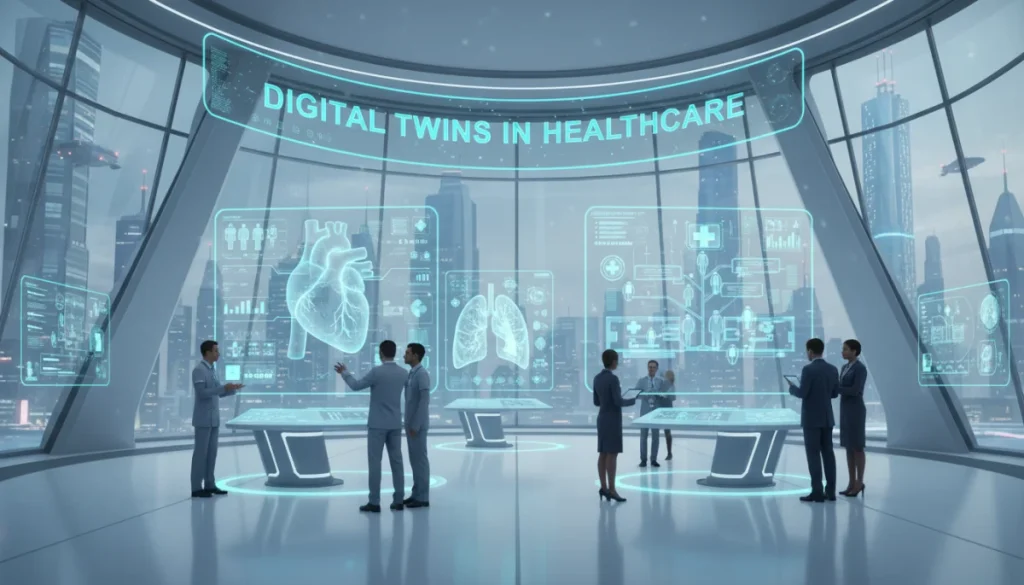
The landscape of US healthcare is constantly evolving, driven by an imperative to deliver superior patient care while simultaneously reining in escalating expenses. Amidst this challenge, a groundbreaking technology is emerging as a powerful ally: digital twins healthcare costs. These virtual replicas of physical systems, processes, or even patients are poised to revolutionize how healthcare operates, promising not just incremental improvements, but a significant 8% reduction in operational costs, reshaping the financial impact across the sector.
Understanding Digital Twins in Healthcare Operations
Digital twins, a concept originating from manufacturing, are virtual models designed to accurately reflect a physical object, process, or system. In healthcare, this translates to creating dynamic, real-time digital replicas of hospitals, clinics, equipment, patient pathways, or even individual physiological systems. These twins are fed by data from sensors, electronic health records (EHRs), and other sources, providing an unprecedented level of insight into complex operations.
Anúncios
The power of a digital twin lies in its ability to simulate various scenarios, predict outcomes, and identify inefficiencies before they manifest in the physical world. This predictive capability is invaluable in a sector as intricate and critical as healthcare. By understanding the intricate interplay of different operational components, healthcare providers can make data-driven decisions that lead to substantial improvements.
The Core Principles of Digital Twin Technology
At its heart, digital twin technology is built on several key principles that enable its transformative potential. These include continuous data integration, sophisticated modeling, and real-time analytics, all working in concert to create a living, breathing digital counterpart to a physical entity.
- Real-time Data Integration: Data from physical assets, sensors, and operational systems are continuously fed into the digital twin, ensuring its virtual representation is always up-to-date.
- Advanced Simulation Capabilities: The twin can run simulations to test changes, predict performance under different conditions, and foresee potential bottlenecks or failures.
- Predictive Analytics: Leveraging AI and machine learning, digital twins can forecast future states and flag potential issues, allowing for proactive intervention rather than reactive problem-solving.
- Bi-directional Communication: Information flows both ways; insights from the digital twin can inform and optimize physical operations, creating a continuous feedback loop.
The application of these principles allows healthcare organizations to move beyond traditional, often siloed, management approaches. Instead, they gain a holistic view of their operations, identifying areas for optimization that were previously obscure. This comprehensive understanding is the first step towards achieving significant cost reductions.
In essence, digital twins provide a sandbox for innovation and optimization without disrupting critical patient care. They offer a safe environment to experiment with new layouts, processes, or resource allocations, ensuring that any changes implemented in the physical world are thoroughly vetted and proven to be effective and efficient. This minimizes risk and maximizes the potential for positive financial impact.
Identifying Operational Inefficiencies Through Digital Models
One of the most compelling aspects of digital twins is their capacity to illuminate hidden operational inefficiencies. Healthcare systems are incredibly complex, with countless variables influencing patient flow, resource utilization, and staff allocation. Traditional methods often struggle to capture the full picture, leading to suboptimal decisions and wasted resources.
Digital twins, however, offer a granular, dynamic view. By creating a virtual model of an entire hospital, for instance, administrators can track patient journeys from admission to discharge, monitor equipment usage, analyze staff workload, and even simulate the impact of unexpected events like an influx of emergency patients. This level of detail makes it possible to pinpoint specific areas where resources are being underutilized, overused, or misallocated.
Case Study: Optimizing Emergency Department Flow
Consider the emergency department (ED), a notoriously high-pressure environment where efficiency directly impacts patient outcomes and costs. A digital twin of an ED could model patient arrivals, triage processes, physician availability, bed occupancy, and diagnostic imaging wait times. By running various simulations, the digital twin might reveal that:
- A specific bottleneck occurs during shift changes due to inadequate handover protocols.
- Certain diagnostic equipment is consistently underutilized, while others face long queues.
- Staffing levels, while seemingly adequate on paper, are misaligned with actual patient demand peaks.
Armed with these insights, hospital management can implement targeted interventions, such as adjusting shift schedules, reallocating equipment, or refining patient routing protocols. The digital twin can then be used to validate these changes in a simulated environment before they are deployed in the real ED, ensuring their effectiveness and minimizing disruption.
The ability to identify and address these inefficiencies proactively is a game-changer. It transforms a reactive operational model into a predictive one, allowing healthcare providers to optimize resource allocation, reduce patient wait times, and improve overall service delivery. This directly translates into cost savings by reducing overtime, preventing equipment downtime, and enhancing staff productivity.
Achieving an 8% Cost Reduction: The Financial Impact
The promise of an 8% reduction in operational costs through digital twins is not merely aspirational; it is grounded in the tangible benefits derived from enhanced efficiency and optimized resource utilization. This percentage represents a significant financial impact for US healthcare institutions grappling with tight budgets and increasing demands.
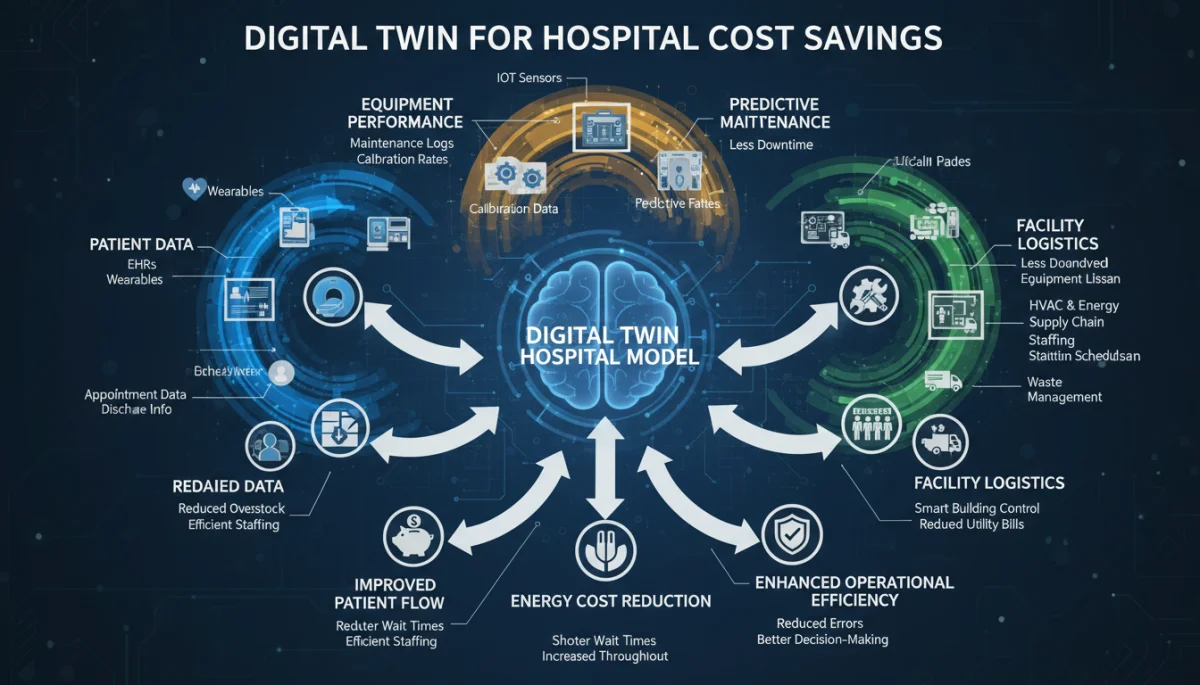
The cost savings stem from several key areas. Firstly, by optimizing patient flow and reducing wait times, hospitals can improve bed turnover rates, allowing more patients to be treated within existing infrastructure. This directly impacts revenue generation and reduces the need for costly expansions. Secondly, efficient resource allocation, from staffing to medical supplies, minimizes waste and ensures that every dollar is spent effectively.
Breakdown of Cost-Saving Avenues
The 8% cost reduction is a composite of savings across various operational domains:
- Supply Chain Optimization: Digital twins can model inventory levels, predict demand, and identify optimal ordering points, reducing waste from expired supplies and minimizing storage costs.
- Equipment Maintenance and Utilization: By monitoring equipment performance in real-time, digital twins can predict maintenance needs, preventing costly breakdowns and extending asset lifespans. They also ensure optimal scheduling and utilization of high-value equipment.
- Staffing Efficiency: Analyzing patient demand patterns and staff availability, digital twins can optimize scheduling, reduce overtime, and ensure appropriate staffing levels, preventing both understaffing and overstaffing.
- Energy Consumption: For large hospital campuses, a digital twin can model energy usage across different departments and times, identifying opportunities for energy conservation and smart building management.
These areas, often overlooked or managed reactively, represent substantial expenditure for healthcare providers. By bringing them under the predictive and analytical umbrella of digital twin technology, organizations can unlock efficiencies that were previously unattainable. The cumulative effect of these improvements contributes to the impressive 8% cost reduction, freeing up capital that can be reinvested into patient care, technology upgrades, or staff development.
Ultimately, the financial impact of digital twins extends beyond mere cost-cutting. It fosters a culture of continuous improvement, where data-driven insights lead to smarter investments and more sustainable operational models. This is crucial for the long-term viability and success of healthcare systems in the US.
Enhancing Patient Care and Outcomes through Optimization
While the financial benefits of digital twins are substantial, their impact extends far beyond the balance sheet. By optimizing operational processes, digital twins inadvertently yet profoundly enhance patient care and outcomes. An efficient hospital is not just a cost-effective one; it is also a safer, more responsive, and more patient-centric environment.
Improved patient flow means less waiting time for critical services, reducing stress and potentially improving recovery times. Optimized staffing ensures that healthcare professionals are available when and where they are most needed, leading to better attention and care quality. Furthermore, predictive maintenance of equipment reduces the risk of failures during critical procedures, safeguarding patient safety.
Streamlining Clinical Pathways
Digital twins can model specific clinical pathways, from diagnosis to treatment and recovery. This allows healthcare providers to identify bottlenecks, optimize resource allocation for specific conditions, and personalize treatment plans. For example, a digital twin could simulate the journey of a patient undergoing surgery, tracking every step from pre-operative assessments to post-operative recovery.
- Reduced Wait Times: By optimizing scheduling and resource availability, patients spend less time waiting for appointments, tests, and procedures.
- Personalized Treatment: Digital twins of individual patients can help tailor treatment plans based on their unique physiological responses and predicted outcomes.
- Improved Safety: Predictive analytics can flag potential risks, such as adverse drug interactions or equipment malfunctions, allowing for preventative action.
- Enhanced Communication: Better operational transparency fosters improved communication among care teams, leading to more coordinated and effective patient management.
The ability to simulate and refine these pathways in a virtual environment ensures that when a patient enters the physical system, their journey is as smooth and efficient as possible. This not only improves their experience but also contributes to better clinical outcomes by reducing the likelihood of complications arising from delays or inefficiencies.
The synergy between operational efficiency and patient care is undeniable. When a hospital runs smoothly, staff are less stressed, resources are readily available, and patients receive timely, high-quality care. Digital twins provide the tools to achieve this optimal state, demonstrating that financial prudence and patient well-being are not mutually exclusive but rather deeply interconnected.
Implementation Challenges and Future Outlook
Despite the immense potential of digital twins in US healthcare, their widespread adoption is not without challenges. Implementing such advanced technology requires significant investment in infrastructure, data integration capabilities, and specialized expertise. The healthcare sector, often characterized by legacy systems and strict regulatory environments, faces unique hurdles in embracing this digital transformation.
Data privacy and security are paramount concerns, given the sensitive nature of patient information. Ensuring compliance with regulations like HIPAA while integrating vast amounts of data into digital twin models requires robust security protocols and ethical considerations. Furthermore, the cultural shift required for healthcare professionals to adopt and trust these new tools is a significant undertaking.
Overcoming Adoption Barriers
Addressing these challenges requires a multi-faceted approach:
- Interoperability Standards: Developing and adopting universal standards for data exchange will facilitate seamless integration of diverse healthcare systems.
- Talent Development: Investing in training programs for healthcare IT professionals and clinicians to develop expertise in digital twin technologies.
- Phased Implementation: Starting with pilot projects in specific departments or for particular processes to demonstrate value and build confidence before scaling up.
- Robust Security Frameworks: Implementing state-of-the-art cybersecurity measures and adhering to stringent data governance policies to protect sensitive patient data.
The future outlook for digital twins in healthcare remains incredibly promising. As technology matures and successful case studies become more prevalent, the initial barriers to adoption are likely to diminish. The continuous evolution of AI and machine learning will further enhance the capabilities of digital twins, making them even more powerful tools for optimization and prediction.
We can anticipate a future where digital twins are not just confined to hospital operations but extend to personalized medicine, drug discovery, and even public health management. Their ability to create a dynamic, predictive model of complex systems will be instrumental in shaping a more efficient, effective, and patient-centric healthcare ecosystem. The journey is complex, but the destination—a healthcare system that is both financially sustainable and clinically excellent—is well worth the effort.
The Role of Data and AI in Digital Twin Efficacy
The efficacy of digital twins in driving significant operational cost reductions and improving patient outcomes hinges critically on the quality and quantity of data they consume, coupled with the intelligence provided by artificial intelligence (AI) and machine learning (ML). Without robust data streams and sophisticated analytical capabilities, a digital twin would be little more than a static model.
Data acts as the lifeblood of the digital twin, continuously feeding information about the physical system’s current state, past performance, and environmental factors. This includes everything from real-time sensor data on equipment, patient vitals, and facility occupancy, to historical records from EHRs, supply chain logs, and financial systems. The richer and more diverse the data, the more accurate and insightful the digital twin becomes.
Leveraging AI for Predictive Insights
AI and ML algorithms are the brains behind the digital twin, transforming raw data into actionable intelligence. They enable the twin to:
- Identify Patterns: AI can detect subtle patterns and correlations in vast datasets that human analysts might miss, revealing underlying causes of inefficiencies.
- Predict Future States: Machine learning models can forecast equipment failures, patient surges, or supply shortages with remarkable accuracy, allowing for proactive intervention.
- Optimize Decisions: AI can recommend optimal courses of action, such as ideal staffing levels, maintenance schedules, or patient routing strategies, based on complex simulations.
- Learn and Adapt: As new data flows in and outcomes are observed, AI models within the digital twin can continuously learn and refine their predictions and recommendations, improving over time.
For instance, an AI-powered digital twin of a hospital’s HVAC system could learn the optimal energy consumption patterns based on weather forecasts, occupancy levels, and historical data, leading to significant energy cost savings. Similarly, in patient care, an AI-driven digital twin of a patient’s physiological system could predict the onset of sepsis hours before traditional markers appear, enabling life-saving early intervention.
The symbiotic relationship between data, AI, and digital twins creates a powerful feedback loop. Data fuels AI, AI empowers the digital twin with intelligence, and the digital twin provides actionable insights that lead to real-world improvements. This continuous cycle of data collection, analysis, and optimization is fundamental to achieving and sustaining the projected 8% cost reductions and enhancing the overall quality of care in US healthcare.
| Key Aspect | Impact on Cost Reduction |
|---|---|
| Operational Efficiency | Streamlines workflows, reduces wait times, and optimizes resource allocation across departments. |
| Predictive Maintenance | Prevents costly equipment failures and extends asset lifespans through proactive servicing. |
| Resource Optimization | Minimizes waste in supplies, energy, and staffing by matching resources to real-time demand. |
| Enhanced Patient Outcomes | Reduces complications and readmissions, leading to fewer follow-up costs and improved patient satisfaction. |
Frequently Asked Questions About Digital Twins in Healthcare
A digital twin in US healthcare is a virtual replica of a physical entity, such as a hospital, a specific department, medical equipment, or even a patient’s physiological system. It’s continuously updated with real-time data to simulate, analyze, and predict performance, helping optimize operations and improve care delivery.
Digital twins reduce costs by identifying and eliminating inefficiencies in patient flow, optimizing resource allocation (staff, equipment, supplies), enabling predictive maintenance to prevent costly breakdowns, and improving energy management. This holistic approach can lead to significant savings across various operational areas.
Current projections and early implementations suggest that digital twins can lead to an impressive 8% reduction in overall operational costs for US healthcare institutions. This substantial saving can be reinvested to enhance patient care, upgrade technology, or improve staff development initiatives.
Yes, key challenges include the significant initial investment, ensuring data interoperability between disparate systems, addressing stringent data privacy and security concerns (e.g., HIPAA compliance), and managing the cultural shift required for widespread adoption among healthcare professionals.
By optimizing operational processes, digital twins reduce patient wait times, ensure better allocation of staff and resources, and enable personalized treatment plans. They also improve safety through predictive maintenance and risk identification, leading to better clinical outcomes and patient satisfaction.
Conclusion
The journey towards a more efficient and effective US healthcare system is complex, but the emergence of digital twin technology offers a clear and compelling path forward. The potential for a remarkable 8% reduction in operational costs underscores the profound financial impact these virtual replicas can have. Beyond the balance sheet, digital twins promise to elevate patient care, streamline critical processes, and foster a more resilient healthcare infrastructure. While challenges in implementation and data integration exist, the strategic combination of advanced data analytics and artificial intelligence within digital twin frameworks positions them as indispensable tools for the future of healthcare, transforming how care is delivered and managed across the nation.
