Decoding the 2026 Metaverse Economy: US Investment Opportunities
Anúncios
The metaverse economy is rapidly expanding, presenting significant investment opportunities for US innovators in 2026 across various sectors, from virtual platforms to advanced hardware and digital assets.
Anúncios
The digital frontier is constantly expanding, and by 2026, the metaverse is poised to redefine how we interact, work, and conduct business. For US innovators, understanding and strategically investing in this burgeoning digital realm is not just an option, but a necessity. This article delves into metaverse investment opportunities, highlighting seven key areas where American ingenuity can thrive and secure a significant foothold in the economy of tomorrow.
Understanding the Metaverse Economic Landscape in 2026
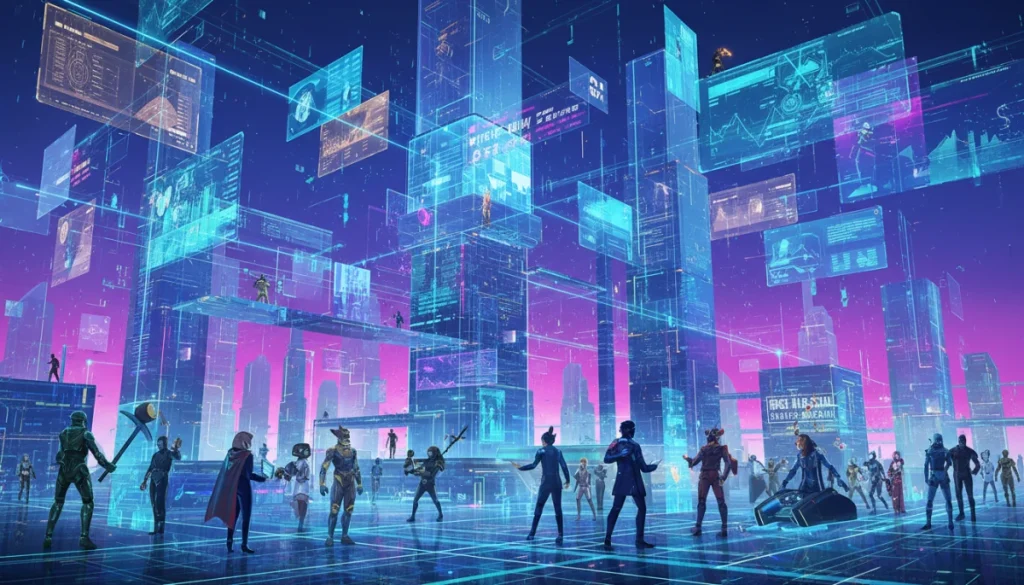
The metaverse, far from being a singular destination, represents a convergence of virtual worlds, augmented reality, blockchain, and artificial intelligence. By 2026, its economic landscape is expected to be a multi-trillion-dollar ecosystem, driven by advancements in connectivity, computing power, and user adoption. This section explores the foundational elements shaping this new digital economy.
Anúncios
The Evolution of Digital Ownership
Digital ownership, underpinned by blockchain technology and non-fungible tokens (NFTs), is a cornerstone of the metaverse economy. This paradigm shift allows for verifiable scarcity and true ownership of digital assets, from virtual land to unique in-game items and digital art.
- NFTs as Asset Backing: NFTs provide a secure and transparent way to represent ownership of digital assets, fueling a robust secondary market.
- Interoperability Challenges: While progress is being made, achieving seamless interoperability of digital assets across different metaverse platforms remains a key challenge and a significant area for innovation.
- Creator Economy Empowerment: Artists, developers, and content creators are empowered to monetize their creations directly, bypassing traditional intermediaries.
The growing acceptance and integration of digital ownership models will continue to drive economic activity, creating new markets and revenue streams. Investors should look for platforms and technologies that facilitate secure, scalable, and user-friendly digital asset management.
As the metaverse matures, understanding its underlying economic principles, including supply and demand for digital goods and services, will be crucial for making informed investment decisions. Early movers who grasp these dynamics stand to gain a significant competitive advantage.
Virtual Real Estate and Digital Infrastructure
Just as in the physical world, location, infrastructure, and development are paramount in the metaverse. Virtual real estate has already seen significant appreciation, and this trend is likely to continue as more users and businesses migrate into these digital spaces. Investing in virtual land, and the infrastructure that supports it, presents a compelling opportunity.
Building out the digital infrastructure involves more than just virtual land. It encompasses the development of servers, networking capabilities, and secure protocols that ensure a seamless and robust metaverse experience. Companies focusing on these foundational technologies are critical to the metaverse’s long-term viability.
Developing Metaverse Platforms and Tools
The creation and management of virtual environments require sophisticated tools and platforms. Innovators can focus on developing user-friendly interfaces, powerful SDKs (Software Development Kits), and robust backend systems that enable seamless creation and interaction within the metaverse.
- No-Code/Low-Code Solutions: Tools that allow users with minimal technical expertise to build and customize their metaverse experiences will democratize access and accelerate adoption.
- Interoperable Standards: Developing standards that allow assets and identities to move freely between different virtual worlds is crucial for a truly open metaverse.
- Security and Privacy Protocols: Robust security measures and privacy-preserving technologies are essential to build trust and ensure user safety in these digital environments.
The demand for virtual real estate is closely tied to the utility and popularity of specific metaverse platforms. Investing in platforms with strong user engagement, clear development roadmaps, and a thriving creator ecosystem can yield substantial returns. Furthermore, companies that provide the essential digital infrastructure, from cloud computing to decentralized storage solutions, will be indispensable.
Advanced Hardware and Devices
The immersive nature of the metaverse relies heavily on advanced hardware. This includes virtual reality (VR) headsets, augmented reality (AR) glasses, haptic feedback devices, and other peripherals that enhance sensory experiences. Innovation in this sector is critical for wider metaverse adoption.
While current VR/AR devices offer compelling experiences, there’s significant room for improvement in terms of comfort, processing power, battery life, and affordability. Companies that can deliver more accessible and powerful hardware will be at the forefront of metaverse expansion.
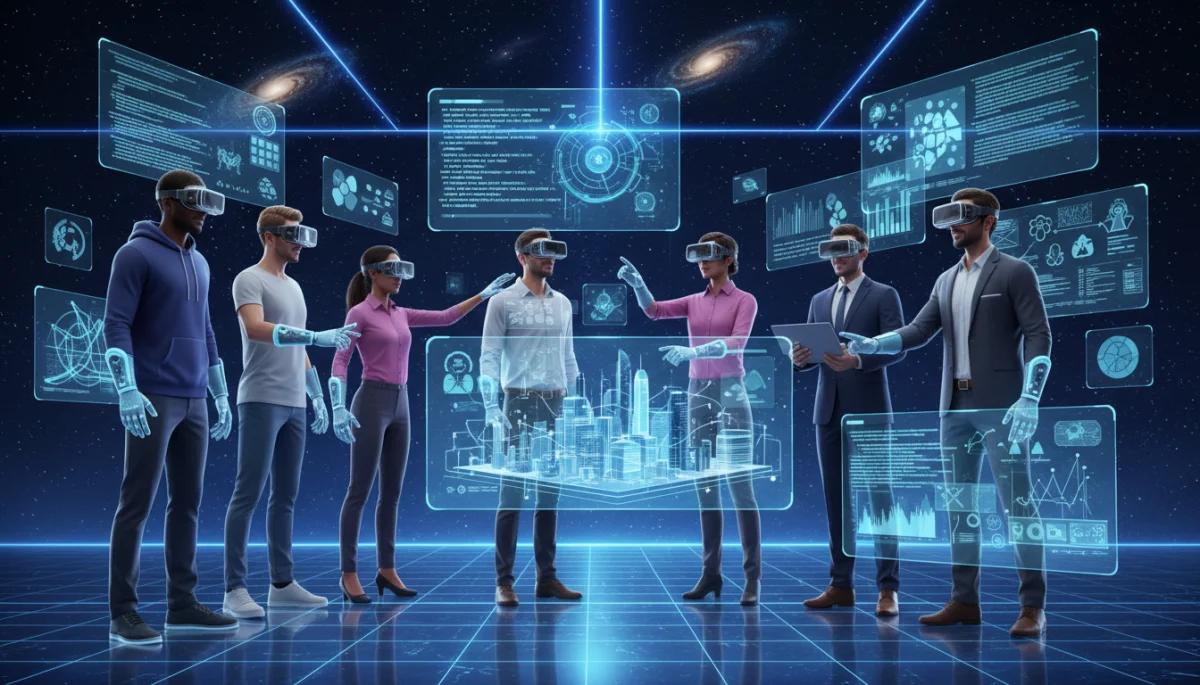
Beyond the head-mounted displays, haptic technology, which simulates touch and force feedback, is crucial for a truly immersive experience. Innovations in haptic gloves, suits, and other wearables will allow users to ‘feel’ the digital world, blurring the lines between physical and virtual.
Miniaturization and Power Efficiency
The next generation of metaverse hardware will need to be smaller, lighter, and more power-efficient. This requires breakthroughs in chip design, battery technology, and material science. Investments in research and development in these areas are poised for significant growth.
The success of the metaverse is inextricably linked to the quality and accessibility of its hardware. Companies that are pushing the boundaries of what’s possible in VR, AR, and haptic technology are prime candidates for investment, as they are building the very foundation upon which the metaverse will be experienced.
Decentralized Finance (DeFi) and Digital Currencies
The metaverse economy is inherently intertwined with decentralized finance (DeFi) and digital currencies. These technologies provide the financial rails for transactions, asset ownership, and economic incentives within virtual worlds. Understanding their role is vital for US innovators looking to invest.
DeFi protocols enable peer-to-peer financial services without traditional intermediaries, offering new ways to lend, borrow, trade, and earn yield within the metaverse. This fosters a more open and equitable financial system for digital economies.
Metaverse-Native Payment Systems
As the metaverse grows, the need for efficient, secure, and low-cost payment systems will become paramount. This includes stablecoins, metaverse-specific cryptocurrencies, and innovative payment gateways that facilitate seamless transactions between users and businesses.
- Cross-Chain Compatibility: Developing solutions that allow digital currencies to move effortlessly between different blockchain networks is crucial for a fluid metaverse economy.
- Regulatory Clarity: Navigating the evolving regulatory landscape for digital assets and DeFi will be a key challenge and opportunity for compliant innovation.
- User-Friendly Wallets: Secure and intuitive digital wallets that can manage a variety of metaverse assets and currencies are essential for mass adoption.
Investing in companies building robust DeFi infrastructure, secure digital wallets, and innovative payment solutions will be key. These financial tools are not just supportive elements; they are integral to the functioning and expansion of the metaverse economy.
Immersive Content Creation and Experiences
Without compelling content, even the most advanced metaverse platforms would remain empty. The demand for high-quality, immersive experiences – from games and entertainment to educational simulations and virtual events – is skyrocketing. This presents a massive opportunity for content creators and experience designers.
The metaverse offers a canvas for unprecedented creativity, allowing for entirely new forms of storytelling, social interaction, and artistic expression. Companies specializing in 3D modeling, animation, spatial audio, and interactive narrative design are in high demand.
User-Generated Content (UGC) Platforms
Empowering users to create and monetize their own content is a powerful driver of engagement and innovation in the metaverse. Platforms that provide intuitive tools and robust marketplaces for UGC will foster vibrant and diverse digital economies.
The ability to create and share unique experiences will distinguish successful metaverse platforms. Investments in studios, individual creators, and platforms that facilitate the creation and distribution of immersive content are essential for enriching the metaverse ecosystem. The shift from passive consumption to active participation is a defining characteristic of this new era.
AI and Machine Learning for Metaverse Enhancement
Artificial intelligence (AI) and machine learning (ML) are not just buzzwords; they are foundational technologies that will supercharge the metaverse. From intelligent avatars and dynamic environments to personalized experiences and advanced security, AI/ML will enhance nearly every aspect of the digital realm.
AI-powered non-player characters (NPCs) can create more engaging and realistic interactions, while ML algorithms can personalize content delivery and optimize user experiences based on individual preferences and behaviors.
Generative AI for Content Creation
Generative AI tools are revolutionizing content creation, allowing for the rapid generation of 3D models, textures, animations, and even entire virtual worlds. This dramatically lowers the barrier to entry for creators and accelerates the development cycle within the metaverse.
- Dynamic World Generation: AI can create ever-evolving and unique environments, ensuring that the metaverse remains fresh and engaging.
- Personalized Avatar Behavior: ML can learn user patterns to create more realistic and responsive avatar behaviors, enhancing social interactions.
- Threat Detection and Moderation: AI plays a crucial role in identifying and mitigating harmful content or behaviors, ensuring a safer metaverse for all users.
Investing in companies that are developing cutting-edge AI/ML solutions specifically tailored for metaverse applications will be highly strategic. These technologies will not only improve existing metaverse experiences but also unlock entirely new possibilities, driving innovation and user adoption.
Identity, Security, and Privacy Solutions
As users spend more time and conduct more transactions in the metaverse, robust solutions for digital identity, security, and privacy become paramount. Trust is the bedrock of any economy, and the metaverse is no exception. Innovators focusing on these critical areas will build the trust necessary for mass adoption.
Decentralized identity solutions, often leveraging blockchain, allow users to control their personal data and prove their identity without relying on centralized authorities. This enhances privacy and reduces the risk of data breaches.
Cybersecurity for Virtual Assets
The value of digital assets in the metaverse makes them prime targets for cybercriminals. Developing advanced cybersecurity protocols, secure smart contract auditing, and fraud detection systems is essential to protect users and their investments.
Ensuring user privacy in the metaverse, particularly concerning personal data and behavioral analytics, is a complex challenge. Innovations in privacy-enhancing technologies, such as zero-knowledge proofs and homomorphic encryption, will be crucial for building a trustworthy digital environment.
Investments in companies specializing in decentralized identity management, advanced cybersecurity for virtual assets, and privacy-preserving technologies are vital. These solutions will not only protect users but also establish the necessary framework for a secure and trusted metaverse economy, fostering broader participation and investment.
| Key Investment Area | Brief Description |
|---|---|
| Virtual Real Estate | Acquiring and developing digital land and infrastructure within metaverse platforms. |
| Advanced Hardware | Developing VR/AR devices, haptics, and peripherals for immersive metaverse access. |
| DeFi & Digital Currencies | Building financial infrastructure, payment systems, and secure wallets for metaverse transactions. |
| AI & Machine Learning | Innovating with AI for dynamic content, intelligent avatars, and enhanced metaverse experiences. |
Frequently Asked Questions About Metaverse Investments
The metaverse economy is a vast digital ecosystem where users can interact, create, own, and trade digital assets and services. It combines virtual reality, augmented reality, blockchain, and AI to form persistent, shared virtual spaces with real economic value.
Early investment allows US innovators to shape the metaverse’s future, establish market leadership, and capitalize on the significant growth projected for this multi-trillion-dollar economy. Strategic entry provides a competitive advantage in emerging digital markets.
Key risks include market volatility, regulatory uncertainty, technological obsolescence, and cybersecurity threats. The nascent nature of the metaverse means high potential returns often come with increased risk, requiring thorough due diligence.
Blockchain provides the foundation for digital ownership, verifiable scarcity, and secure transactions through NFTs and cryptocurrencies. It ensures transparency and decentralization, which are crucial for a truly open and user-controlled metaverse economy.
AI enhances the metaverse by powering intelligent avatars, generating dynamic content, personalizing user experiences, and improving security. It’s vital for creating more immersive, interactive, and efficient virtual environments and interactions.
Conclusion
The metaverse is not a distant fantasy but an evolving reality, presenting unparalleled opportunities for US innovators in 2026. From virtual real estate and advanced hardware to decentralized finance, immersive content, AI integration, and robust security solutions, the avenues for investment are diverse and impactful. By strategically engaging with these key areas, American businesses and entrepreneurs can not only secure a leading position in the global digital economy but also actively shape the future of human interaction and commerce. The journey into the metaverse economy demands foresight, adaptability, and a willingness to embrace transformative technologies, promising significant rewards for those ready to innovate.
