Cybersecurity Innovations for 2026: Protecting US Data from Evolving Threats
Anúncios
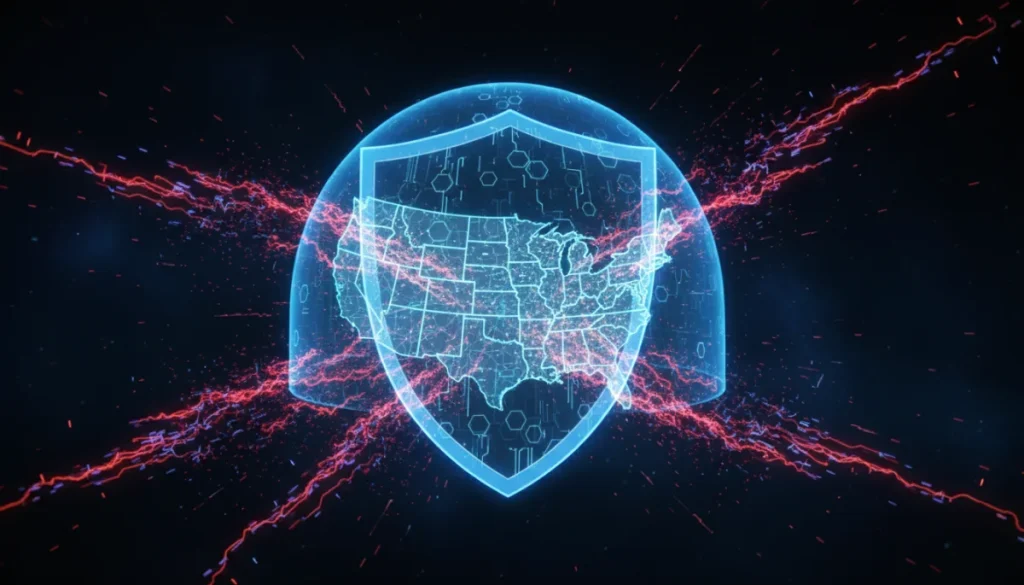
Cybersecurity innovations 2026 are paramount for safeguarding US data against an array of sophisticated and evolving digital threats, requiring proactive and adaptive defense strategies.
Anúncios
As we approach 2026, the digital landscape continues to evolve at an unprecedented pace, bringing with it both incredible opportunities and increasingly complex threats. Protecting US data from these challenges demands a proactive and innovative approach. This article delves into the crucial cybersecurity innovations 2026 that are being developed and deployed to defend against seven key evolving threats, ensuring the integrity and confidentiality of critical national information.
The Rising Tide of AI-Powered Cyberattacks
The advent of artificial intelligence has revolutionized many industries, but it has also provided cybercriminals with potent new tools. AI-powered attacks are becoming more sophisticated, capable of learning, adapting, and executing highly personalized threats at scale. These attacks can bypass traditional defenses by mimicking legitimate user behavior or exploiting zero-day vulnerabilities with unprecedented speed.
Anúncios
Defending against such advanced threats requires equally sophisticated countermeasures. Cybersecurity firms are leveraging AI and machine learning to create adaptive defense systems that can detect anomalous behaviors and predict potential attacks before they fully materialize. This includes real-time threat intelligence and automated response mechanisms.
Adaptive AI Defenses
- Predictive Analytics: Utilizing vast datasets to identify patterns indicative of emerging threats.
- Automated Anomaly Detection: Machine learning algorithms flagging unusual network activities instantly.
- Self-Healing Systems: AI-driven platforms that can automatically remediate vulnerabilities or isolate compromised systems.
The battle against AI-powered threats is a continuous arms race. Organizations must invest in AI-driven cybersecurity solutions that can learn and evolve faster than the threats they aim to counter. This ensures a resilient defense posture against increasingly intelligent adversaries.
Quantum Computing and Cryptographic Vulnerabilities
The promise of quantum computing is immense, but so are its potential implications for current encryption standards. Once quantum computers become powerful enough, they could theoretically break many of the cryptographic algorithms that secure sensitive US data today, rendering vast amounts of information vulnerable. This looming threat necessitates the development of quantum-resistant cryptography.
Researchers and government agencies are actively working on post-quantum cryptography (PQC) to prepare for this future. These new cryptographic standards are designed to be secure against attacks from both classical and quantum computers, ensuring long-term data protection.
Transitioning to Post-Quantum Cryptography
- Standardization Efforts: International bodies like NIST are leading the charge in standardizing PQC algorithms.
- Hybrid Cryptography: Implementing a combination of classical and PQC algorithms for a transitional period.
- Quantum Key Distribution (QKD): Exploring quantum mechanics to create unhackable communication channels.
The transition to PQC is a monumental undertaking, requiring significant investment and coordination across public and private sectors. Proactive adoption of these new standards is crucial to prevent a future data catastrophe.
Supply Chain Attacks: A Growing National Security Concern
Supply chain attacks have become a favored tactic for sophisticated threat actors, allowing them to compromise an organization by targeting a less secure third-party vendor or a component within the software or hardware ecosystem. These attacks can have far-reaching consequences, potentially compromising critical infrastructure and sensitive government data.
In response, cybersecurity innovations in 2026 are focusing on enhancing supply chain transparency and integrity. This involves rigorous vetting of vendors, continuous monitoring of software components, and implementing secure development lifecycle practices.
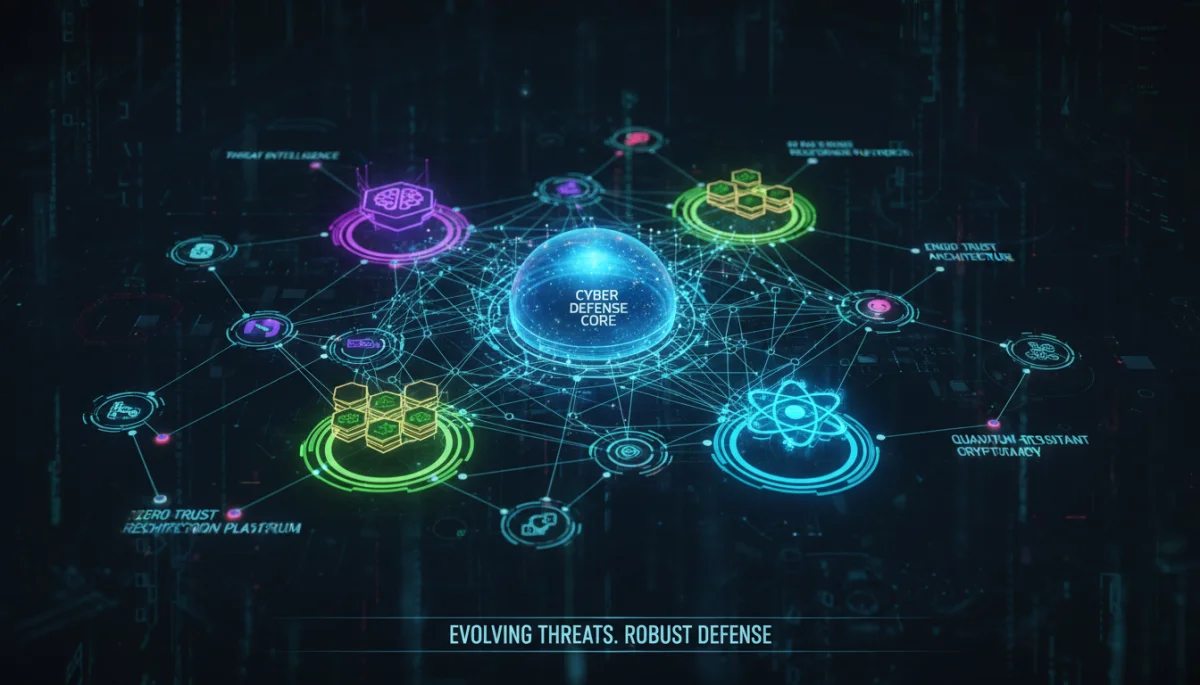
Supply chain security is no longer an afterthought but a core component of national cybersecurity strategy. Organizations are adopting technologies that provide end-to-end visibility and verification across their entire supply chain.
Strengthening Supply Chain Resilience
- Software Bill of Materials (SBOMs): Mandating detailed lists of all components in software products for greater transparency.
- Vendor Risk Management: Implementing robust frameworks for assessing and monitoring third-party security.
- Blockchain for Supply Chain Integrity: Using distributed ledger technology to track and verify product origins and modifications.
Securing the supply chain requires a collaborative effort, involving government, industry, and individual organizations working together to build a more trustworthy and resilient digital ecosystem.
The Pervasiveness of IoT and Edge Device Vulnerabilities
The proliferation of Internet of Things (IoT) devices and edge computing has expanded the attack surface exponentially. From smart city sensors to connected medical devices, these endpoints often lack robust security features, making them attractive targets for cybercriminals. Compromised IoT devices can serve as entry points for larger network breaches or be weaponized in botnet attacks.
Addressing this challenge necessitates a shift towards security by design for IoT and edge devices. This means integrating security measures from the initial development phase, rather than attempting to patch vulnerabilities later. Innovations in this area include hardware-based security, secure boot processes, and automated firmware updates.
Edge computing, while offering efficiency, also distributes data processing and storage, creating more potential points of compromise. Securing these distributed environments is paramount for protecting US data.
Securing the Edge Ecosystem
- Zero Trust Architectures for IoT: Verifying every device, user, and application before granting access to resources.
- Hardware-Based Security Modules: Embedding secure elements directly into IoT devices to protect cryptographic keys.
- Automated Patch Management: Ensuring timely and efficient updates for a vast array of dispersed devices.
As the number of connected devices continues to grow, robust security for IoT and edge environments will be a critical pillar of national data protection strategies.
Advanced Persistent Threats (APTs) and Nation-State Actors
Advanced Persistent Threats (APTs) represent some of the most formidable challenges in cybersecurity. These sophisticated, long-term attacks, often backed by nation-state actors, aim to achieve specific geopolitical or economic objectives by maintaining covert access to target networks for extended periods. They are characterized by their stealth, persistence, and ability to adapt to defensive measures.
Countering APTs requires a multi-layered defense strategy that goes beyond traditional perimeter security. This includes advanced threat intelligence, behavioral analytics, and proactive hunting for hidden intruders within networks. The focus is on detecting the subtle indicators of compromise that APTs leave behind.
The evolving nature of these threats means that static defenses are insufficient. Continuous monitoring and adaptive security protocols are essential to identify and neutralize APTs before they can inflict significant damage.
Combating Sophisticated APTs
- Threat Intelligence Sharing: Collaborating with government agencies and industry peers to share insights on APT tactics and indicators.
- Deception Technologies: Deploying honeypots and other lures to detect and analyze attacker behavior without compromising real systems.
- Security Orchestration, Automation, and Response (SOAR): Automating security operations to respond rapidly to complex threats.
Protecting against APTs is a continuous and resource-intensive endeavor that demands constant vigilance and the integration of cutting-edge cybersecurity innovations.
The Human Element: Social Engineering and Insider Threats
Despite technological advancements, the human element remains a significant vulnerability in cybersecurity. Social engineering attacks, such as sophisticated phishing campaigns, continue to trick individuals into compromising security. Furthermore, insider threats, whether malicious or unintentional, can lead to significant data breaches.
Cybersecurity innovations in 2026 are increasingly focusing on bolstering human defenses through advanced training, behavioral analysis, and robust access controls. It’s about creating a culture of security where every employee understands their role in protecting data.
User awareness training is evolving from generic presentations to interactive, scenario-based simulations that better prepare individuals for real-world threats. Technologies are also being developed to detect unusual user behavior that might indicate a compromised account or an insider threat.
Mitigating Human-Centric Risks
- Advanced Security Awareness Training: Realistic simulations and continuous education to empower employees.
- User and Entity Behavior Analytics (UEBA): AI-driven monitoring to detect deviations from normal user activity.
- Strong Access Management: Implementing multi-factor authentication (MFA) and granular access controls to limit potential damage.
Addressing the human element requires a holistic approach that combines technology, policy, and ongoing education to create a more resilient workforce against cyber threats.
Zero-Day Exploits and Rapid Vulnerability Patching
Zero-day exploits, which target previously unknown software vulnerabilities, pose an immediate and severe risk because there is no readily available patch or defense. Attackers can leverage these vulnerabilities to gain unauthorized access, deploy malware, or steal data before vendors are even aware of the flaw.
The challenge lies in rapidly identifying and mitigating these unknown threats. Cybersecurity innovations for 2026 are focusing on automated vulnerability discovery, proactive threat hunting, and accelerated patch deployment mechanisms. This includes leveraging AI to analyze code for potential weaknesses and developing frameworks for faster, more efficient patching.
Organizations are also adopting more resilient system architectures that can withstand a zero-day exploit, even if a patch isn’t immediately available. This involves isolation, segmentation, and continuous monitoring to limit the blast radius of an attack.
Accelerating Zero-Day Defense
- Automated Vulnerability Discovery: Using AI and machine learning to scan for and identify new software flaws.
- Proactive Threat Hunting: Security teams actively searching for signs of compromise rather than waiting for alerts.
- Micro-segmentation: Isolating network segments to contain breaches and prevent lateral movement of attackers.
Rapid response and adaptive defenses are crucial in the fight against zero-day exploits, ensuring that even novel threats can be quickly addressed and neutralized.
| Key Innovation Area | Brief Description |
|---|---|
| AI-Powered Defenses | Adaptive systems using AI to detect, predict, and respond to evolving cyber threats. |
| Post-Quantum Cryptography | Developing encryption standards resistant to future quantum computer attacks. |
| Supply Chain Security | Enhancing transparency and integrity across software and hardware ecosystems. |
| IoT & Edge Security | Implementing security-by-design for connected devices and distributed computing. |
Frequently Asked Questions about Cybersecurity Innovations 2026
The primary drivers include the rise of AI-powered cyberattacks, the looming threat of quantum computing, increasingly complex supply chain vulnerabilities, and the massive expansion of IoT and edge devices. Nation-state actors also push for more sophisticated defenses.
AI will revolutionize defenses by enabling predictive analytics, automated anomaly detection, and self-healing systems. These innovations allow security platforms to learn from attacks, adapt faster, and provide real-time responses to evolving threats with minimal human intervention.
Post-quantum cryptography (PQC) refers to cryptographic algorithms designed to be secure against attacks from future quantum computers. It’s crucial because current encryption standards could be broken by quantum machines, making PQC essential for long-term data security.
Addressing supply chain attacks involves mandating Software Bill of Materials (SBOMs), implementing robust vendor risk management, and leveraging blockchain for integrity verification. These measures aim to increase transparency and secure every component of the digital ecosystem.
The human element remains critical, as social engineering and insider threats continue to be major vulnerabilities. Innovations focus on advanced security awareness training, User and Entity Behavior Analytics (UEBA), and strong access management to mitigate human-centric risks effectively.
Conclusion
The journey towards a secure digital future in 2026 is complex and dynamic. The convergence of advanced technologies and ever-more sophisticated threat actors necessitates continuous innovation in cybersecurity. By investing in AI-driven defenses, preparing for quantum threats, fortifying supply chains, securing the IoT landscape, combating APTs, strengthening the human firewall, and accelerating zero-day responses, the United States can build a robust defense infrastructure. Protecting US data is not merely a technical challenge but a strategic imperative that underpins national security and economic stability in an increasingly interconnected world. The commitment to these cybersecurity innovations 2026 will define our resilience against the digital threats of tomorrow.
