Haptic Feedback Technology: US User Experience by 2026
Anúncios
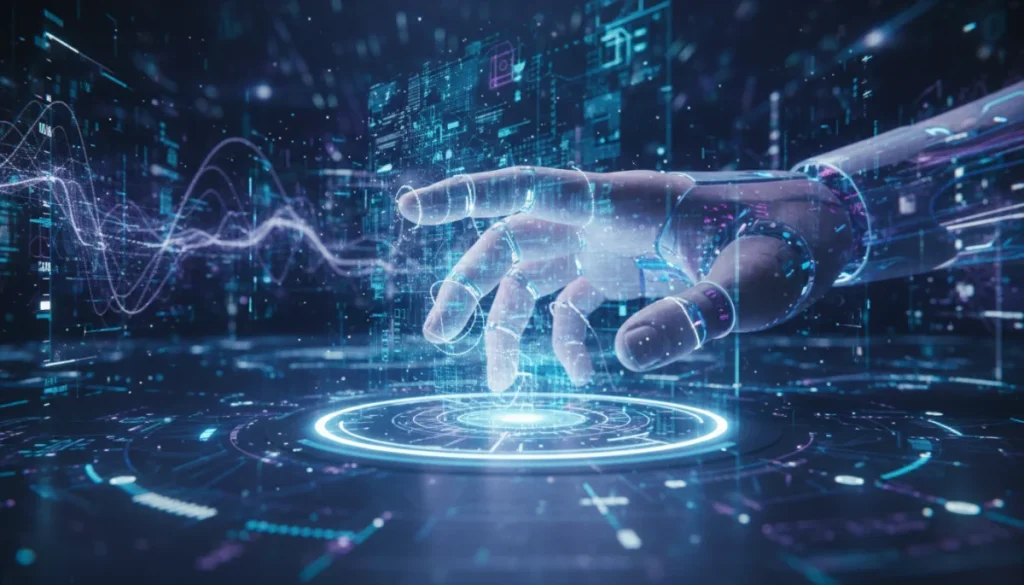
Haptic feedback technology is set to revolutionize US user experience by 2026, creating more intuitive and immersive interactions across diverse applications from gaming to healthcare and automotive interfaces.
Anúncios
Imagine touching a virtual object and feeling its texture, or navigating your car’s infotainment system with a gentle, reassuring click. This is the promise of haptic feedback technology, and by 2026, it’s poised to fundamentally transform how users interact with the digital and physical world across the United States. Get ready for an era where technology doesn’t just respond visually or audibly, but tangibly.
The Evolution of Haptic Feedback
Haptic feedback, derived from the Greek word ‘haptikos’ meaning ‘pertaining to the sense of touch,’ is not a new concept. Early forms date back to simple vibrations in pagers and mobile phones. However, the sophistication and integration of haptic technology have advanced dramatically, moving beyond mere buzzes to nuanced tactile sensations that mimic real-world interactions.
Anúncios
The journey from basic vibrators to advanced haptic arrays has been driven by breakthroughs in micro-actuators, material science, and computational algorithms. These innovations allow for precise control over force, texture, and even temperature, opening up a new dimension of human-computer interaction.
From Vibration to True Tactile Sensation
Initial haptic implementations were limited to eccentric rotating mass (ERM) motors, producing a simple, often jarring vibration. Modern haptics, however, leverage linear resonant actuators (LRAs) and piezoelectric actuators, offering far greater control and fidelity. This shift enables devices to generate a wide range of distinct sensations, from the crisp click of a button to the subtle ripple of water.
- ERM Motors: Simple, low-cost, general vibration.
- LRA Actuators: More precise, directional, and nuanced vibrations.
- Piezoelectric Actuators: High-fidelity, rapid response, capable of complex textures.
- Electroadhesive Haptics: Creates friction changes on surfaces, mimicking textures without moving parts.
The ability to simulate complex tactile experiences is crucial for creating truly immersive digital environments. As hardware becomes smaller and more energy-efficient, we see haptic integration in an ever-widening array of devices, from wearables to automotive dashboards. This evolution is setting the stage for a tactile revolution in the US user experience.
Immersive Gaming and Entertainment
The gaming industry has always been an early adopter of immersive technologies, and haptic feedback is no exception. By 2026, haptics will be integral to delivering unparalleled realism and engagement in video games and virtual reality (VR) experiences across the US.
Imagine feeling the recoil of a weapon, the impact of a collision, or the subtle texture of a virtual environment directly through your controller or VR suit. This level of tactile immersion transcends visual and auditory cues, drawing players deeper into the game world and enhancing their emotional connection to the experience.
Next-Generation Controllers and VR Suits
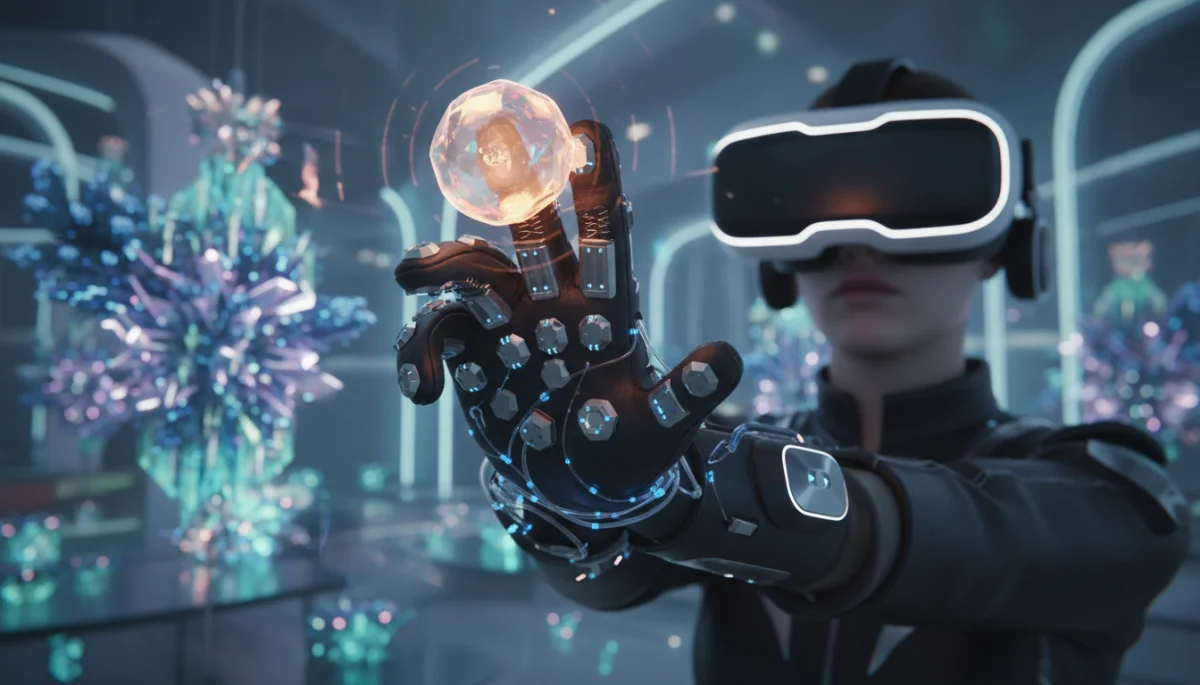
Current-generation gaming controllers already incorporate advanced haptics, but the future promises even greater sophistication. VR headsets and full-body haptic suits are becoming more accessible, allowing users to feel rain, wind, or even the subtle movements of virtual characters. This technology is not just about enhancing gameplay; it’s about creating a more believable and interactive narrative.
- Adaptive Triggers: Controllers that vary resistance based on in-game actions.
- Localized Vibrations: Pinpointing sensations to specific parts of the hand or body.
- Full-Body Haptic Suits: Providing tactile feedback across the entire body for ultimate immersion.
- Environmental Feedback: Simulating weather conditions, surface textures, and physical impacts.
The entertainment sector is also exploring haptics for cinematic experiences, theme park attractions, and live events. The goal is to move beyond passive consumption, transforming audiences into active participants who can feel the story unfolding around them. This integration will make entertainment more visceral and memorable for US consumers.
Haptics in Automotive and Transportation
The automotive industry is rapidly integrating haptic feedback to enhance safety, improve driver awareness, and revolutionize the in-car user experience. By 2026, haptic interfaces will be a standard feature in many vehicles across the United States, offering a new dimension of interaction.
Instead of relying solely on visual or auditory alerts, drivers will receive tactile cues through steering wheels, seats, and dashboards. These subtle vibrations can warn of lane departures, impending collisions, or even provide navigation instructions, allowing drivers to keep their eyes on the road and reduce cognitive load.
Enhanced Safety and Intuitive Controls
Haptic feedback in vehicles is not just about alerts; it’s about making controls more intuitive and engaging. Touchscreens can mimic the feel of physical buttons with haptic clicks, providing confirmation without requiring drivers to look away. This tactile reassurance is vital for complex infotainment systems and advanced driver-assistance features.

- Lane Departure Warning: Vibrations in the steering wheel alert drivers if they drift.
- Collision Avoidance: Haptic pulses in the seat or steering wheel indicate danger.
- Navigation Cues: Directional vibrations guide drivers through turns.
- Tactile Touchscreens: Provide physical feedback for virtual buttons and sliders.
As autonomous vehicles become more prevalent, haptic feedback will play an even greater role in conveying information to occupants, maintaining their situational awareness, and ensuring a comfortable, secure journey. The blend of advanced sensors and sophisticated haptics promises a safer and more enjoyable driving experience for US commuters.
Healthcare and Medical Applications
The potential of haptic feedback technology in healthcare is immense, promising transformative changes in medical training, rehabilitation, and surgical procedures. By 2026, haptics will be increasingly integrated into US medical practices, enhancing precision and patient outcomes.
Surgeons can use haptic feedback systems to ‘feel’ virtual tissues during robotic surgery, improving dexterity and accuracy. Medical students can practice complex procedures on haptic-enabled simulators, gaining realistic tactile experience without risk to patients. This technology bridges the gap between theoretical knowledge and practical application.
Revolutionizing Training and Rehabilitation
Haptic systems are proving invaluable in physical therapy and rehabilitation. Patients can engage with interactive exercises that provide immediate tactile feedback, helping them regain motor skills and strength. For example, a haptic glove could guide a stroke patient’s hand movements, providing resistance or assistance as needed.
- Surgical Simulators: Allow trainees to feel tissue resistance and texture.
- Rehabilitation Devices: Provide guided tactile feedback for motor skill recovery.
- Remote Surgery: Enable surgeons to ‘feel’ during operations performed from a distance.
- Diagnostic Tools: Haptic probes could detect subtle changes in tissue density.
Beyond training and rehabilitation, haptics are also being explored for remote medical consultations and even for assisting individuals with sensory impairments. The ability to convey information through touch offers new avenues for communication and care, making healthcare more accessible and effective across the US.
Wearables and Smart Devices
The proliferation of wearables and smart devices presents a fertile ground for advanced haptic feedback. By 2026, these personal technologies in the US will leverage haptics to deliver more discreet, intuitive, and context-aware notifications and interactions, moving beyond simple audible alerts.
Smartwatches, fitness trackers, and even smart clothing can use haptic patterns to convey information without requiring visual attention. A specific vibration could signal an important email, while another might indicate a turn during navigation, enhancing convenience and reducing distractions in daily life.
Discreet Communication and Enhanced Interactions
Haptic feedback in wearables is particularly valuable for discreet communication in professional or social settings. Instead of a disruptive ringtone, a subtle haptic pattern on the wrist can convey an urgent message, allowing users to stay connected without interrupting their focus or disturbing others.
- Smartwatch Notifications: Customizable haptic patterns for different alerts.
- Fitness Trackers: Haptic cues for workout guidance or achieving goals.
- Augmented Reality Glasses: Tactile feedback for interacting with virtual objects.
- Smart Clothing: Integrated haptics for posture correction or environmental sensing.
As devices become more integrated into our lives, haptics will play a crucial role in making these interactions seamless and natural. The ability to communicate through touch adds a personal and intuitive layer to our smart devices, making them feel like true extensions of ourselves in the US market.
Challenges and Future Outlook
While the future of haptic feedback technology appears bright, several challenges must be addressed for its widespread adoption and continued advancement in the US by 2026. These include the cost of advanced haptic actuators, power consumption, and the need for standardized development frameworks.
Creating realistic and diverse tactile sensations requires sophisticated hardware and software. Miniaturizing these components while maintaining performance and keeping costs down is a continuous engineering challenge. Furthermore, integrating haptics into battery-powered devices demands efficient power management to avoid frequent recharging.
Overcoming Hurdles and Embracing Innovation
One of the significant hurdles is the subjective nature of touch perception. What feels like a ‘crisp click’ to one person might feel ‘weak’ to another. Developing universal standards and calibration methods for haptic experiences will be crucial for consistent user satisfaction. Additionally, educating developers and designers on how to effectively utilize haptics will drive innovation.
- Cost Reduction: Making advanced haptics more affordable for mass production.
- Power Efficiency: Developing low-power actuators for extended battery life.
- Standardization: Creating common protocols for haptic content creation.
- User Experience Research: Understanding how different haptic sensations are perceived.
Despite these challenges, the trajectory of haptic feedback technology is clearly upward. Continued research into novel materials, AI-driven haptic synthesis, and tighter integration with other sensory modalities (like augmented reality) promises an even more profound impact on US user experience beyond 2026. The future is tangible, and it feels incredibly exciting.
| Key Aspect | Brief Description |
|---|---|
| Evolution | From simple vibrations to nuanced tactile sensations using advanced actuators. |
| Key Applications | Gaming, automotive, healthcare, and wearables for enhanced immersion and interaction. |
| Impact on UX | Creates more intuitive, safer, and emotionally engaging user experiences. |
| Challenges | Cost, power consumption, and the need for standardization and calibration. |
Frequently Asked Questions About Haptic Technology
Haptic feedback technology simulates the sense of touch by applying forces, vibrations, or motions to the user. It allows users to feel digital interfaces and virtual objects, enhancing immersion and interaction across various devices and applications.
By 2026, haptics will provide gamers with unparalleled realism through adaptive triggers, localized vibrations, and full-body suits. Players will feel weapon recoil, environmental textures, and impacts, deepening their immersion in virtual worlds and enhancing emotional engagement.
In automotive, haptics enhance safety and intuition. Steering wheels and seats can provide tactile warnings for lane departures or collisions. Touchscreens can mimic physical buttons with haptic clicks, allowing drivers to interact with controls without diverting their gaze from the road.
Absolutely. Haptic systems are revolutionizing medical training by allowing students to practice complex procedures on simulators with realistic tactile feedback. Surgeons can also use haptics to ‘feel’ virtual tissues during robotic operations, improving precision and dexterity.
Key challenges include reducing the cost of advanced actuators, improving power efficiency for battery-powered devices, and establishing standardized development frameworks. Addressing these will ensure broader adoption and consistent user experiences across diverse applications.
Conclusion
The journey of haptic feedback technology from simple vibrations to sophisticated tactile interfaces represents a pivotal shift in how we interact with the digital world. By 2026, its pervasive integration across gaming, automotive, healthcare, and wearables in the US will not merely enhance existing experiences but redefine them entirely. We are on the cusp of an era where technology truly engages all our senses, fostering connections that are not just visual or auditory, but deeply and intuitively tactile. The future of user experience is tangible, promising a more immersive, safer, and profoundly human interaction with the innovations that shape our daily lives.
