IoT Revolution: 3 Critical Data Security Innovations for US Businesses

Anúncios
The rapid expansion of the Internet of Things (IoT) presents both unprecedented opportunities and significant data security challenges for US businesses, making the adoption of innovative security strategies paramount for protecting sensitive information and maintaining operational integrity.
The digital age has ushered in an era where connectivity is king, and at the forefront of this transformation is the Internet of Things (IoT). For US businesses, the proliferation of IoT devices promises enhanced efficiency, deeper insights, and novel service delivery. However, with every connected sensor, smart device, or industrial machine, a new potential vulnerability emerges. Securing the vast and often disparate data generated by these devices is not just a technical challenge, but a strategic imperative. This year, understanding and implementing the right strategies for IoT data security has become non-negotiable for maintaining trust and operational resilience.
Anúncios
understanding the IoT security landscape for US businesses
The Internet of Things has fundamentally reshaped how businesses operate, collecting vast amounts of data from diverse sources. This interconnectedness, while beneficial, also creates a complex and expanding attack surface. US businesses, ranging from manufacturing to healthcare, are grappling with the intricacies of securing these environments against sophisticated cyber threats. The sheer volume and variety of IoT devices, often with varying security standards, make traditional security models inadequate.
Understanding the unique challenges involves recognizing the distributed nature of IoT. Unlike centralized IT systems, IoT deployments often span multiple locations, involve numerous vendors, and generate data that is critical yet often sensitive. The implications of a breach extend beyond data loss, potentially impacting physical infrastructure, personal safety, and national security. Therefore, a comprehensive and proactive approach to security is essential for any enterprise leveraging IoT in the United States.
Anúncios
the evolving threat landscape
Cybercriminals are constantly adapting their tactics, and IoT devices present attractive targets due to their often-limited processing power and default security settings. Common threats include:
- DDoS attacks leveraging compromised devices.
- Data exfiltration from unsecured sensors.
- Physical sabotage through manipulated control systems.
These threats highlight the urgent need for robust security measures that can evolve as quickly as the threats themselves. The dynamic nature of IoT requires continuous vigilance and adaptation.
In conclusion, the IoT security landscape for US businesses is complex and rapidly evolving. It demands a holistic strategy that addresses not only technological vulnerabilities but also operational and human factors. Ignoring these challenges can lead to severe financial, reputational, and operational consequences.
innovation 1: zero-trust architecture for IoT ecosystems
One of the most transformative shifts in cybersecurity, particularly relevant to IoT, is the adoption of a zero-trust architecture. This model fundamentally challenges the traditional perimeter-based security approach, where everything inside the network is implicitly trusted. In an IoT environment, where devices are often geographically dispersed and communicate across various networks, assuming trust is a recipe for disaster. Zero-trust operates on the principle of ‘never trust, always verify,’ regardless of whether the user or device is inside or outside the network.
For US businesses deploying IoT, zero-trust means that every device, user, and application attempting to access network resources must be authenticated and authorized. This continuous verification process significantly reduces the risk of unauthorized access and lateral movement by attackers who might have breached an initial entry point. It’s about micro-segmentation and least-privilege access, ensuring that even if one IoT device is compromised, the damage is contained and does not spread across the entire ecosystem.
implementing zero-trust in IoT
Adopting zero-trust for IoT involves several key components:
- Strong Identity Verification: Every IoT device must have a unique, cryptographically secure identity.
- Micro-segmentation: Network segments are isolated, limiting communication between devices to only what is absolutely necessary.
- Continuous Monitoring: All device behavior and access attempts are constantly monitored for anomalies.
These elements work in concert to create a resilient security posture. The goal is to minimize the blast radius of any potential breach, making it harder for malicious actors to achieve their objectives.
The benefits of zero-trust for IoT are profound, offering enhanced protection against internal and external threats, improved compliance, and a more agile security framework that can adapt to new devices and evolving threats. For US businesses, this innovation is a cornerstone of future-proof IoT security strategies.
innovation 2: AI-powered threat detection and response
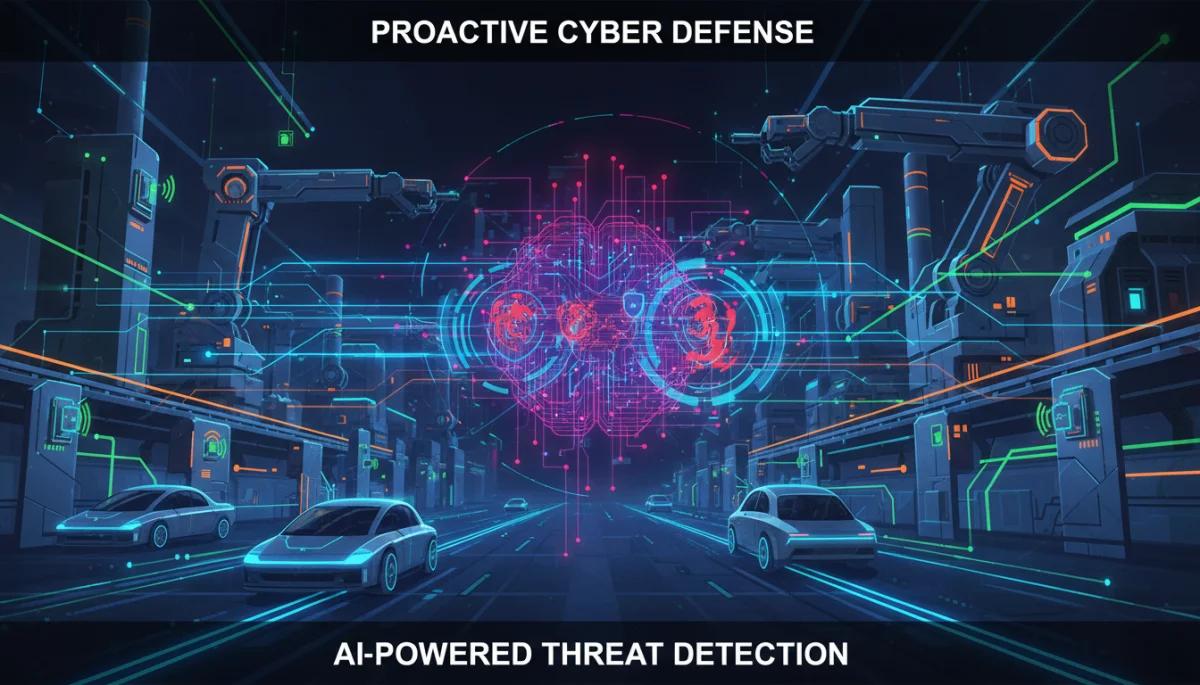
The sheer volume of data generated by IoT devices, coupled with the speed at which threats can emerge, makes manual threat detection virtually impossible. This is where artificial intelligence (AI) and machine learning (ML) become indispensable tools for enhancing IoT data security. AI-powered systems can analyze vast datasets in real-time, identify anomalies, and detect patterns indicative of cyber threats with a level of speed and accuracy that far surpasses human capabilities.
For US businesses, AI-powered threat detection means moving from reactive security to proactive defense. Instead of waiting for a breach to occur, AI algorithms can predict and prevent attacks by identifying subtle deviations from normal behavior. This includes recognizing unusual data flows, unauthorized access attempts, or even changes in device configurations that could signal a compromise. The ability to learn and adapt makes AI a dynamic defense mechanism against evolving cyber threats.
how AI transforms IoT security
AI’s role in IoT security is multi-faceted:
- Behavioral Analytics: AI establishes baseline behaviors for each device and flags deviations.
- Automated Response: AI systems can automatically quarantine compromised devices or block suspicious traffic.
- Predictive Threat Intelligence: Machine learning models analyze global threat data to anticipate future attacks.
These capabilities significantly strengthen an organization’s ability to protect its IoT infrastructure. The continuous learning aspect of AI means that security systems become more effective over time, adapting to new attack vectors and improving their detection accuracy.
The integration of AI into IoT security frameworks is no longer a luxury but a necessity for US businesses. It provides the scale and sophistication required to defend against the complex and persistent threats targeting interconnected environments, ensuring the integrity and confidentiality of critical data.
innovation 3: blockchain for IoT data integrity and transparency
Ensuring the integrity and immutability of data collected by IoT devices is paramount, especially in sectors like healthcare, supply chain, and critical infrastructure. Blockchain technology, with its decentralized and tamper-proof ledger, offers a compelling solution to these challenges. By recording every data transaction from an IoT device onto a blockchain, businesses can create an unalterable audit trail, significantly enhancing trust and transparency in their data streams.
For US businesses, blockchain can address concerns around data manipulation and unauthorized alterations, which are critical in regulatory compliance and maintaining operational reliability. Each data point is timestamped and cryptographically linked to the previous one, making it nearly impossible to alter historical records without detection. This provides a robust mechanism for verifying the authenticity and origin of IoT data, which is crucial for decision-making and automated processes.
blockchain’s role in securing IoT data
The application of blockchain in IoT security brings several advantages:
- Data Immutability: Once recorded, data cannot be altered, ensuring its integrity.
- Enhanced Trust: Decentralized ledgers eliminate single points of failure and increase transparency.
- Simplified Auditing: A verifiable history of all data transactions streamlines compliance and investigations.
These features are particularly beneficial for IoT applications where data provenance and trustworthiness are critical, such as smart contracts, automated supply chains, and regulatory reporting. Blockchain effectively creates a ‘digital fingerprint’ for every piece of IoT data.
In essence, blockchain provides a foundational layer of trust and security for IoT data, allowing US businesses to leverage their connected devices with greater confidence in the reliability and authenticity of the information they generate and consume.
challenges in adopting new IoT security innovations
While these innovations—zero-trust, AI-powered threat detection, and blockchain—offer significant advancements in IoT data security, their adoption is not without challenges for US businesses. Integrating new security paradigms into existing, often complex, IoT ecosystems requires careful planning, significant investment, and a skilled workforce. Many organizations face hurdles related to legacy systems, budget constraints, and a shortage of cybersecurity talent capable of implementing and managing these advanced solutions.
Furthermore, the sheer diversity of IoT devices, from simple sensors to complex industrial machinery, means that a one-size-fits-all security solution is rarely effective. Each device type may have unique vulnerabilities and require tailored security configurations, adding layers of complexity to implementation. Ensuring interoperability between new security tools and existing infrastructure is also a critical consideration that can impact the speed and success of adoption.
overcoming implementation hurdles
Addressing these challenges requires a multi-pronged approach:
- Phased Implementation: Roll out new security measures incrementally, starting with critical assets.
- Vendor Collaboration: Work closely with IoT device manufacturers and security vendors for integrated solutions.
- Talent Development: Invest in training existing staff or hiring new talent with expertise in advanced cybersecurity.
These strategies can help businesses navigate the complexities of adopting cutting-edge security innovations without disrupting ongoing operations. It’s about building a robust security posture step by step.
Ultimately, overcoming these challenges is crucial for US businesses to fully realize the benefits of the IoT revolution while effectively mitigating its inherent security risks. A proactive and strategic approach to implementation is key to success.
the strategic imperative for US businesses
For US businesses, embracing these critical data security innovations is not merely a technical upgrade; it’s a strategic imperative that directly impacts their competitive advantage, regulatory compliance, and long-term viability. The landscape of cyber threats is constantly evolving, and organizations that fail to adapt risk significant financial losses, reputational damage, and potential legal repercussions. Investing in advanced IoT data security solutions like zero-trust, AI-powered threat detection, and blockchain is an investment in future resilience.
Moreover, robust security measures can become a differentiator in the marketplace. Customers and partners are increasingly prioritizing data privacy and security, making an organization’s commitment to these principles a key factor in trust and collaboration. By proactively implementing these innovations, US businesses can not only protect their assets but also build stronger relationships and foster greater confidence in their digital operations.
future-proofing your IoT strategy
To future-proof their IoT security strategy, businesses should focus on:
- Continuous Assessment: Regularly evaluate security posture against new threats and technologies.
- Regulatory Compliance: Stay abreast of evolving data protection regulations and standards.
- Security Culture: Foster a culture of security awareness and responsibility among all employees.
These ongoing efforts ensure that security remains an integral part of the business strategy, rather than an afterthought. It’s about creating a living security framework that can adapt and evolve.
In conclusion, the IoT revolution presents both immense opportunities and significant risks. By strategically adopting and integrating these critical data security innovations, US businesses can navigate this complex environment with confidence, safeguarding their data, operations, and reputation in the years to come.
| Key Innovation | Brief Description |
|---|---|
| Zero-Trust Architecture | ‘Never trust, always verify’ approach, securing every device and user access in IoT ecosystems. |
| AI-Powered Threat Detection | Uses AI/ML to detect anomalies and predict cyber threats in real-time across vast IoT data. |
| Blockchain for Data Integrity | Creates an immutable, decentralized ledger for IoT data, ensuring transparency and preventing tampering. |
| Strategic Imperative | Adopting these innovations is crucial for competitive advantage, compliance, and long-term business resilience. |
Frequently Asked Questions About IoT Data Security
Zero-trust architecture for IoT means that no device or user is inherently trusted, regardless of its location or network. Every access attempt is verified continuously, minimizing the risk of unauthorized access and lateral movement within the network. This approach is vital for securing diverse and distributed IoT ecosystems.
AI enhances IoT data security by analyzing massive volumes of data in real-time to detect anomalies and predict cyber threats. It can identify unusual device behaviors, unauthorized access patterns, and automatically respond to potential breaches, offering a proactive defense against evolving cyberattacks that human analysis cannot match.
Blockchain is crucial for IoT data integrity because it creates a decentralized, immutable ledger for all data transactions. This ensures that once data from an IoT device is recorded, it cannot be altered or tampered with, providing a transparent and verifiable audit trail. This is vital for trust and compliance.
Implementing these IoT security innovations presents challenges such as integrating new systems with legacy infrastructure, managing budget constraints, and addressing the cybersecurity talent gap. The diversity of IoT devices also complicates deployment, requiring tailored solutions and careful planning to ensure interoperability and effective protection.
US businesses can future-proof their IoT security strategy through continuous assessment of their security posture, staying updated on regulatory compliance, and fostering a strong security culture. Phased implementation, collaboration with vendors, and investing in talent development are also essential for adapting to new threats and technologies effectively.
conclusion
The IoT revolution is undeniably transforming the operational landscape for US businesses, bringing with it immense potential but also significant and complex data security challenges. The three critical innovations discussed—zero-trust architecture, AI-powered threat detection and response, and blockchain for data integrity—represent powerful tools in the fight to safeguard sensitive information and maintain operational continuity. Embracing these advanced security paradigms is not merely a reactive measure but a proactive strategic decision that positions businesses for sustained growth and resilience in an increasingly interconnected world. By prioritizing these innovations, US businesses can build trust, ensure compliance, and secure their digital future against the relentless tide of cyber threats.
