Cybersecurity for SMBs: 4 Essential Protections by Q3 2026
Anúncios
Implementing four essential cybersecurity protections can enable small to medium-sized businesses (SMBs) to mitigate 90% of common digital threats by Q3 2026, ensuring robust defense against evolving cyber risks.
In today’s interconnected world, the digital landscape presents both immense opportunities and significant risks, especially for small to medium-sized businesses (SMBs). The phrase Cybersecurity for SMBs: Implementing 4 Essential Protections to Mitigate 90% of Common Threats by Q3 2026 encapsulates a critical objective for any forward-thinking business owner. Cyberattacks are no longer exclusive to large corporations; SMBs are increasingly targeted due to their often-perceived weaker defenses and valuable data. This article will guide you through the vital steps necessary to fortify your business against the most prevalent cyber threats, ensuring your operations remain secure and resilient.
Anúncios
Understanding the SMB Threat Landscape
Small and medium-sized businesses face a unique set of cybersecurity challenges. Unlike large enterprises with dedicated security teams and extensive budgets, SMBs often operate with limited resources, making them attractive targets for cybercriminals. The misconception that ‘we’re too small to be targeted’ is a dangerous one, as statistics consistently show a significant percentage of cyberattacks specifically aim at businesses of this size. These attacks can range from sophisticated ransomware to simpler phishing schemes, all designed to compromise data, disrupt operations, or extort money.
The impact of a successful cyberattack on an SMB can be devastating. Beyond financial losses from direct theft or recovery costs, there’s the potential for significant reputational damage, loss of customer trust, and even legal repercussions if sensitive data is exposed. Understanding this threat landscape is the first crucial step toward building an effective defense. It involves recognizing the types of threats prevalent in your industry, assessing your current vulnerabilities, and understanding the potential consequences of a breach.
Anúncios
Common Cyber Threats Targeting SMBs
- Phishing and Social Engineering: These attacks manipulate employees into revealing sensitive information or granting unauthorized access.
- Ransomware: Malware that encrypts data and demands a ransom for its release, severely disrupting business operations.
- Malware and Viruses: Broad categories of malicious software designed to damage, steal, or disrupt computer systems.
- Data Breaches: Unauthorized access to or disclosure of sensitive, protected, or confidential data.
By grasping the nature and scope of these threats, SMBs can begin to prioritize and implement the most effective protective measures. The goal is not just to react to incidents but to proactively build a resilient security posture that anticipates and neutralizes potential attacks before they can cause harm. This foundational understanding sets the stage for implementing the essential protections discussed in the following sections, moving your business closer to the target of mitigating 90% of common threats.
Protection 1: Robust Employee Training and Awareness
Human error remains one of the weakest links in any cybersecurity strategy. Even the most advanced technological defenses can be rendered ineffective if employees fall victim to social engineering tactics or fail to follow security protocols. Therefore, comprehensive and continuous employee training and awareness programs are paramount for SMBs. This protection focuses on transforming your workforce from potential vulnerabilities into your strongest line of defense against cyber threats.
Effective training goes beyond a one-time presentation; it requires ongoing education, practical exercises, and a culture of security awareness. Employees need to understand not only what cyber threats look like but also how to identify them, what steps to take when they encounter suspicious activity, and why their role in cybersecurity is critical to the business’s overall health. Regular reminders and updates on new threat vectors are also essential to keep knowledge current and vigilance high.
Key Components of Effective Training
- Phishing Simulation Drills: Regularly test employees with simulated phishing emails to assess their susceptibility and provide immediate feedback.
- Password Best Practices: Educate on creating strong, unique passwords and the importance of using a password manager.
- Data Handling Protocols: Train on secure methods for storing, accessing, and sharing sensitive company and customer data.
- Incident Reporting Procedures: Ensure employees know how to report suspicious emails, unusual system behavior, or potential security incidents promptly.
Furthermore, fostering a security-conscious culture means making cybersecurity a topic of regular discussion, celebrating adherence to security policies, and providing clear channels for employees to ask questions or raise concerns without fear of reprimand. When employees feel empowered and informed, they are far more likely to contribute positively to the organization’s security posture. This proactive approach significantly reduces the likelihood of successful attacks stemming from human factors, directly contributing to the goal of enhancing SMB Cybersecurity Protections.
Protection 2: Implementing Multi-Factor Authentication (MFA)
One of the simplest yet most effective security measures an SMB can implement is Multi-Factor Authentication (MFA). MFA adds an additional layer of security beyond just a username and password, requiring users to verify their identity through at least two different methods before granting access to systems or data. This significantly reduces the risk of unauthorized access, even if a password is stolen or compromised.
The beauty of MFA lies in its ability to thwart many common credential-based attacks. Cybercriminals often rely on stolen passwords obtained through phishing or data breaches. With MFA in place, even if they possess a valid password, they would still need the second factor – typically something the user has (like a phone with an authenticator app) or something the user is (like a fingerprint or facial scan) – to gain entry. This makes it exponentially harder for attackers to breach your accounts.
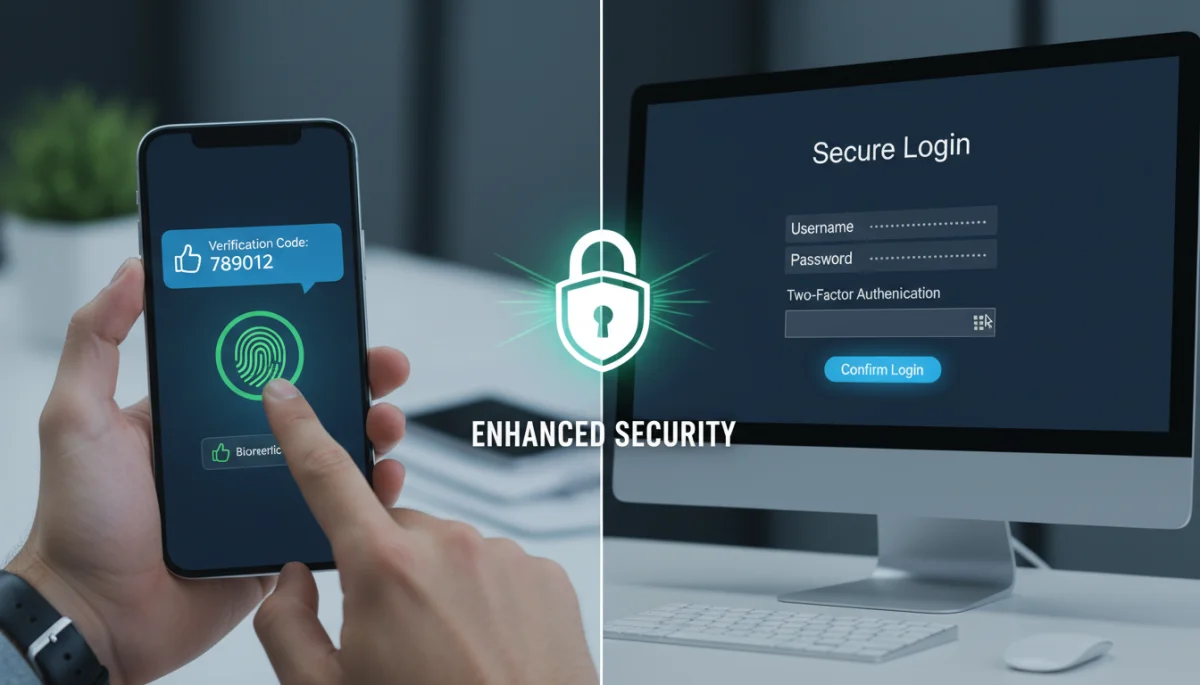

Implementing MFA should be a priority for all critical business systems, including email, cloud services, financial applications, and network access. Most modern platforms offer built-in MFA capabilities, making deployment relatively straightforward for SMBs. While it might add a small extra step to the login process, the security benefits far outweigh this minor inconvenience.
Types of Multi-Factor Authentication
- Something you know: Password, PIN, security questions.
- Something you have: Smartphone (for codes or push notifications), hardware token, smart card.
- Something you are: Fingerprint, facial recognition, voice recognition.
By combining at least two of these factors, MFA creates a robust barrier against unauthorized access. It’s a foundational element for any SMB aiming to significantly improve its cybersecurity posture and protect against credential compromise, moving towards the goal of mitigating 90% of common threats. This protection is a non-negotiable component of modern digital defense, ensuring that even if one factor is breached, the others hold strong.
Protection 3: Regular Data Backup and Disaster Recovery Planning
Even with the best preventative measures, cyberattacks can sometimes succeed. In such scenarios, the ability to recover quickly and minimize downtime is critical. This is where regular data backup and a comprehensive disaster recovery plan become indispensable. For SMBs, losing critical data or experiencing prolonged operational disruption can be catastrophic, making these protections as vital as preventing the attack itself.
A robust backup strategy involves regularly copying all essential business data to secure, off-site locations or cloud storage. This ensures that even if your primary systems are compromised by ransomware, hardware failure, or natural disaster, your data remains safe and can be restored. The key is not just having backups, but having accessible, verifiable, and frequently tested backups. An untested backup is as good as no backup at all.
Elements of an Effective Backup Strategy
- Automated Backups: Schedule regular, automated backups to reduce human error and ensure consistency.
- Off-site Storage: Store backups in a separate physical location or a secure cloud service to protect against localized disasters.
- Version Control: Maintain multiple versions of backups, allowing recovery from different points in time to avoid restoring corrupted data.
- Encryption: Encrypt backup data both in transit and at rest to prevent unauthorized access.
Beyond backups, a disaster recovery plan outlines the specific steps your business will take to restore operations after an incident. This plan should detail who is responsible for what, the order of restoration, communication protocols, and testing schedules. A well-defined plan minimizes panic and ensures an organized, efficient recovery process, significantly reducing the financial and reputational impact of a cyber incident. This dual approach of robust backups and a clear recovery strategy provides a safety net, allowing SMBs to withstand and bounce back from inevitable disruptions, further strengthening their overall Cybersecurity for SMBs framework.
Protection 4: Network Security and Endpoint Protection
The perimeter of your network and every device connected to it represent potential entry points for cybercriminals. Therefore, robust network security and comprehensive endpoint protection are fundamental components of an SMB’s cybersecurity strategy. This involves securing your network infrastructure and every individual device, from servers and desktops to laptops and mobile phones, against a myriad of digital threats.
Network security encompasses firewalls, intrusion detection systems, and secure Wi-Fi configurations, all designed to monitor and control incoming and outgoing network traffic. Firewalls act as the first line of defense, blocking unauthorized access attempts, while intrusion detection systems alert you to suspicious activity. Secure Wi-Fi, often overlooked, prevents unauthorized users from accessing your internal network, which could lead to data theft or system compromise.
Essential Network and Endpoint Security Measures
- Firewall Implementation: Configure and maintain a strong firewall to filter malicious traffic.
- Antivirus/Anti-Malware Software: Install and regularly update comprehensive endpoint protection on all devices.
- Patch Management: Keep all operating systems, applications, and firmware updated to patch known vulnerabilities.
- Network Segmentation: Divide your network into smaller, isolated segments to limit the spread of an attack if a breach occurs.
Endpoint protection extends this defense to individual devices. This includes installing and regularly updating antivirus and anti-malware software, ensuring all operating systems and applications are patched against known vulnerabilities, and implementing device encryption. For SMBs, managing these elements can seem daunting, but many managed security service providers (MSSPs) offer affordable solutions that centralize these protections. By securing both the network perimeter and every connected device, SMBs create a formidable barrier against cyber threats, significantly reducing their attack surface and working towards the goal of mitigating 90% of common threats. This layered defense is crucial for comprehensive SMB Cybersecurity Protections.
Integrating Protections for a Holistic Defense
While each of the four essential protections discussed is vital on its own, their true power emerges when they are integrated into a cohesive, holistic cybersecurity strategy. For SMBs, this means understanding that these measures are not isolated tasks but interconnected components of a larger security ecosystem. A strong defense is built upon layers, where the failure of one layer does not automatically lead to a complete compromise of the system. This integrated approach ensures that your business is protected from multiple angles, providing resilience against diverse and evolving cyber threats.
Achieving this integration requires a strategic mindset. It involves not only deploying the right technologies but also fostering a culture of security throughout the organization. For instance, employee training becomes more effective when coupled with robust network security, as educated employees are less likely to click on phishing links that might bypass a firewall. Similarly, reliable backups provide a safety net even if endpoint protection fails to stop a new strain of ransomware.
Steps Towards Integration
- Conduct Regular Security Audits: Periodically review your security posture to identify gaps and ensure all protections are functioning optimally.
- Centralized Security Management: Utilize tools or services that allow you to manage and monitor various security measures from a single dashboard.
- Incident Response Planning: Develop and test a plan for how your business will respond to a cyber incident, integrating all security components.
- Continuous Improvement: Cybersecurity is an ongoing process; regularly update your strategies and tools to counter new threats.
By viewing cybersecurity as a continuous, integrated process rather than a series of one-off projects, SMBs can build a truly resilient defense. This approach not only safeguards critical assets but also instills confidence in customers and partners, reinforcing the business’s commitment to data protection. The synergy between these protections is what will ultimately enable SMBs to effectively mitigate 90% of common threats by Q3 2026, securing their digital future. This comprehensive integration is the cornerstone of effective Cybersecurity for SMBs.
The Path to 90% Threat Mitigation by Q3 2026
Achieving the ambitious goal of mitigating 90% of common cyber threats by Q3 2026 requires more than just implementing the four essential protections; it demands a commitment to ongoing vigilance, adaptation, and strategic planning. For SMBs, this means viewing cybersecurity not as an expense, but as a critical investment in business continuity and future growth. The digital threat landscape is constantly evolving, with new attack vectors and sophisticated methods emerging regularly. Therefore, your cybersecurity strategy must also be dynamic, capable of adapting to these changes.
The journey towards enhanced security begins with a clear understanding of your current state, followed by a phased implementation of the recommended protections. Start with a comprehensive risk assessment to identify your most critical assets and vulnerabilities. Prioritize the implementation of employee training, MFA, robust backups, and network/endpoint security, focusing on areas that offer the greatest impact on threat reduction. Remember, even small, consistent steps can lead to significant improvements over time.
Strategic Considerations for Long-Term Security
- Budget Allocation: Dedicate a realistic portion of your budget to cybersecurity, considering both initial investments and ongoing maintenance.
- Expert Consultation: Consider engaging cybersecurity professionals or MSSPs to help assess, implement, and manage your security infrastructure.
- Compliance Awareness: Stay informed about industry-specific regulations and data protection laws relevant to your business.
- Technology Updates: Regularly evaluate and update your security technologies to ensure they remain effective against emerging threats.
Furthermore, fostering a culture where every employee understands their role in cybersecurity is paramount. Regular communication, positive reinforcement, and clear guidelines will empower your team to be active participants in protecting the business. By consistently applying these essential protections and maintaining an adaptive, proactive stance, SMBs can significantly reduce their exposure to common cyber threats. This strategic commitment will not only help achieve the 90% mitigation target but also build a resilient and trustworthy digital presence, ensuring the long-term success and stability of your business in an increasingly digital world, solidifying effective Cybersecurity for SMBs.
| Key Protection | Brief Description |
|---|---|
| Employee Training | Educating staff on threat identification and secure practices to prevent human error. |
| Multi-Factor Authentication (MFA) | Adding an extra layer of identity verification for critical system access. |
| Data Backup & Recovery | Regularly backing up data and having a plan to restore operations post-incident. |
| Network & Endpoint Security | Securing network infrastructure and all connected devices with firewalls and antivirus. |
Frequently Asked Questions About SMB Cybersecurity
SMBs are often targeted because they possess valuable data but typically have fewer resources and less sophisticated security measures compared to larger corporations, making them easier and more profitable targets for cybercriminals.
Employees should receive cybersecurity training at least annually, with regular refreshers and updates throughout the year. This ensures they stay informed about new threats and maintain a strong security-conscious mindset.
Yes, MFA is highly necessary. It significantly enhances security by requiring multiple verification methods, drastically reducing the risk of unauthorized access even if a password is stolen. It’s a fundamental protection against credential compromise.
The most critical aspect is regular testing of the plan and backups. An untested plan or backup can lead to unexpected failures during an actual incident, prolonging downtime and increasing recovery costs significantly.
While achieving 100% protection is unrealistic, SMBs can mitigate a vast majority of common threats by implementing these essential protections. The goal is to build resilience, reduce risk, and ensure rapid recovery, not absolute invulnerability.
Conclusion
The digital age presents an evolving battleground, and for small to medium-sized businesses, robust cybersecurity is no longer optional but a fundamental requirement for survival and growth. By diligently implementing the four essential protections—comprehensive employee training, multi-factor authentication, regular data backups with a disaster recovery plan, and strong network and endpoint security—SMBs can significantly fortify their defenses. These measures, when integrated strategically and maintained consistently, provide a powerful shield against the vast majority of common cyber threats. Achieving the target of mitigating 90% of these threats by Q3 2026 is an ambitious yet entirely attainable goal, ensuring that your business not only survives but thrives securely in the digital landscape. Your commitment to these principles will safeguard your assets, protect your reputation, and empower your digital journey.
