AI-Powered Supply Chain: US Logistics See 12% Delivery Optimization by 2027
Anúncios
AI is poised to deliver a significant 12% optimization in US logistics delivery times by 2027, driven by advanced analytics and automation across the supply chain.
Anúncios
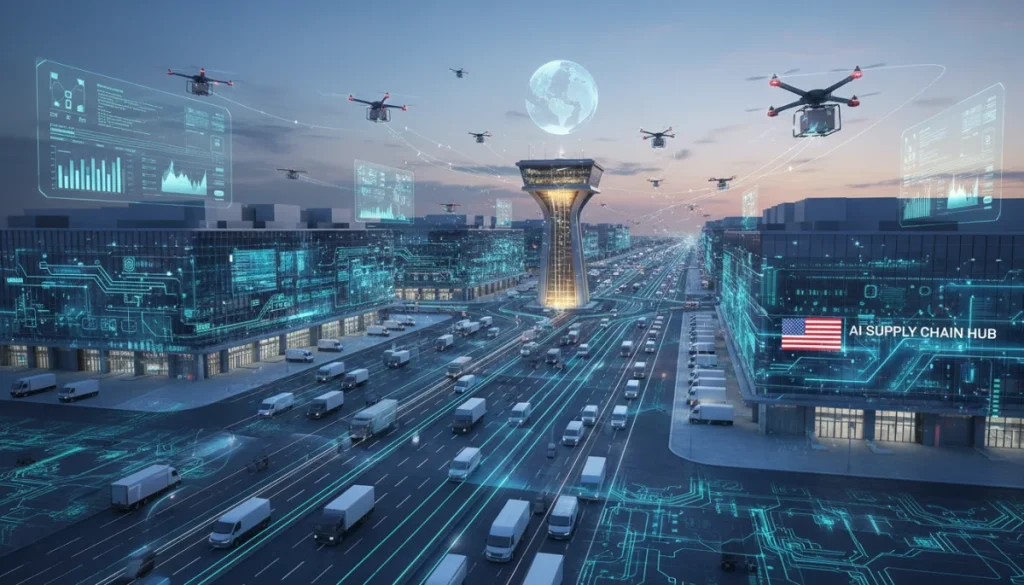
The landscape of American commerce is undergoing a profound transformation, spearheaded by technological innovation. Central to this evolution is the AI-Powered Supply Chain: How US Logistics are Achieving a 12% Optimization in Delivery Times by 2027, a paradigm shift promising unparalleled efficiency and responsiveness. This article delves into the mechanisms, impacts, and future trajectory of AI in reshaping the nation’s logistical backbone.
The AI Revolution in US Logistics
The United States logistics sector, a colossal engine driving the nation’s economy, is at the cusp of a revolutionary overhaul powered by artificial intelligence. This isn’t merely an incremental improvement but a fundamental re-imagining of how goods move from origin to destination. AI’s capacity to process vast datasets, learn from patterns, and make predictive decisions is fundamentally changing operational dynamics.
Anúncios
From predicting demand fluctuations to optimizing last-mile delivery routes, AI applications are permeating every facet of the supply chain. This pervasive integration is not just about speed; it’s about creating a more resilient, transparent, and ultimately, more customer-centric logistics ecosystem. The projected 12% optimization in delivery times by 2027 is a testament to the transformative power AI brings to the table, offering a competitive edge in a globalized market.
Predictive Analytics for Demand Forecasting
One of AI’s most impactful contributions is its ability to refine demand forecasting. Traditional methods often struggle with the sheer volume and variability of market data, leading to either overstocking or stockouts. AI, however, excels at identifying subtle trends and correlations.
- Analyzes historical sales data, seasonal variations, and economic indicators.
- Incorporates external factors like weather patterns and social media sentiment.
- Generates highly accurate predictions, minimizing inventory discrepancies.
- Enables proactive adjustments to production and distribution plans.
By leveraging advanced algorithms, businesses can anticipate consumer needs with unprecedented accuracy, ensuring products are available when and where they are needed. This significantly reduces waste and improves overall supply chain responsiveness.
The integration of AI in demand forecasting allows logistics providers to move from reactive problem-solving to proactive strategic planning. This shift is crucial for maintaining agility in a fast-paced market and directly contributes to the overarching goal of reducing delivery times by optimizing inventory placement and availability.
Optimizing Warehousing and Inventory Management
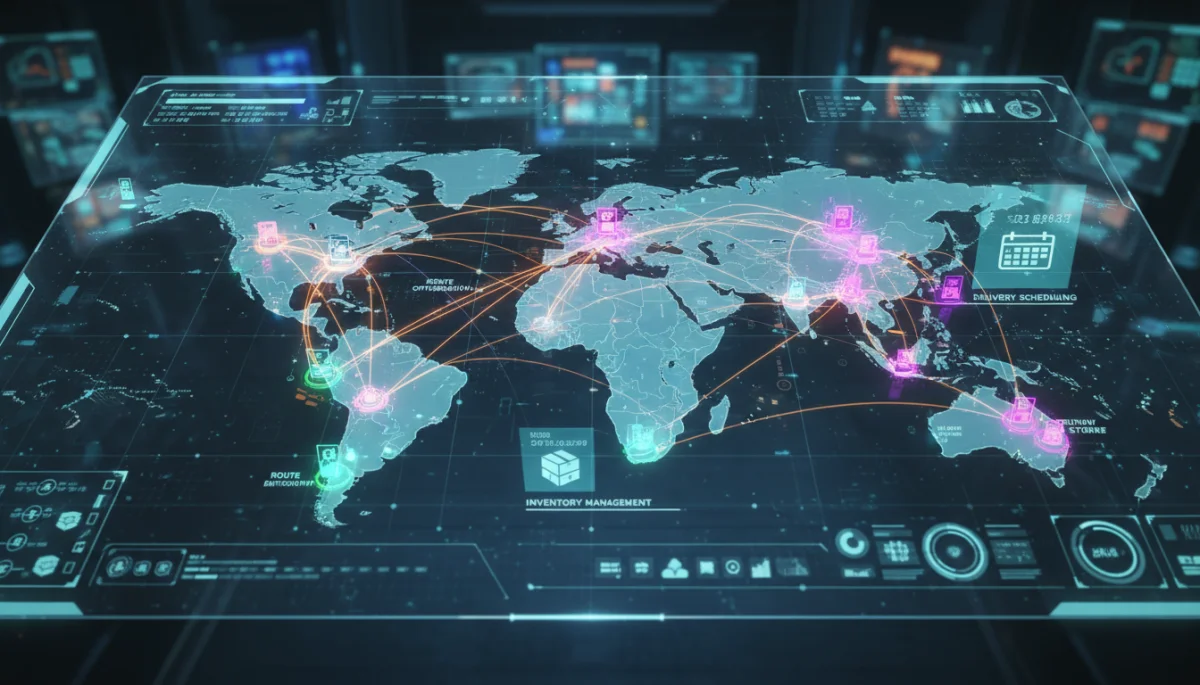
Warehousing and inventory management are critical components of any efficient supply chain. AI is introducing a new era of intelligence and automation to these operations, moving beyond traditional manual processes and static systems. The goal is to maximize space utilization, minimize handling times, and ensure seamless product flow.
AI-powered systems can dynamically adjust storage strategies based on demand forecasts, product characteristics, and retrieval frequency. This intelligent allocation of resources ensures that high-demand items are easily accessible, while slower-moving inventory is stored efficiently without impeding operations. The result is a more fluid and responsive warehouse environment, directly impacting delivery speed.
Automated Inventory Tracking and Robotics
Robotics, powered by AI, are becoming increasingly prevalent in modern warehouses. These autonomous systems can perform a range of tasks, from picking and packing to sorting and transporting goods. Their ability to operate continuously and with high precision significantly boosts throughput.
- Autonomous mobile robots (AMRs) navigate warehouses, transporting goods between locations.
- Robotic arms handle delicate or heavy items with consistent accuracy.
- AI vision systems identify and track inventory in real-time, reducing errors.
- Automated storage and retrieval systems (AS/RS) optimize vertical space.
These automated solutions not only accelerate processing times but also enhance safety by reducing human interaction with heavy machinery. The data collected by these systems also feeds back into the AI, continuously improving operational intelligence.
The synergy between AI and robotics in warehousing creates a highly optimized environment where inventory is managed with unprecedented efficiency. This translates directly into faster order fulfillment and improved delivery reliability, reinforcing the projected 12% optimization in delivery times.
Intelligent Route Optimization and Fleet Management
Transportation is often the most visible and complex part of the supply chain, and it’s where AI offers some of its most immediate and tangible benefits. Intelligent route optimization and fleet management systems are leveraging AI to reduce transit times, fuel consumption, and operational costs.
Gone are the days of static route planning. AI algorithms analyze real-time traffic conditions, weather patterns, road closures, and delivery schedules to dynamically adjust routes. This ensures that drivers are always on the most efficient path, avoiding delays and maximizing their capacity. The impact on delivery times is profound, shaving minutes and even hours off transit.
Dynamic Routing and Real-time Adjustments
AI-powered dynamic routing systems are a game-changer for fleet managers. They go beyond simple shortest-path calculations, considering a multitude of variables to create optimal routes.
- Analyzes live traffic data and incident reports.
- Considers vehicle capacity, driver availability, and delivery windows.
- Provides real-time route adjustments to bypass unexpected delays.
- Optimizes multi-stop routes to minimize mileage and time.
This constant optimization means that fleets operate at peak efficiency, delivering goods faster and more reliably. The ability to react instantly to unforeseen circumstances is a key factor in achieving the targeted delivery time improvements.
The intelligence embedded in these systems allows for a continuous feedback loop, where every trip contributes data to refine future route planning. This iterative learning process is fundamental to sustained improvements in delivery speed and operational cost-effectiveness within the US logistics network.
Enhancing Last-Mile Delivery with AI
The last mile, the final leg of a product’s journey to the customer, is notoriously expensive and inefficient. AI is providing innovative solutions to tackle these challenges, making last-mile delivery faster, more predictable, and more cost-effective. This is where the 12% optimization truly becomes tangible for the end-consumer.
AI-driven platforms are not only optimizing routes for individual parcels but also orchestrating entire networks of delivery agents, whether human drivers, drones, or autonomous vehicles. By understanding customer preferences, delivery windows, and urban complexities, AI ensures that packages arrive precisely when expected, significantly boosting customer satisfaction.
Predictive Delivery and Autonomous Solutions
Predictive delivery leverages AI to inform customers about precise delivery windows, reducing missed deliveries and improving overall efficiency. Autonomous solutions, while still evolving, promise to revolutionize the physical act of delivery.
- AI predicts optimal delivery times based on historical data and real-time conditions.
- Customers receive accurate ETA updates, improving convenience.
- Autonomous delivery robots and drones handle short-distance, high-density deliveries.
- AI manages charging schedules and maintenance for autonomous fleets.
These innovations are not just about speed; they are also about creating a more sustainable and flexible last-mile infrastructure. As urban areas become denser, autonomous solutions, guided by AI, will play an increasingly vital role in maintaining rapid delivery times.
The last mile is where customer experience is often defined, and AI’s ability to streamline this complex segment is paramount. By leveraging predictive insights and emerging autonomous technologies, US logistics providers are set to achieve unprecedented levels of efficiency in delivering goods directly to consumers.
AI’s Role in Supply Chain Visibility and Resilience
Beyond optimizing individual processes, AI is fundamentally changing the overall visibility and resilience of the entire supply chain. In an increasingly volatile global environment, the ability to foresee and react to disruptions is invaluable. AI provides the eyes and the brains necessary to navigate this complexity.
By integrating data from countless sources—sensors, GPS, market intelligence, news feeds—AI creates a comprehensive, real-time picture of the supply chain. This holistic view allows for early detection of potential issues, from supplier delays to geopolitical events, enabling proactive mitigation strategies that maintain delivery schedules.
Risk Management and Proactive Problem Solving
AI-powered risk management systems are transforming how logistics companies prepare for and respond to disruptions. Instead of reacting to problems, they can anticipate them.
- Monitors global events and their potential impact on supply routes.
- Identifies vulnerable points in the supply chain and suggests alternative strategies.
- Simulates various disruption scenarios to test preparedness.
- Provides real-time alerts and recommendations during crises.
This proactive approach significantly reduces the impact of unforeseen events, safeguarding delivery times and ensuring business continuity. The resilience built through AI integration is a critical asset in today’s interconnected world.
The enhanced visibility and predictive capabilities offered by AI contribute directly to the 12% optimization goal by minimizing delays caused by unforeseen circumstances. A resilient supply chain is an efficient supply chain, capable of consistently meeting delivery targets despite external pressures.
Challenges and the Road Ahead for AI in Logistics
While the promise of AI in US logistics is immense, its full realization is not without challenges. The journey towards a 12% optimization in delivery times by 2027 requires careful navigation of technological, ethical, and operational hurdles. Understanding these obstacles is crucial for successful implementation and sustained growth.
Data quality and integration remain significant concerns. AI systems are only as good as the data they consume, and fragmented, inconsistent, or siloed data can severely limit their effectiveness. Furthermore, the need for skilled professionals who can develop, deploy, and manage these sophisticated AI systems is growing rapidly, creating a talent gap that needs to be addressed.
Data Integration and Cybersecurity Concerns
The effectiveness of AI heavily relies on comprehensive and clean data. Integrating disparate systems and ensuring data integrity is a complex undertaking.
- Ensuring data compatibility across various platforms and partners.
- Implementing robust cybersecurity measures to protect sensitive logistics data.
- Establishing data governance policies for ethical AI deployment.
- Developing standardized data formats for seamless information exchange.
Addressing these data-related challenges is foundational for AI to deliver on its promise. Without a solid data infrastructure, even the most advanced algorithms will struggle to provide accurate insights and optimal solutions.
The path forward involves continued investment in data infrastructure, cybersecurity, and workforce development. Collaboration between technology providers, logistics companies, and educational institutions will be key to overcoming these challenges and fully unlocking the potential of AI to achieve and surpass the 12% delivery optimization target in the US.
| Key Aspect | Impact on US Logistics |
|---|---|
| Predictive Analytics | Accurate demand forecasting, reduced inventory waste. |
| Automated Warehousing | Faster order fulfillment, optimized space utilization. |
| Dynamic Route Optimization | Reduced transit times, lower fuel consumption, real-time adjustments. |
| Enhanced Visibility | Proactive risk management, improved supply chain resilience. |
Frequently Asked Questions About AI in Logistics
AI optimizes delivery times by leveraging predictive analytics for demand forecasting, intelligent route optimization considering real-time traffic, and automating warehouse processes like picking and packing. These integrated applications lead to more efficient operations and faster transit.
By 2027, AI is projected to achieve a 12% optimization in delivery times across US logistics. This significant improvement will result from widespread AI adoption in various supply chain functions, enhancing efficiency and customer satisfaction.
Yes, key challenges include ensuring high-quality data integration from diverse sources, addressing cybersecurity concerns to protect sensitive information, and overcoming the talent gap for skilled AI professionals. These require strategic planning and investment.
AI enhances last-mile delivery through dynamic route optimization, predictive delivery notifications for accurate ETAs, and the integration of autonomous delivery solutions like robots and drones. This makes deliveries faster, more reliable, and cost-effective.
AI significantly boosts supply chain resilience by providing real-time visibility, enabling proactive risk management, and simulating disruption scenarios. It allows companies to anticipate and mitigate potential issues, ensuring continuity and consistent delivery performance.
Conclusion
The journey towards an AI-powered supply chain in the US is not merely a technological upgrade but a fundamental redefinition of efficiency and reliability. The projected 12% optimization in delivery times by 2027 underscores AI’s profound potential to revolutionize logistics, creating a more agile, responsive, and resilient system. While challenges remain, the strategic integration of AI across demand forecasting, warehousing, transportation, and last-mile delivery promises not only economic benefits but also a significant enhancement in customer satisfaction. Embracing this AI revolution is imperative for any US logistics entity seeking to thrive in the competitive landscape of tomorrow.